

Business Engagement /

Our work /
Shift helps businesses to address the most significant human rights impacts relevant to their operations and value chains.
We help companies:
- establish the governance structures, policies, skills, and cross-functional collaboration needed to embed human rights due diligence across the business
- take action to address specific impacts in specific places – whether in their operations, upstream or downstream value chains
- evaluate the effectiveness of their programs and to credibly report on their progress, challenges and impact
- develop coherent and efficient approaches to due diligence and reporting rooted in the shared UNGPs-based methodology that has shaped legislative frameworks
Our work with business shapes the wider sustainability and responsible business field. Our publicly available insights and guidance accelerate the uptake of responsible practices and are consistently used to inform the standards and regulations that govern business conduct globally.
Why companies choose Shift /
We have singular expertise in the standards companies are trying to meet. Our co-founders worked with John Ruggie to develop the UN Guiding Principles, which defined human rights due diligence. And we have been closely involved in the legislative developments for due diligence and reporting that are grounded in the UNGPs.
We combine this expertise with a practical understanding of how businesses operate across different sectors. We take the time to understand our partners’ strategic priorities, operating realities, and organisational culture. That means we can provide advice that is tailored, actionable, and capable of delivering meaningful outcomes.
We help companies respond to due diligence and reporting requirements in practical, credible, and effective ways. This includes advising on compliance with EU CSDDD, EU CSRD, and the EU FLR. As requirements evolve and intersect, we help align systems and practices to avoid fragmentation or duplication of efforts, while strengthening impact and risk management over time.
Our multidisciplinary team brings experience from business, law, consulting, diplomacy, change management, education, and advocacy. We hold applied expertise in human rights issues ranging from living wages to FPIC to operating in Conflict Affected and High-Risk Areas. We hold trusted relationships across civil society, government, international organizations and the finance sector, enabling us to bridge conversations and perspectives in support of solutions.
Our services /
How we support business

Tailored advice

Shift’s Business Impact Program

Learning and Training Programs
Supporting industry leadership and collective action /
We support industry and business associations to meet the due diligence and remedy implementation needs of their corporate members. We have a track record of advising or facilitating the creation of multi-stakeholder action to address specific human rights challenges and their root causes.
Our work in this area has included:
Fair Circularity Principles for Waste Pickers’ Rights
Shift supported The Circulate Initiative to develop the Harmonized Resourcing Sourcing Framework for Recycled Materials, based on the UNGPs and targeting all actors in recycling value chains. The Framework facilitates implementation of the Fair Circularity Principles, which Shift previously helped to develop,working with companies, NGOs, and informal waste workers to establish shared expectations for respecting the rights of waste pickers in recycled plastics value chains.
ETI Guidance on Responsible Disengagement
Shift partnered with the Ethical Trading Initiative to develop guidance helping companies manage sourcing reductions, supplier exits, and other forms of disengagement in line with the UN Guiding Principles.
ICMM Guidance on Community Grievance Mechanisms
Shift provided expert support to the International Council on Mining and Metals to strengthen guidance on grievance mechanisms for mining-affected communities. Our contribution helped embed the UNGPs’ effectiveness criteria into practical approaches for designing accessible, trusted, and rights-compatible processes for addressing community concerns.
Dutch International Responsible Business Conduct (IRBC) Covenants
Shift played a leading role in establishing and facilitating sector-wide IRBC Covenant processes in the Netherlands, bringing together companies, trade unions, NGOs, industry associations, and government. Through these multi-stakeholder agreements, we helped develop innovative approaches to sector-wide human rights risk assessment, collective action, and access to remedy across complex value chains.
Featured resources /
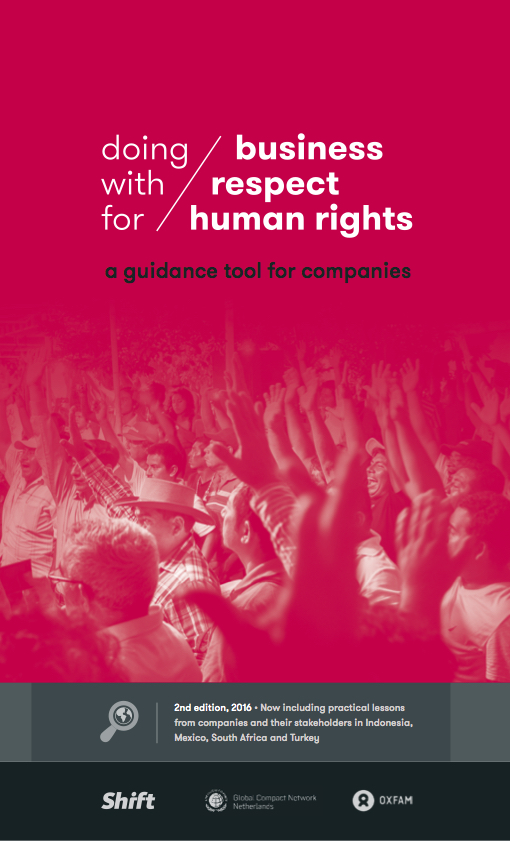
Doing Business with Respect for Human Rights
A comprehensive guide to putting the UN Guiding Principles into practice across company operations and business relationships.

Establishing Effective Due Diligence Structures: Getting Closer to a Risk-Based Approach
Fair Circularity Principles
Principles for advancing a just transition to circular economy models that respect the rights of informal waste workers.
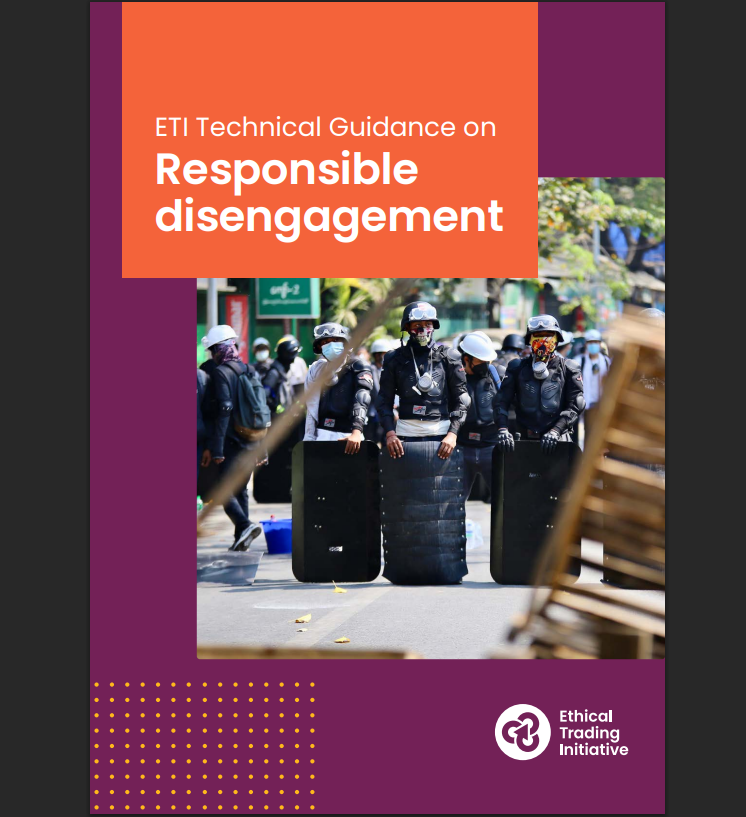
ETI Technical Guidance on Responsible Disengagement
A framework for ending business relationships responsibly while reducing harm to workers and affected stakeholders.

ICMM Good Practice Guide on Grievance Mechanisms
Practical guidance for establishing and strengthening operational-level grievance mechanisms.
Advancing Responsible Development and Deployment of Generative AI
Recommendations for integrating human rights due diligence into the development and deployment of generative AI systems.
Using Leverage in Business Relationships to Reduce Human Rights Risks

Embedding Respect for Human Rights Within a Company’s Operations
Practical insights on building the leadership, governance, communication, and organizational culture needed to embed respect for human rights throughout a company’s operations and business relationship.

Operationalizing Remedy
Guidance on designing effective approaches to remedy that meet the expectations of the UN Guiding Principles.
Technical Guidance on Due Diligence for Living Income
A practical and comprehensive framework that supports agribusiness companies in implementing human rights due diligence for living income in line with the UN Guiding Principles on Business and Human Rights.