
Forced Labor /
Combatting forced labor situations, including those that involve children, is a necessary component in building sustainable economies that work for all.
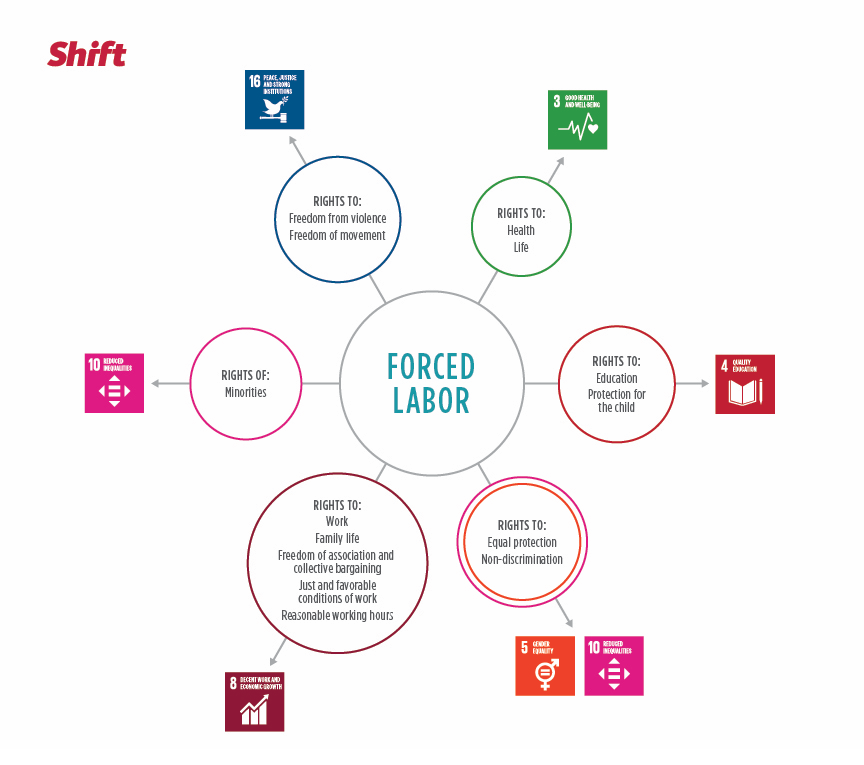
On any given day, according to the most recent estimates, nearly 25 million people are living under conditions of forced labor; 71 percent of them are women and girls. /
Across the world, millions of people are working against their will, exploited for their labor, and treated as no human being should ever be. Some are recruited with promises of decent work and fair pay and then taken to job sites, often far away from their homes and families, where they are physically barricaded from leaving and threatened if they refuse to work. Others are forced to hand over their passports or other documents essential to their freedom of movement, leaving them at the mercy of their employers.
The burden of debt is often used as a weapon in these situations, forcing individuals to continue working under inhumane conditions for months and even years on end until recruitment fees or the costs of transportation fronted by employers or recruiters are paid off using these workers’ wages. Clearly, slavery is not a thing of the past.
One in four victims of modern slavery
is a child. /
According to the International Labor Organization (ILO), forced labor is “work that is performed involuntarily and under the menace of any penalty,” meaning “situations in which persons are coerced to work through the use of violence or intimidation, or by more subtle means such as manipulated debt, retention of identity papers, or threats of denunciation to immigration authorities.” It is very often linked to seemingly legitimate commercial channels.
Approximately 16 million victims of forced labor are in the private economy. Over half of these individuals are in situations where personal debt is used to forcibly obtain labor. Moreover, “this proportion rises above 70% for adults who were forced to work in agriculture, domestic work or manufacturing.”
Individuals may also be coerced or deceived into forced labor by employers or recruiters when their wages are withheld or when they are prevented from leaving by threats, document retention or acts of violence, including sexual violence.
Companies across various sectors are increasingly including forced labor among their salient human rights issues – the human rights at risk of the most severe negative impacts through the company’s activities and business relationships.
Combatting forced labor situations, including those that involve children, is a necessary component in building sustainable economies that work for all.
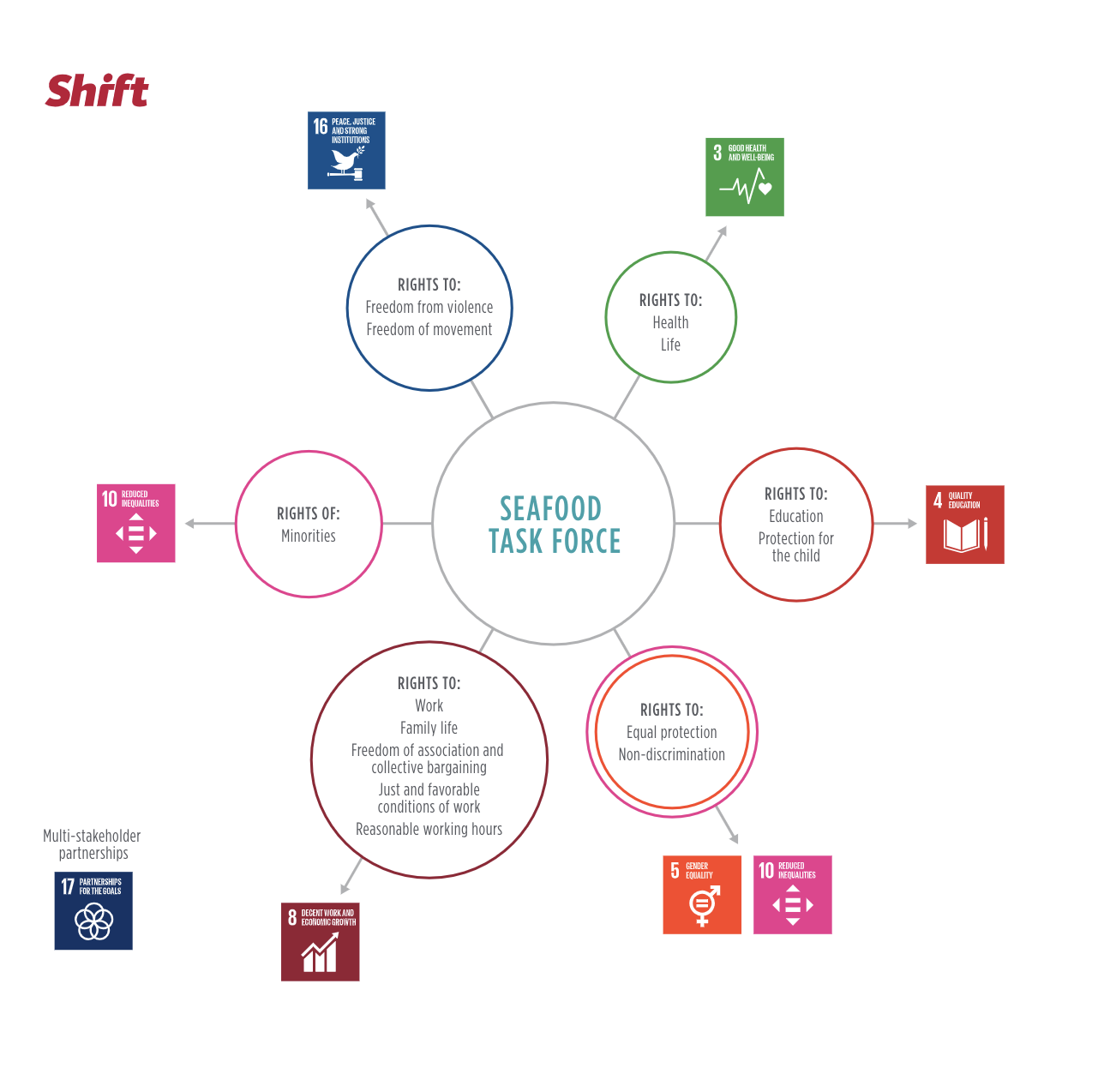
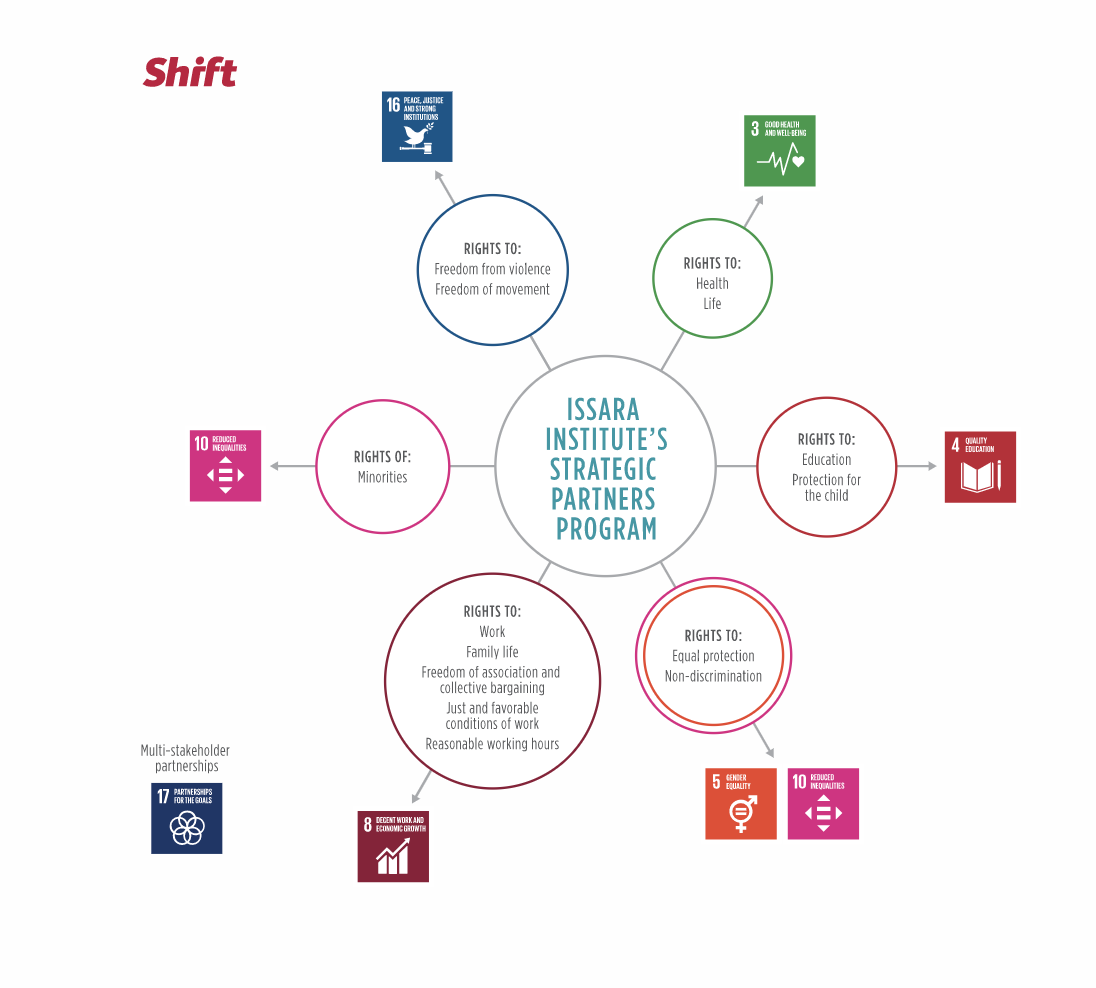
As illustrated above, and depending on the specifics of the relevant corporate initiative, private sector efforts to address forced labor may contribute to the achievement of an array of the Global Goals, including:
- Goal 3: Ensure healthy lives and promote well-being for all at all ages[i]
- Goal 4: Ensure inclusive and equitable quality education and promote lifelong learning opportunities for all [ii]
- Goal 5: Achieve gender equality and empower all women and girls[iii]
- Goal 8: Promote sustained, inclusive and sustainable economic growth, full and productive employment and decent work for all[iv]
- Goal 10: Reduce inequality within and among countries[v]
- Goal 16: Promote peaceful and inclusive societies for sustainable development, provide access to justice for all and build effective, accountable and inclusive institutions at all levels[vi]
So, how are companies currently taking action to bring about a world in which both adults and children are free from forced labor? Examples illustrated by the case studies below include:
- Individual corporations are tackling key entry points: A leading tech company is drawing a strong line in the sand when it comes to forced labor risks, requiring all of its suppliers to directly employ their workforce and support responsible recruitment practices that prevent conditions in which forced labor can thrive.
- Manufacturers are reforming recruitment and employment systems: A garment producer in India is taking concerted action to combat conditions that support or allow for a local system of exploitation that traps young women and girls into forced and child labor.
- Global buyers and local actors are collaborating in high-risk contexts: A network of brands and retailers sourcing from the seafood supply chain in Thailand are coordinating with local processors, producers, trade unions, NGOs and government actors to enhance transparency, foster multi-stakeholder engagement and spark systemic change across the industry.
- Leading brands are engaging with programs that prioritize worker voice: A group of international buyers is participating in an innovative program that tackles the issue of forced labor across various sectors in Southeast Asia via empowerment of worker voices and collaborative, rather than punitive, partnerships with suppliers to improve conditions on the ground.
The case studies explore each of these innovative and evolving models in more detail. Each case study captures publicly available information on the initiative, alongside experiences and opinions from various actors involved.
The case study summaries do not claim to give a definitive account of a specific initiative or of all perspectives on that case study; instead, they are intended to serve as illustrative examples of how action toward corporate respect for human rights can make a critical contribution to the achievement of various goals and targets under the SDGs.
Key Takeaways on Forced Labor /
Individual Company Action
- 1. Strategic engagement with expert organizations can drive leading and targeted action on a severe human rights issue in a company’s supply chain.
- 2. Strong supplier relationships that focus on capacity building and support rather than on “policing” can result in mutually beneficial outcomes.
- 3. There can be forced labor risks in the recruitment and hiring of local workers as well as migrant workers.
- 4. Manufacturer-led efforts that engage business partners downstream are possible and can facilitate monitoring of risks deeper in the supply chain.
- 5. Forced labor is a severe human rights harm that may be prioritized even when the likelihood of its occurrence is decreasing, especially when the risks are to particularly vulnerable groups.
Collective Action
- 1. Proactive, solution-oriented responses by brands connected to human rights abuses in their supply chains can spark action and collaboration that tackles the issue, rather than avoiding it.
- 2. Collective efforts across business relationships in a particular industry or across multiple industries can bring together information and resources to increase transparency throughout complex supply chains.
- 3. Tracking of impacts and improvements based on quality data management systems can greatly inform efforts to reduce and remedy impacts, as well as internal and external reporting.
- 4. Consistently and appropriately empowering worker voice can be a meaningful way to capture the scale and nature of impacts as experienced by the people most affected and to help companies target their responses.
- 5. Interventions can multiply their impact by creatively engaging workers across various entry points to more holistically inform workers and address the myriad harms caused to victims of forced labor.
HP’s Foreign Migrant Worker Standard /
Leading the industry with action on root causes
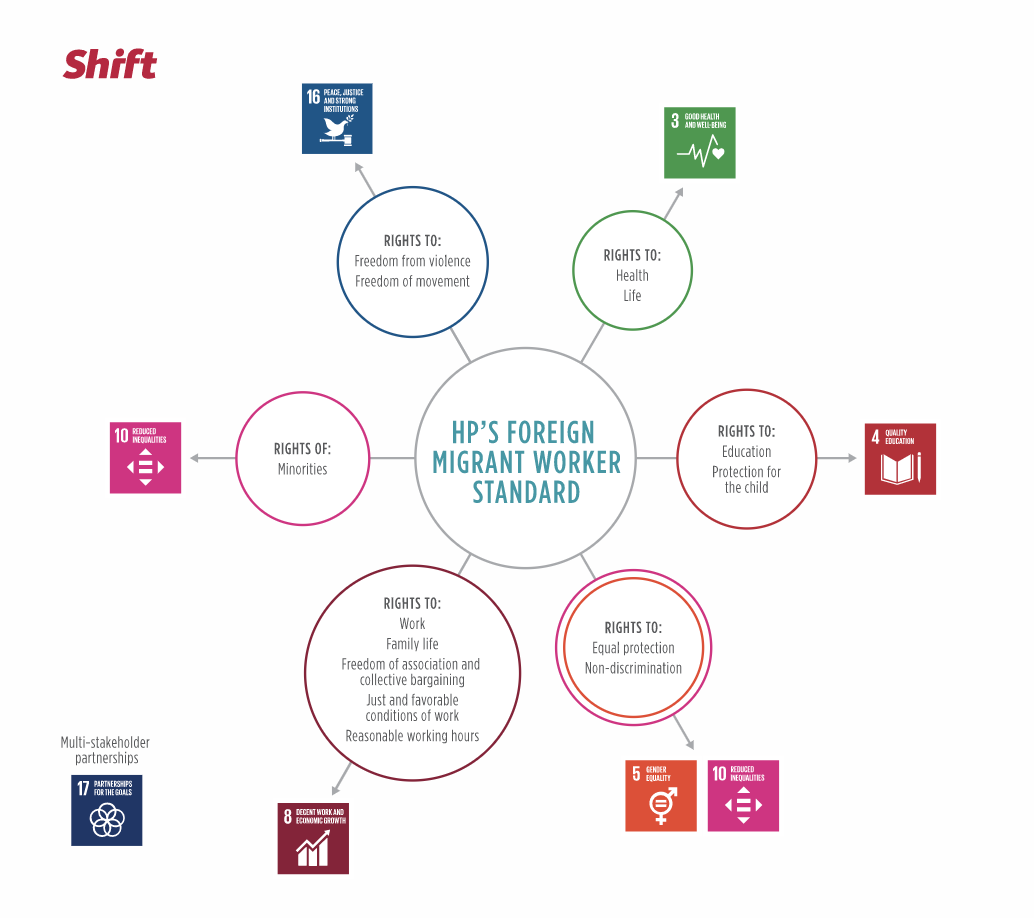
In 2014, reports of forced labor linked to migrant recruitment practices in the electronics industry supply chain in Malaysia were coming to the surface, catching the eye of HP Inc. At the time, the company itself was identifying, through various assessment mechanisms across diverse geographic regions, that migrant workers are a particularly vulnerable population in terms of severe human rights impacts connected to the business.
Thinking critically about the root causes of forced labor among this community, HP determined that hiring workers through recruitment agencies or labor brokers is too high a risk for the people involved in the company’s supply chain.
The response /
HP released its Foreign Migrant Worker Standard in 2014 and partnered with expert organization Verité to build a body of research and dedicated program in response to the issue of forced labor among migrant workers.
The standard goes beyond general industry practice in addressing forced labor – which primarily focuses on implementing policies banning recruitment fees – to require that the company’s suppliers directly employ any foreign migrant workers in their workforce. While recruiters may still be used, once a worker is placed, they must become a formal employee of the HP supplier.
More specifically, the standard “prohibits [HP] suppliers from outsourcing the migrant worker employment relationship to third-party labor brokers – a major source of vulnerability for migrant workers – as well as eliminating the practice of charging workers recruitment fees and requiring that workers hold their own passports.” The standard also requires employment contracts written in the worker’s native language.
HP is the first company in the information and communications technology (ICT) sector to require all of these practices.
“HP’s Foreign Migrant Worker Standard remains a very forward-looking approach. It takes commitment around forced labor one step further to identify a root problem – indirect employment – as a key risk factor. The company decided to not try and work around that risk, but instead develop a standard to address it. This is clear leadership and hopefully more companies will take this kind of work on.”
– Shawn MacDonald, Verité
Key aspects of the initiative /
HP has so far implemented its Foreign Migrant Worker Standard by:
1. Continuing its partnership with Verité to develop supplier guidance on the standard. The guidance includes “information on how to transition to direct employment, the ‘no recruitment fee’ model, and how to identify, screen and select ethical recruitment agents.” Each supplier engaged in the program is allowed a one-year grace period to implement the standard, and HP’s procurement managers are integrally involved in roll-out of the guidance.
2. Developing and disseminating a supplier self-assessment questionnaire to not only raise awareness and understanding of the standard, but also to serve as a foundation of relevant changes to onsite audit practices. For instance, HP auditors now use focused foreign migrant worker assessments as a tool to measure implementation and enforcement of the standard while providing support to suppliers where performance is weak.
3. Conducting a series of dialogues and workshops with government representatives and collaboration with peer companies and suppliers in high-risk areas such as Southeast Asia. HP’s engagement in this area has included the donation of its supplier guidance to the Responsible Business Association (RBA) for others to use and learn from; chairing the RBA-affiliated Responsible Labor Initiative Steering Committee; and serving on the Steering Committee of the Leadership Group for Responsible Recruitment, which is “a collaboration between leading companies and expert organizations to drive positive change in the way that migrant workers are recruited,” including “the total eradication of fees being charged to workers to secure employment.”
“A key lesson learned from our work in this area is that you can’t do it alone. Internally, this means having a committed tone from the top and across the various functions involved. For instance, we couldn’t do this work if we didn’t have support from our procurement managers, who understand the issues and drive the actions on a daily basis.
Each company needs to do their part to ensure freely chosen labor, whether you are a global company where you have a large scope to work with or a small business where you see the issues every day.”
– JAY CELORIE, HP
4. Aiming to create fora for suppliers to share best practice. The company has received feedback that the direct hiring requirement has resulted in its suppliers gaining important knowledge about recruitment agencies and monitoring their practices in a more effective and sustainable manner.
“HP’s strong relationships with its suppliers is at the core of our Foreign Migrant Worker Standard. Implementation is not perfect, and it takes time, but responsible engagement is our approach.
We try to be transparent and clear and we ask that of our suppliers in return. As long as there’s a corrective action plan in place and we’re working proactively on that together with the supplier and building our leverage, we will always stay committed to progressing forward and not cutting off the relationship. Otherwise, it’s the workers that are most harmed.
We’ve had a paradigm shift in our thinking – instead of being anxious about going and looking for the issues, we recognize that this is our responsibility. And, in fact, this has been really freeing. We know we’re going to find issues, so we identify them and then get more quickly to the important work of addressing them in meaningful and positive ways.”
– TANVI KAFI, HP
Responsible Labor Initiative /
New cross-industry initiatives to watch
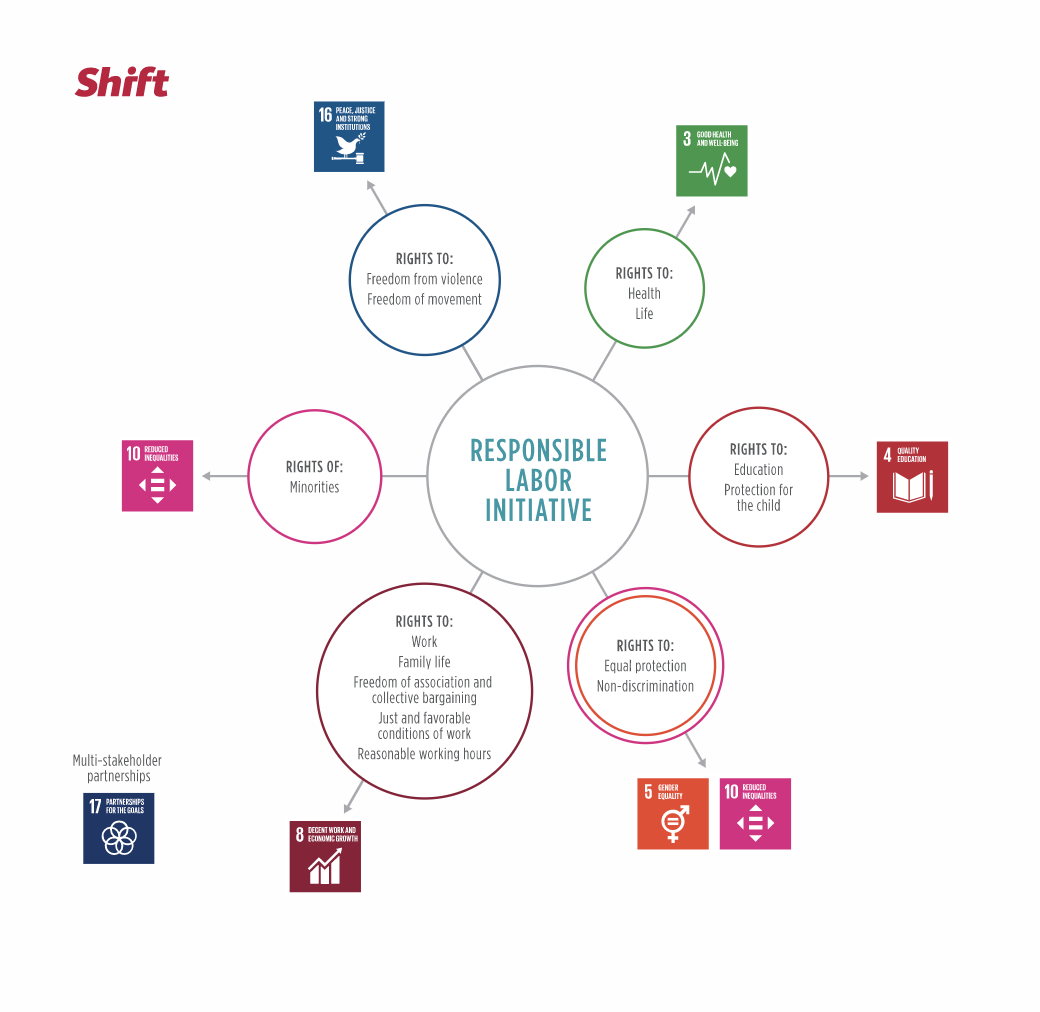
Launched in June 2017, the Responsible Labor Initiative (RLI) is a multi-industry, multi-stakeholder collaboration stemming out of the forced labor commitments and programs of the Responsible Business Alliance (RBA), formerly the Electronic Industry Citizenship Coalition (EICC).
The RLI aims to bring together multiple sectors to harness members’ collective influence in its efforts to ensure the rights and dignity of workers vulnerable to forced labor in global supply chains are consistently respected and promoted.
As a member of the RLI’s multi-stakeholder Advisory Board, David Schilling of ICCR says, “The RLI is smartly building on a set of tools that the RBA has developed over time, retooling them to deal with forced labor and recruitment issues in a way that creates a path for recruitment agencies to become recognized as ethical recruiters.”
The RLI utilizes a Labor Migration Corridor Database developed with Verité to facilitate honest conversations with suppliers around the true costs of responsible recruitment practices. It is led by a multi-industry Steering Committee that includes representatives from the electronics, construction, food and beverage, and retail sectors.
In early 2018, the initiative launched its Responsible Workplace and Responsible Recruitment Programs with supporting partner ELEVATE. The Responsible Workplace Program focuses on worker engagement through mobile survey technology, a third-party helpline, and trainings on workers’ rights, pre-departure orientation, and worker-management communication. The Responsible Recruitment Program directly involves labor agents in self-assessments, forced labor audits, and ethical recruitment trainings. It will then provide a public list of each participant’s progression in the program toward certification.
“Forced labor due diligence must be harmonized across industries to ensure that workers vulnerable to forced labor are respected and protected. The RLI has a set of advanced tools and programs that are complementary to other initiatives in this area and that are facilitating transparency, assessment, mitigation and remediation. We’re aiming to create a market for ethical recruitment and employment. The more sectors and stakeholders that are involved, the better.”
– Bob Mitchell, RBA Vice President
Penguin Apparel’s efforts to combat Sumangali schemes /
Tackling local forced labor risks from the producer perspective
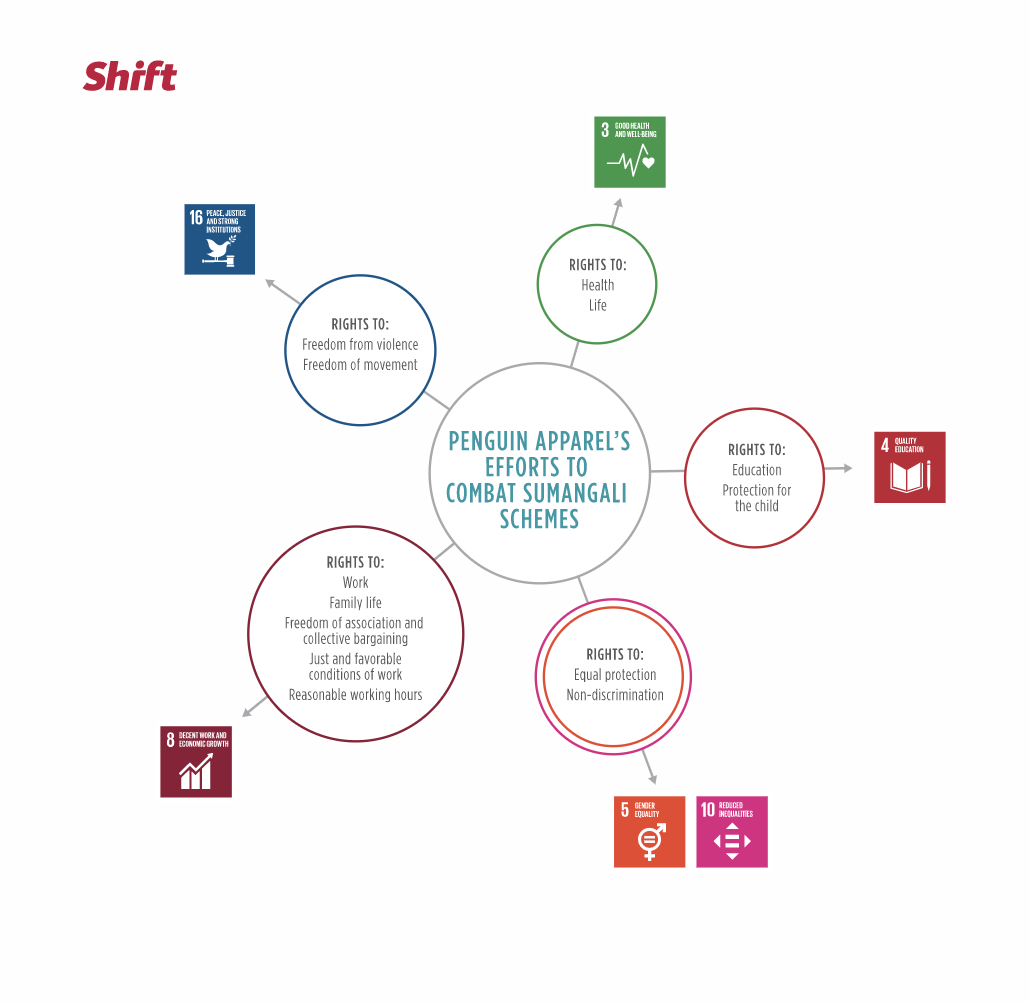
The challenge /
The state of Tamil Nadu in southern India is a major hub for one of the largest employment-generating businesses in the country – the textile and clothing industry. It is also home to one of the most horrendous forced labor practices that has been exposed on the international stage.
Known as Sumangali schemes, the practice involves the recruitment of young women and girls by labor brokers into contracted work at textile mills, typically for periods of three to five years. Promises of a lump sum payment at the end of the contract period – and the appeal of using this toward the dowry required in many traditional Hindu marriages – lure poor and lower caste women, girls and their families into the scheme.
Once under the control of the broker or the factory, these young women and girls are reportedly exploited with low wages and long working hours and forced to live and work under unsafe and traumatizing conditions. They are also allegedly kept in isolation from their families and the organized labor community while being harassed and violated within the mills and dormitories.
The response /
Several brands and retailers have responded to the exposure of Sumangali schemes in various ways, in many cases severing ties with suppliers linked to the illegal practice. But the role of suppliers themselves in addressing the issue locally has not been highlighted as publicly.
One example of producer-led practices aimed at tackling this issue is Penguin Apparel’s program. Penguin Apparel is a medium-sized ready-made garment manufacturer in Tamil Nadu that primarily exports to Canada, France and the United States. Its work on Sumangali schemes highlights that forced labor risks are not solely linked to employers of migrant workers; they can also be of serious concern to employers of local workers as well.
Key aspects of the initiative /
While Sumangali schemes in Tamil Nadu have decreased in recent years, Penguin Apparel has recognized the severity of the forced labor risks associated with the practice and its disproportionate impact on particularly vulnerable groups in India.[i]
Major components of the manufacturer’s work around this issue include:
1. Recruitment system reform: The company has eliminated recruiters and labor brokers from its hiring practices and does not pay recruitment fees or charge workers any fees to receive employment.
Human resource staff are trained in document verification to ensure that potential women employees are of legal working age. These staff members are also experienced and/or trained in identifying Sumangali scheme indicators during in-person interviews, which each potential employee must participate in before hiring takes place.
2. Management system reform: All appointment letters and contracts signed are written in the workers’ local language, and all documents verified during the hiring process are given back to the workers to ensure freedom of movement during employment.
Once employed, all workers also participate in training on workers’ rights and wellness.
3. Engagement and capacity building with suppliers and contractors: In addition to auditing its own suppliers and contractors in the search for Sumangali schemes, Penguin Apparel prohibits the use of home workers – which are strongly linked with forced and child labor risks.
The company also educates its partners on social management systems and prioritizes strong communication channels to facilitate openness throughout the lower tiers of its supply chain.
Seafood Task
Force /
Combining global and local forces in a high-risk context
The challenge /
In June 2014, the Guardian published a shocking, in-depth investigation that spelled out in disturbing detail allegations of Asian slave labor in the production of shrimp for consumption in the United States and the United Kingdom.
The article outlined “horrific conditions, including 20-hour shifts, regular beatings, torture and execution-style killings. Some [of the victims of forced labor] were at sea for years; some were regularly offered methamphetamines to keep them going. Some had seen fellow slaves murdered in front of them.”
The response /
In quick response to the exposé and the serious concerns it raised, Chareon Pokphand Foods (CPF) and Costco, both of which were implicated in the investigation, came together to establish the Shrimp Sustainable Supply Chain Task Force in July 2014.
Following an expansion of its mandate and membership, the initiative was renamed the Seafood Task Force in October 2016. It is the first industry-led, multi-stakeholder coalition of retailers, processors, producers, governments and NGOs working to eradicate forced labor in the US$7 billion seafood supply chain in Thailand.
In addition to its founding member companies, the task force now boasts leadership and involvement from major brands around the globe that are linked to the Thai seafood industry, including Mars Petcare, Nestlé, Target and Walmart. It also involves key Thai producers and processors, as well as expert NGOs such as Verité and the World Wildlife Fund (WWF), which participate via the initiative’s External Stakeholder Advisory (ESA) Committee.
“Forced labor is one of our identified and prioritized salient human rights issues. As such, we’re taking a deep dive to find where and how incidents of forced labor might occur in our supply chain. This learning feeds into our action-focused roadmap to address potential risks and any identified issues, and involves key international collaborations such as the Seafood Task Force.
Our responsible sourcing strategy builds upon an understanding that in order to achieve real sector-wide supply chain transformation, we must work together collectively, as companies and organizations, to complement and build upon individual actions.”
– ANNA TURRELL, NESTLÉ
Key aspects of the initiative /
While results of the Task Force’s ongoing work need to be explicitly tracked and disclosed, the initiative is bringing together the key players in the Thai seafood supply chain in a new and innovative way.
Thus far, the Task Force’s work has focused on four main activities:
1. Mapping the various supply chains of the buyers, processors and producers involved.
2. Implementing “track and trace” systems to provide further transparency.
3. Engaging with the Thai government and the Thai seafood industry as a whole on relevant national legislation, as well as the Task Force’s Code of Conduct, using its collective purchasing influence.
4. Fishery improvement projects that aim to reduce levels of illegal, unreported and unregulated fishing.
With the major components of its governance systems now in place and eight issue-specific working groups underway, the initiative plans to next turn its efforts to the development of data management resources that may facilitate remediation, corrective action and anonymized reporting.
In the longer term, the Task Force hopes to expand the scope of its efforts to other key jurisdictions outside of Thailand.
“The Seafood Task Force is the first major initiative to deal with forced labor in the Thai seafood market. Trying to improve life in a factory is one thing, but on ships, it’s a whole different world entirely. The challenges are really great and the conditions are really bad.
The Task Force has created specific processes that have aimed to see what’s happening at sea – where vessels are going and what labor conditions on those vessels look like. A lot of this is completely new. But an industry-wide approach is essential in addressing this systemic issue.”
– Shawn MacDonald, Verité
Issara Institute’s Strategic Partners Program /
Empowering worker voice and going beyond audits to strengthen supply chains
The challenge /
On fishing vessels, at ports, on farms, and at other job sites across Southeast Asia, forced labor continues to be an everyday reality. Victims of trafficking are brought across national borders under false pretenses of safe and decent work, only to be unjustly treated and exploited by recruiters and employers who trap these individuals into forced labor using physical violence or debt bondage.
Yet, time and time again, audits of suppliers by global buyers and brands have failed to accurately identify and meaningfully address these types of human rights violations; and workers themselves have been unable to access information and holistic support to rise out of these inhumane and unacceptable conditions.
The response /
Established in 2014, the Issara Institute is tackling human trafficking and forced labor in Southeast Asia through a two-pronged approach of bottom-up worker empowerment and top-down improvement of the management systems that administer global supply chains.
Since January 2016, after a two-year pilot program that engaged 10 private sector partners and focused on the seafood industry, Issara has been working with an increasing number of global brands and retailers to “eliminate trafficking risks in their supply chains” and transform private sector approaches in tackling this pervasive issue.
The Issara model – called the Strategic Partners Program and using the organization’s Inclusive Labor Monitoring method – currently involves 17 global brands, retailers and importers from the United States and Europe, including Marks & Spencer, Mars Petcare, Nestlé, Tesco and Walmart. Several of Issara’s strategic partners are also involved in other forced labor initiatives, such as the Responsible Labor Initiative, the Seafood Task Force, and the Leadership Group on Responsible Recruitment.
The program’s scope has now expanded beyond seafood to include apparel, footwear, fruits, vegetables, spices, sauces and poultry export supply chains across Myanmar, Cambodia, Laos and Thailand.
Key aspects of the initiative /
Issara’s unique Inclusive Labor Monitoring method involves the following components and corresponding data to date:
1. Continuous and widespread monitoring of partner supply chains via Issara’s toll-free, multilingual, 24-hour migrant worker hotline and various social media platforms; staff visits to migrant communities; workplace assessments that involve site surveys, document reviews, and interviews with workers and management; and port risk assessments.
According to Issara:
- More than 100,000 workers are covered by the Inclusive Labor Monitoring program.
- The program assesses and engages over 500 Thai supplier company workplaces, including companies across all tiers of partners’ supply chains and covering upstream farms, plants and fishing vessels.
- Community outreach – carried out by Issara’s grassroots civil society organization partners and by ambassadors who are returned migrants aiming to help jobseekers migrate more successfully – has reached more than 25,000 workers directly in source areas.
- Between 1,000 and 1,500 calls and conversations per month take place with workers via Issara’s various worker voice channels, including the multilingual hotline, Facebook, the Issara Golden Dreams Android app (detailed below), and other social media and chat/messaging platforms.
“If you want to drive sustainable change for victims of forced labor, you have to go beyond a raid-and-rescue approach or strengthening rule of law, which is an extremely slow process that leaves workers stuck in shelters in the meantime and often receiving little to no pay or remediation in the end. You need a collaborative approach, one that genuinely works with suppliers in partnership with global brands.
The Issara model works at the ground level to understand the situation at the factory level so that we can be well-equipped to provide a safe channel for worker voices to be heard, both before improvement plans are in place and while they are carried out. We then have a responsibility to support remediation when issues arise, all the while safeguarding the information that’s being shared.”
– MARK TAYLOR, ISSARA INSTITUTE
2. Data analytics and development of empowering worker-centric technology to uncover risks and impacts in complex supply chains, many of which are not captured by traditional social audits.
This aspect of the program’s work allows partners to “better understand trends and patterns in migration, gain insight into hot spots for trafficking, understand supply chain risks, and develop strategic solutions to addressing forced labour in supply chains.”From running the hotline for many years, Issara recognizes that the knowledge held by migrant workers themselves often vastly exceeds, in quality and quantity, a lot of what NGOs and workers’ rights groups are tapped into. As such, Issara is motivated to create platforms for migrant workers and jobseekers to exchange up-to-date, accurate information relevant to safe job seeking and migration. Thus, the primary goal of Issara’s worker voice platforms is worker empowerment and strengthening linkages to remediation. At the same time, the value of this safely sourced worker feedback for corporate due diligence and worker-driven corporate responsibility is clear.
According to Issara:
- More than 900 workers were involved in the creation of the program’s mobile app (called Golden Dreams), which provides information on worker rights, policies and laws related to migrant workers; updated lists and reviews of employers, recruitment agencies and service providers such as hospitals and NGOs; polling platforms to allow migrant workers to voice their opinions and view those of others; and a secure mechanism to report a problem or seek immediate assistance from the Issara team.
- Over 90,000 migrant workers and jobseekers are regularly interfacing with and exchanging through Issara worker voice channels.
“One thing we often hear from the companies we work with is how daunting it can be to know what’s happening across complex supply chains. But the situation is changing rapidly in our modern world. The majority of workers in Southeast Asia have access to smartphones and use these technologies in their daily lives.
If you can creatively tap into these advancements to talk to workers – ensuring privacy and the support of remedy along the way – then you can start to unlock information that traditional approaches such as audits haven’t captured. And having that information empowers companies and other actors along supply chains to respond in ways that are more systemic and that have real impacts in the lives of workers and their families.”
Mark Taylor, Issara Institute
3. Development and implementation – in direct collaboration with suppliers – of improvement plans that make changes in labor recruitment and management systems and that are based on direct engagement with workers.
According to Issara:
- Corrective actions and collaborations undertaken by suppliers, in partnership with Issara technical teams, have positively impacted over 25,000 workers.
- Corrective actions and collaborations have included corrections in illegally low wages; excessive deductions; inappropriate treatment by line supervisors or human resources staff; document withholding; lack of contracts; unsafe dormitories; sexual harassment; and weak, unsafe or non-functional grievance mechanisms.
4. Remediation for victims via a Victim Support Fund and the organization’s Freedom of Choice program, which is the first remediation program in the world to provide unconditional cash transfers to victims of trafficking, often coupled with safe job placement through Issara partner businesses, empowering survivors to stabilize and make their own decisions in overcoming forced labor.
According to Issara:
- Over 6,000 workers identified as being in forced labor situations received forms of remedy through healthcare, legal assistance, safe relocation, employment, psychosocial care and assistance obtaining documentation.
- The Victim Support Fund supported more than 500 victims of trafficking, including their children who were also in the trafficking/harm environment.
- Over 200 victims received unconditional cash transfers through the Freedom of Choice program.
5. Production of bi-annual risk reports for the companies involved, providing each partner with an overview of issues identified in its supply chain and actions that have been taken in response.
6. Multi-stakeholder working groups and the production of cutting-edge research and analysis that provide platforms for discussion on key topics in ethical sourcing, such as ethical recruitment systems, mainstreaming worker voices into global responsible sourcing systems, technology solutions to human trafficking, the intersections of seafood sustainability and labor, and jobseeker and migrant worker empowerment.