
Our Impact /
Turning principles into progress

For more than 15 years, Shift has worked alongside governments and other standard-setters, businesses, financial institutions, trade unions and civil society organizations to help embed respect for human rights into how business gets done.
Our impact can be seen in the policies, standards, practices and tools that continue to shape responsible business globally and help keep the focus where it belongs: on better outcomes for people.
We create change by working across the entire business and human rights ecosystem. We help organizations put the UN Guiding Principles into practice, support governments and standard setters in translating those lessons into stronger policy and standards, and bring together diverse stakeholders to tackle systemic challenges that no single organization can solve alone. This combination of practical implementation, standard-setting and collaborative innovation is how we help turn principles into lasting progress.
Established the global standard /
We helped develop the UN Guiding Principles on Business and Human Rights and have spent the past 15 years since they were endorsed working to translate them into practice. From supporting implementation across different business sectors and with lenders and investors to shaping voluntary standards and helping inform mandatory human rights due diligence and reporting requirements, we’ve worked to ensure that the evolution of business and human rights remains grounded in the principles and practice of effective due diligence.
Redefined corporate human rights reporting /
We developed the UNGP Reporting Framework, helping define what good quality human rights reporting and assurance looks like. This work has since influenced voluntary and mandatory reporting standards, including those of GRI, ISSB and the EU’s sustainability reporting framework, while also influencing how investors assess corporate disclosures. Now we are a founding partner of an innovative effort to demonstrate how growing inequality has financially material impacts for business through the Taskforce on Inequality and Social-related Financial Disclosures.
Measured what matters /
Through our Valuing Respect project, we helped answer one of the field’s most important questions: how do you know whether human rights due diligence is actually working?
Our pioneering research has informed better social performance indicators, helped build consensus around metrics for a just transition, and developed new approaches to accounting for companies’ living wage commitments – advancing how organizations measure effectiveness of their due diligence in terms of outcomes for people.
Expanded the frontiers of practice /
We have helped pioneer the practical application of the UN Guiding Principles in new and evolving contexts – from advancing responsible business conduct in global sports bodies through our work with the IOC and FIFA, to developing red flag indicators for human rights risks embedded in common business models to addressing the connections between climate, nature and people-related impacts.
Advanced practice in financial institutions /
We helped articulate the concept of enabling remedy in situations where companies have not caused or contributed to harm but remain linked to it – the typical situation for most lenders and investors. We helped advance its adoption in financial institution due diligence, influencing guidance from authoritative bodies such as the OECD and IFC, from initiatives such as the Equator Principles, as well as in the practices of individual lenders and investors.
Enabled collective action /
We have brought businesses, governments, financial institutions, trade unions and civil society organizations together to tackle shared human rights challenges – from supporting negotiated sector agreements in the Netherlands to advancing the rights of informal waste workers in global value chains – demonstrating how collaboration can drive systemic change.
Shaping what's next /
As expectations continue to evolve, we remain focused on helping organizations translate the UN Guiding Principles into effective standards and practice – developing solutions and advancing the next generation of thinking to ensure that human rights due diligence delivers meaningful and lasting outcomes for people.
Better standards. Better practice. Better outcomes for people.
Better standards. Better practice. Better outcomes for people. /
Established the global standard /
We helped develop the UN Guiding Principles on Business and Human Rights and have spent the past 15 years since they were endorsed working to translate them into practice. From supporting implementation across different business sectors and with lenders and investors to shaping voluntary standards and helping inform mandatory human rights due diligence and reporting requirements, we’ve worked to ensure that the evolution of business and human rights remains grounded in the principles and practice of effective due diligence.
Redefined corporate human rights reporting /
We developed the UNGP Reporting Framework, helping define what good quality human rights reporting and assurance looks like. This work has since influenced voluntary and mandatory reporting standards, including those of GRI, ISSB and the EU’s sustainability reporting framework, while also influencing how investors assess corporate disclosures. Now we are a founding partner of an innovative effort to demonstrate how growing inequality has financially material impacts for business through the Taskforce on Inequality and Social-related Financial Disclosures.
Measured what matters /
Through our Valuing Respect Project, we helped answer one of the field’s most important questions: how do you know whether human rights due diligence is actually working?
Our pioneering research has informed better social performance indicators, helped build consensus around metrics for a just transition, and developed new approaches to accounting for companies’ living wage commitments—advancing how organizations measure effectiveness of their due diligence in terms of outcomes for people.
Expanded the frontiers of practice /
We have helped pioneer the practical application of the UN Guiding Principles in new and evolving contexts—from advancing responsible business conduct in global sports bodies through our work with the IOC and FIFA, to developing red flag indicators for human rights risks embedded in common business models to addressing the connections between climate, nature and people-related impacts.
Advanced practice in financial institutions /
We helped articulate the concept of enabling remedy in situations where companies have not caused or contributed to harm but remain linked to it – the typical situation for most lenders and investors. We helped advance its adoption in financial institution due diligence, influencing guidance from authoritative bodies such as the OECD and IFC, from initiatives like the Equator Principles Association , as well as in the practices of individual lenders and investors.
Enabled collective action /
We have brought businesses, governments, financial institutions, trade unions and civil society organizations together to tackle shared human rights challenges—from supporting negotiated sector agreements in the Netherlands to advancing the rights of informal waste workers in global value chains—demonstrating how collaboration can drive systemic change.
Shaping what's next
As expectations continue to evolve, we remain focused on helping organizations translate the UN Guiding Principles into effective standards and practice—developing solutions and advancing the next generation of thinking to ensure that human rights due diligence delivers meaningful and lasting outcomes for people.
Better standards. Better practice. Better outcomes for people. /
Established the global standard /
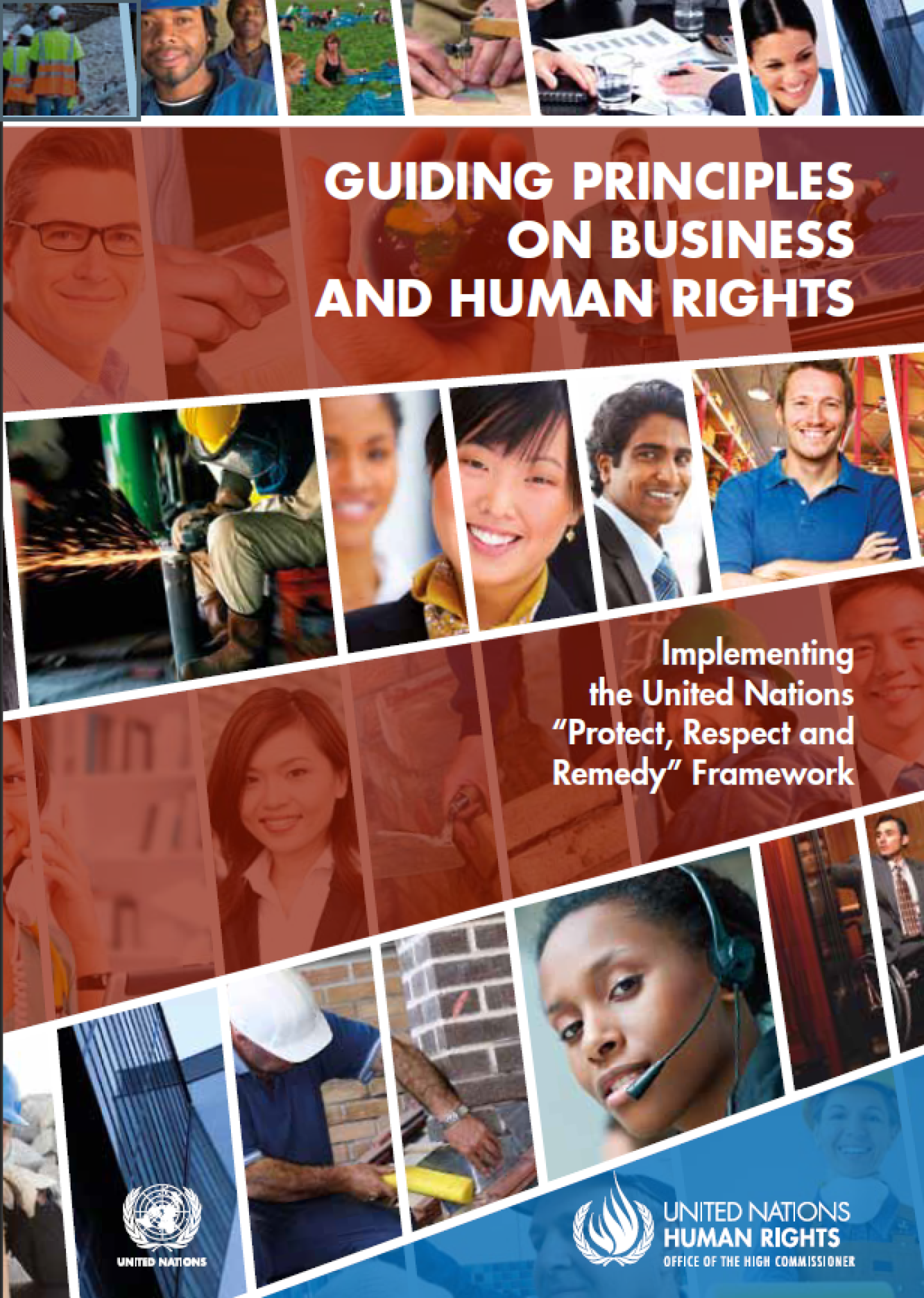
We helped develop the UN Guiding Principles on Business and Human Rights and have spent the past 15 years since they were endorsed working to translate them into practice. From supporting implementation across different business sectors and with lenders and investors to shaping voluntary standards and helping inform mandatory human rights due diligence and reporting requirements, we’ve worked to ensure that the evolution of business and human rights remains grounded in the principles and practice of effective due diligence.

Redefined corporate human rights reporting /

Measured what matters /
Through our Valuing Respect Project, we helped answer one of the field’s most important questions: how do you know whether human rights due diligence is actually working?
Our pioneering research has informed better social performance indicators, helped build consensus around metrics for a just transition, and developed new approaches to accounting for companies’ living wage commitments—advancing how organizations measure effectiveness of their due diligence in terms of outcomes for people.

Expanded the frontiers of practice /
We have helped pioneer the practical application of the UN Guiding Principles in new and evolving contexts—from advancing responsible business conduct in global sports bodies through our work with the IOC and FIFA, to developing red flag indicators for human rights risks embedded in common business models to addressing the connections between climate, nature and people-related impacts.

Advanced practice in financial institutions /
We helped articulate the concept of enabling remedy in situations where companies have not caused or contributed to harm but remain linked to it – the typical situation for most lenders and investors. We helped advance its adoption in financial institution due diligence, influencing guidance from authoritative bodies such as the OECD and IFC, from initiatives like the Equator Principles Association , as well as in the practices of individual lenders and investors.

Enabled collective action /
We have brought businesses, governments, financial institutions, trade unions and civil society organizations together to tackle shared human rights challenges—from supporting negotiated sector agreements in the Netherlands to advancing the rights of informal waste workers in global value chains—demonstrating how collaboration can drive systemic change.
Shaping what's next
Better standards. Better practice. Better outcomes for people.
Better standards. Better practice. Better outcomes for people. /
Established the global standard /
We helped develop the UN Guiding Principles on Business and Human Rights and have spent the past 15 years since they were endorsed working to translate them into practice. From supporting implementation across different business sectors and with lenders and investors to shaping voluntary standards and helping inform mandatory human rights due diligence and reporting requirements, we’ve worked to ensure that the evolution of business and human rights remains grounded in the principles and practice of effective due diligence.
Redefined corporate human rights reporting /
We developed the UNGP Reporting Framework, helping define what good quality human rights reporting and assurance looks like. This work has since influenced voluntary and mandatory reporting standards, including those of GRI, ISSB and the EU’s sustainability reporting framework, while also influencing how investors assess corporate disclosures. Now we are a founding partner of an innovative effort to demonstrate how growing inequality has financially material impacts for business through the Taskforce on Inequality and Social-related Financial Disclosures.
Measured what matters /
Through our Valuing Respect Project, we helped answer one of the field’s most important questions: how do you know whether human rights due diligence is actually working?
Our pioneering research has informed better social performance indicators, helped build consensus around metrics for a just transition, and developed new approaches to accounting for companies’ living wage commitments—advancing how organizations measure effectiveness of their due diligence in terms of outcomes for people.
Expanded the frontiers of practice /
We have helped pioneer the practical application of the UN Guiding Principles in new and evolving contexts—from advancing responsible business conduct in global sports bodies through our work with the IOC and FIFA, to developing red flag indicators for human rights risks embedded in common business models to addressing the connections between climate, nature and people-related impacts.
Advanced practice in financial institutions /
We helped articulate the concept of enabling remedy in situations where companies have not caused or contributed to harm but remain linked to it – the typical situation for most lenders and investors. We helped advance its adoption in financial institution due diligence, influencing guidance from authoritative bodies such as the OECD and IFC, from initiatives like the Equator Principles Association , as well as in the practices of individual lenders and investors.
Enabled collective action /
We have brought businesses, governments, financial institutions, trade unions and civil society organizations together to tackle shared human rights challenges—from supporting negotiated sector agreements in the Netherlands to advancing the rights of informal waste workers in global value chains—demonstrating how collaboration can drive systemic change.
Shaping what's next
As expectations continue to evolve, we remain focused on helping organizations translate the UN Guiding Principles into effective standards and practice—developing solutions and advancing the next generation of thinking to ensure that human rights due diligence delivers meaningful and lasting outcomes for people.