

We help institutions integrate a people-lens to climate and nature solutions to make these more effective and just.
We advise companies and financial institutions on how to embed a people lens into their climate and nature strategies, including decarbonization and adaptation. We have a track record in bringing our applied expertise in human rights due diligence to identify address human rights “blind spots” and advance a just transition.
We facilitate consensus around the types of metrics and indicators that will enable assessment of how ‘just’ transition plans prove to be. We have led an initiative with other organizations at the forefront of work on the just transition to define sector-agnostic metrics that can be used by companies, investors and standard-setters to assess how well transition plans are embedding human rights in practice.
Our work helps ensure that climate and nature action can proceed at the pace required by building and maintaining social license and managing the financial and legal risks that can otherwise delay or derail progress.
For companies, bringing a human rights lens to climate and nature strategies enables better identification of risks, more effective stakeholder engagement and stronger, more resilient transitions.
Integrating Disciplines. Advancing Practice. Enabling a Just Transition.

Our research and practical experience have identified areas where human rights are often overlooked in climate and nature responses, including in addressing physical climate risks and engaging affected communities. We have developed practical tools, methods and guidance to support organizations in prioritizing these risks and building roadmaps to strengthen their approaches – helping ensure that action is both effective and implementable in practice.

We help convene human rights, climate and other specialists within organizations to support integrated decision-making. We also provide insights for lenders and investors on their own climate efforts and on how to assess the approaches of client and portfolio companies, including through work such as our Business Model Red Flags analysis, which highlights embedded risks that can affect the viability and pace of transition.

Measuring the effectiveness of a just transition requires both qualitative and quantitative metrics. Together with peer organizations, businesses and financial institutions, we have developed sector-agnostic metrics that can be embedded into emerging reporting standards and used to evaluate business action on climate, nature and human rights.
We led the collation of evidence regarding the financial materiality of community relationships in the context of nature-related impacts and risks, demonstrating its relevance for sustainability-related financial disclosures.
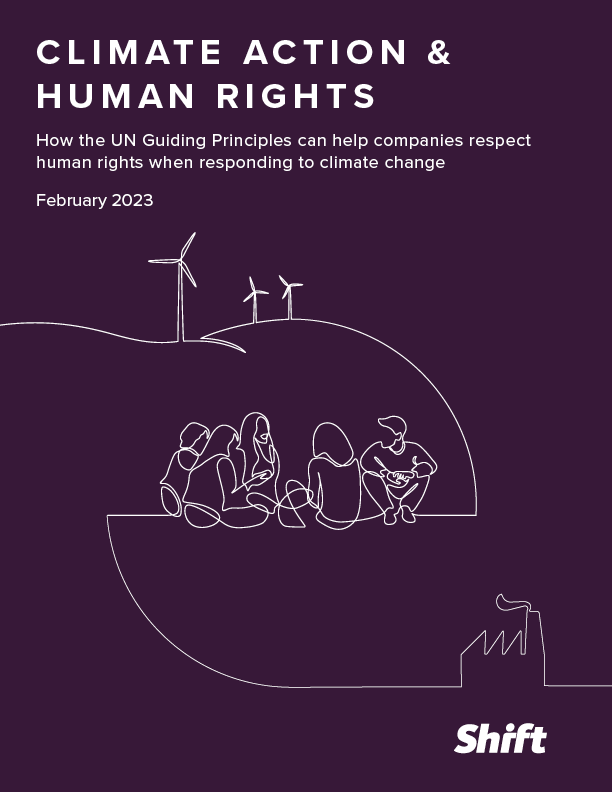
A report on how the UN Guiding Principles on Business and Human Rights (UNGPs) can help companies to layer a human rights lens into their climate change strategies.
A report on the nexus between climate change strategy and action by financial institutions and the responsibility to respect human rights in accordance with UNGPs.

A tool to help practitioners and executives spot and manage social impacts that flow from the interaction of business models with climate action, transition planning, and physical climate risks.
Metrics, developed with supporting organizations, to help companies, investors, and policymakers in assessing whether climate transition efforts are fair for outcomes for workers and communities.

Guidance for engaging indigenous peoples, communities and other affected stakeholders as part of identifying nature-related dependencies, impacts, risks and opportunities.

Guidance on how to effectively engage stakeholders to address social impacts connected to science-based targets on climate and nature action.
She has held senior leadership roles at UBS Asset Management, HSBC Asset Management and Federated Hermes, where she led global stewardship, thematic research, responsible investment and engagement with companies on sustainability and governance issues. She was the human rights engagement lead at Federated Hermes, where she pioneered its approach to global value chain engagement with electronics companies, and advocated for provenance and traceability of critical minerals.
Christine served as Managing Director at UBS Asset Management, leading on global stewardship, thematic research and impact engagement. Previously, she was Global Head of Stewardship and a board member of HSBC Asset Management UK Limited, and Head of Asia and Global Technology at Federated Hermes EOS. From 2019 to 2025, she served as a board member and then Chair of the International Corporate Governance Network (ICGN), a global investor-led organisation representing around US$100 trillion in assets under management across more than 40 countries.
Christine is recognised internationally for her work on responsible investment, AI governance and corporate stewardship. She has published influential work on responsible AI and data governance and was a member of the UK Parliament’s All-Party Parliamentary Group on Artificial Intelligence, serving on its Data Governance Task Force. She is the Appointed Advisor of AFRC in Hong Kong, the independent regulator of the accounting profession, and Emeritus Governor of the London School of Economics. Her PhD research on responsible investment was shortlisted for a United Nations award recognising industry relevance and academic excellence.
As Director, David engages with business partners to better identify, prioritize and act on salient human rights issues, embedding the UN Guiding Principles in companies’ decision-making processes.
Specializes in Business Enterprises
As Director, David engages with business partners to better identify, prioritize and act on salient human rights issues, embedding the UN Guiding Principles in companies’ decision-making processes.
David has over a decade of experience advising multinational corporations, governments, NGOs and others on business and human rights. Prior to joining Shift, David provided research assistance to the Special Representative of the UN Secretary-General for business and human rights John Ruggie. As part of his contributions, David field-tested human rights due diligence with a group of Dutch companies and their stakeholders, and he supported research on company-led grievance mechanisms.
From 2008 to 2010, David was the lead consultant on an 18-month project, the Business and Human Rights Initiative, under the umbrella of the Global Compact Network Netherlands. The initiative was a collaboration between 10 Dutch multinationals – ABN AMRO, AkzoNobel, Essent, KLM, Philips, Rabobank, Randstad, Shell, TNT and Unilever – and led to the publication of a ground-breaking business guidance tool, How to Do Business with Respect for Human Rights, in 2010. Through his work at Shift, David led the update of this publication from 2014 to 2016 with the support of the Dutch government under their National Action Plan on implementing the Guiding Principles.
Another major guidance tool David has helped develop addresses due diligence on child labor, published by the International Labour Organization (ILO) and the International Organisation of Employers (IOE) in 2015. The guidance was the result of a multi-year, multi-stakeholder, multi-country project led by David involving the ILO, IOE, companies, unions, NGOs and other stakeholders.
David was previously a Research Fellow at the Corporate Responsibility Initiative at the Harvard Kennedy School, including assisting in teaching on business and human rights, global governance, corporate governance and leadership. David sits in a personal capacity on the board of the Dutch Social and Economic Council International Corporate Social Responsibility Committee. He has a Masters in Public Policy from the Harvard Kennedy School and a Bachelor of Arts in Business from Radboud University Nijmegen in the Netherlands. David is a Dutch national, speaks English and Dutch and is proficient in Spanish and German.
As a Senior Associate with Shift, Anna advises companies, lawyers, investors and business associations on how to put the Guiding Principles into practice.
As a Senior Associate with Shift, Anna advises companies, investors and business associations on how to put the Guiding Principles into practice. Trained as a lawyer, Anna focuses particularly on working with legal professionals on their role in implementing the Guiding Principles and has led work on analyzing regulations in various jurisdictions and how they align to the Guiding Principles. She also has particular expertise on the UN Guiding Principles Reporting Framework.
Prior to joining Shift, Anna provided input to the work of the Special Representative of the UN Secretary-General for business and human rights John Ruggie as a legal consultant. During this period, Anna also opened the New York office of the Public International Law & Policy Group, where she advised government officials, opposition leaders, human rights victims and civil society organizations on human rights, constitutional reform and transitional justice in Burma, Côte d’Ivoire, Egypt, Kenya, Libya, Somaliland, Tunisia, Uganda and Zimbabwe.
Anna was previously a mergers and acquisitions associate at the law firm of Jones Day in New York, where she advised a broad range of multinational companies on cross-border mergers and acquisitions, joint venture, private equity and venture capital transactions. She founded and led the law firm’s International Law Pro Bono Group. She began her career as an advisor to the World Bank, advising on development governance structures to better meet the Millennium Development Goal of achieving universal primary education.
Anna is a (non-practicing) lawyer qualified in New York, England & Wales and France. She is a frequent expert speaker and writer on business and human rights and is the recipient of various professional awards, including the Empire State Counsel Award for changing the lives of those unable to afford counsel and the Seymour-Reuben Award for shaping international law. Anna has a Masters in International Law from American University Washington College of Law and a degree in common and civil law from the University of Paris X. She has been awarded the Business Sustainability Management certificate from the Cambridge Institute for Sustainability Leadership (CISL) and the MBA Essentials certificate from London School of Economics (LSE). Anna is a British and French national and speaks English and French.
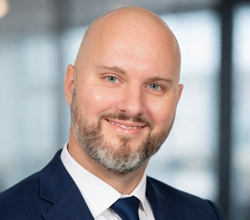
Head of Human Resources
He/Him
As Head of Human Resources, Martyn leads Shift’s global people strategy and oversees all aspects of HR across the organization.
As Head of Human Resources, Martyn leads Shift’s global people strategy and oversees all aspects of HR across the organization. He ensures that Shift’s systems, policies and practices foster a thriving, inclusive and values-driven culture that supports our mission to embed respect for people’s dignity at the core of business practice.
Martyn brings over a decade of HR leadership experience across mission-driven and international organizations working at the intersection of business and society. Prior to joining Shift, he was Director of People Development & Culture at the PRI and earlier worked with Business in the Community. In these roles, he developed and embedded HR business partnering models, guided the organizations through significant growth and transformation, and partnered with senior leaders to design and implement people strategies that supported the delivery of their mission. Most recently, he served as a consultant with the WeProtect Global Alliance, where he supported the establishment of their HR function.
He is a Chartered Member of the CIPD and holds a Level 7 Diploma in Human Resource Management, as well as an ILM Level 7 Certificate in Executive Coaching and Mentoring, reflecting his strong focus on leadership development and coaching. Martyn studied German and International Relations at the University of Exeter, including a year at the University of Würzburg in Germany. He later worked on education projects in Nicaragua, strengthening his global outlook and commitment to people-centred change.
Martyn is based in the United Kingdom.
As a Senior Advisor at Shift, Brianna advises financial institutions and companies on how to put the UNGPs into practice, with a particular focus on the nexus between human rights and climate change.
Specializes in Financial Institutions
As a Senior Advisor at Shift, Brianna advises financial institutions and companies on how to put the UNGPs into practice, with a particular focus on the nexus between human rights and climate change. Brianna combines environment and climate change expertise with experience developing and implementing human rights policies, due diligence approaches and sustainability reporting.
Before Shift, Brianna spearheaded innovative sustainability initiatives at Sustainable Development Technology Canada and Export Development Canada (EDC). At EDC she led the development and implementation of exciting new portfolio approaches for climate change and human rights risk management, as well as aligning EDC’s corporate reporting with international reporting frameworks, such as the Task Force on Climate-related Financial Disclosures and the UNGPs Reporting Framework. She also led EDC’s international sustainability negotiations and engagements, including as co-Chair of the Equator Principles Climate Change Working Group.
Prior to joining EDC, Brianna worked for nine years as a diplomat with Canada’s foreign ministry, including four years at the United Nations General Assembly where she led environment and development negotiations, advocacy and outreach on behalf of the Government of Canada, including for the creation of the UN Sustainable Development Goals.
Brianna has also advised international financial institutions including the World Bank Group, institutional investors, bilateral development agencies, and small- and medium-sized enterprises on the practical application of environment, climate change, human rights standards.
Brianna has an undergraduate degree in Chemical Engineering from Queen’s University and a Master’s degree in Environmental Change & Management from the University of Oxford.
As Shift’s Director / Financial Institutions Lead, Ashleigh leads our work with financial institutions and supports other partners across industries, leveraging her breadth of experience to tackle cutting-edge issues and entrenched challenges on the road to implementation of the UN Guiding Principles.
Specializes in Financial Institutions | Valuing Respect
As Director / Financial Institutions Lead, Ashleigh engages directly with financial institutions, companies and investors as they embed respect for human rights into their operations and business relationships. She also leads on pieces of research under our Valuing Respect Project, which is focused on developing better ways to evaluate business respect for human rights. Ashleigh has a breadth of experience approaching the Guiding Principles from business, legal and academic perspectives and brings a holistic view to Guiding Principles implementation.
Ashleigh was previously Executive Director at Ernst & Young’s Climate Change and Sustainability Services. At EY Japan, she led a team of consultants supporting policy-making, educational program and governance design, stakeholder dialogue and due diligence strategies for multinational and domestic companies across a variety of industries. As founder of the EY Human Rights Network, she led the enhancement of EY’s human rights capabilities across EY’s global network. In her role she was a frequent speaker and moderator of dialogues at multi-stakeholder fora and functioned as a connector between civil society, government and corporate actors with a common goal of empowering business to respect rights.
From 2012 to 2014 she conducted research at the United Nations University in the field of Sustainability Science, specializing in business and human rights. She prepared research for the UN Working Group on Business and Human Rights and spent time at the UN Global Compact New York and the Office of the High Commissioner for Human Rights. Ashleigh later sat on the UN Global Compact’s Human Rights and Labour Working Group and drafted the Global Compact’s 2015 Guide on How to Develop a Human Rights Policy.
Ashleigh is a lawyer qualified in Australia and England & Wales and specialized in intellectual property law, labor law and public international law. She has advised governments and companies on state human rights obligations, companies on the nexus between bilateral investment treaties and human rights and fellow lawyers on integrating the Guiding Principles into legal advice. In 2007 she won the Intellectual Property Society of Australia & NZ prize.
Ashleigh has authored or contributed to a number of publications including: Business and Human Rights: Corporate Japan Rises to the Challenge (joint publication between EY Japan and Global Compact Network Japan), Corporate Social Responsibility Can Save Japan (Op-ed in Japan Times), Cumulative Human Rights Impacts (in UN Global Compact/ Maplecroft Business Dilemmas Forum) as well as several legal publications on intellectual property law in Australia and English translations of Japanese High Court judgments. She is also a member of the Advisory Board for the United Nations Institute for Training and Research (UNITAR)’s Division for Prosperity.
Ashleigh has degrees in Law and Asian Studies from the University of Western Australia, with studies also conducted at the University of Vienna and Sophia University in Japan. She has a Masters of Science in Sustainability from the United Nations University and has undertaken the institution’s Leadership for Sustainability program. Ashleigh is an Australian national, and is fluent in Japanese.
As the Vice President and Co-Founder of Shift, Rachel helps shape our strategy and oversees a range of our collaborations with companies, governments, investors, civil society and other partners. Rachel is also responsible for driving our work on standards advocacy and with sports associations.
Specializes in Standard Setters | Sports and Human Rights
Rachel is one of Shift’s co-founders and has led work at Shift over the last decade on standard-setting, human rights and sports, financial institutions, conflict and international law.
As Vice President, Rachel shapes our strategy and oversees a range of our collaborations with companies, governments, investors, civil society and other partners. Rachel leads Shift’s work to influence standard-setters of all kinds to integrate the UN Guiding Principles into the rules that govern business, including engaging with governments and the European Union on mandatory human rights due diligence.
Rachel also has unique experience advising and leading efforts to drive respect for human rights into the operations of global sports governing bodies. Rachel was the Chair of FIFA’s independent Human Rights Advisory Board while it operated, between 2017 and 2021. She has advised the International Olympic Committee on human rights since 2018, including co-authoring recommendations for the IOC on a comprehensive human rights strategy with former UN High Commissioner for Human Rights, Zeid Ra’ad Al-Hussein.
Rachel has more than a decade of experience in implementing the Guiding Principles with a wide range of organizations, including public and private financial institutions and companies from diverse business sectors and geographies, and she frequently leads and facilitates engagements with senior audiences around the world. She is the co-author of the leading study of the costs of company-community conflict in the extractive sector.
Prior to co-founding Shift, Rachel was a senior legal advisor from 2006-2011 to the Special Representative of the UN Secretary-General on business and human rights, Harvard Professor John Ruggie. She played a pivotal role in the development of the Guiding Principles, advising on all aspects of the relationship between the Guiding Principles and national and international law.
Rachel is also a Senior Program Fellow with the Corporate Responsibility Initiative at Harvard Kennedy School and has experience at the highest levels of the Australian legal system and internationally, having clerked at the High Court of Australia and at the UN International Criminal Tribunal for the former Yugoslavia in The Hague. She has a particular interest in Indigenous peoples’ rights, having advised the Australian Federal Attorney-General’s Department on Indigenous affairs and acted as Ruggie’s liaison with the UN Permanent Forum on Indigenous Issues during his UN mandate.
Rachel has a Master of Laws degree from Harvard Law School and Bachelors degrees in Law and Politics from the University of New South Wales in Sydney, where she also lectured and published in law. She is a (non-practicing) lawyer qualified in New South Wales.
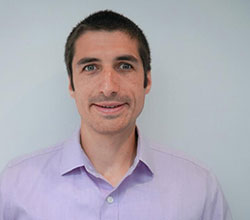
Director
He/Him London
As Director at Shift, Federico engages with business partners to better identify, prioritize and act on salient human rights issues, embedding the UN Guiding Principles in companies’ decision-making processes.
Specializes in Business Enterprises
As Director at Shift, Federico engages with business partners to better identify, prioritize and act on salient human rights issues, embedding the UN Guiding Principles in companies’ decision-making processes.
Prior to joining Shift, Federico was Head of Delivery at Impactt. Federico managed a portfolio of clients, supported by a team of consultants. He led human rights assessment and remediation projects in the construction, energy, food and shipbuilding industries. This resulted in positive outcomes such as the return of passports and reimbursement of recruitment fees to workers and the strengthening of companies’ employment practices. Federico led Impactt’s engagement with the Supreme Committee for Delivery & Legacy in Qatar as external monitor of worker welfare in the construction of venues for the 2022 FIFA World Cup. He also developed Impactt’s Diagnostics community of practice, delivering for clients as well as building internal capacity to execute human rights assessments around the world, with a focus on worker voice.
Prior to Impactt, Federico was a Sustainability Manager at Tesco plc. He contributed to the roll out of Tesco’s ethical trading programme to the goods-not-for-resale value chain. Federico engaged with hundreds of product and services suppliers and internal purchasing and sourcing teams to raise awareness of human rights issues and to prioritise and address the findings from third-party social audits. He also worked on climate change to develop a roadmap to achieve Tesco’s carbon reduction commitments related to direct and supply chain emissions.
In prior roles, Federico worked with a variety of human rights organisations in the United Kingdom and United States.
Federico holds a MSc in Human Rights from the London School of Economics and a BA in Political Science and International Studies from Macalester College, with a focus on human rights law and international migration. He is a United World College Adriatic alumnus and is from Argentina.
Erika George is Director of the Tanner Humanities Center and Samuel D. Thurman Professor of Law at the University of Utah. She has conducted leading research and is a passionate advocate for women’s rights, children’s rights, gender equality and environmental justice.
Professor Erika R. George is the Associate Dean for Equity, Justice, & Engagement, Professor of Law, and Ernest Haddad Faculty Scholar at Boston University School of Law and a leading expert in business and human rights.
Professor George is the author of “Incorporating Rights: Strategies to Advance Corporate Accountability” (Oxford University Press, 2021), which examines the evolution of demands for corporate responsibility to respect international human rights. She was a founding member of the editorial board of the Business and Human Rights Journal (Cambridge University Press) and since 2022 has served on the board of Shift.
Before joining BU Law in 2024, Professor George spent over two decades at the University of Utah as the Samuel D. Thurman Professor of Law. She directed the Tanner Humanities Center for four years and worked to enhance engagement and expand and diversify audiences for public humanities programs during her tenure. She also advocated for academic freedom and the right to read. Along with the former poet laureate of Utah, she co-founded the PEN America Utah Chapter to protect access to information and prevent censorship.
Professor George is an elected member of the American Law Institute, an American Bar Foundation fellow, a trustee of Earthjustice, and serves on the Executive Board of the American Bar Association Center for Human Rights.
She is the recipient of numerous awards including the Society of American Law Teachers’ M. Shanara Gilbert Human Rights Award and the Salt Lake City Human Rights Commission Human Rights Award.
Professor George earned her BA with honors from the University of Chicago, a MA in International Relations from the University of Chicago, and a JD from Harvard Law School. She also clerked for Judge William T. Hart of the United States District Court for the Northern District of Illinois. She was a litigation associate at the law firm of Jenner & Block in Chicago before joining Human Rights Watch as a research fellow.
We recorded an interview with Professor George when she joined Shift’s Board in February of 2022. It is available here.
Erika George is Director of the Tanner Humanities Center and Samuel D. Thurman Professor of Law at the University of Utah. Prior to joining the University of Utah, Professor George served as a law clerk and litigation associate at prominent firms in both Illinois and New York. She also worked as a fellow and later consultant at Human Rights Watch, where she conducted investigations in South Africa on women’s rights, children’s rights, violence, the right to education and abuses related to the HIV/AIDS epidemic. She wrote a book-length report, Scared at School: Sexual Violence Against Girls in South African Schools, which received widespread media coverage in South Africa and internationally. She currently serves as special counsel to the Women’s Rights Division of Human Rights Watch.
Her scholarship has appeared in the California Law Review, the Michigan Journal of International Law, the New York University Journal of International Law and Policy, and the annual proceedings of the American Society of International Law.
Professor George has served on the Executive Committee of the U.S. Department of State Public-Private Partnership for Justice Reform in Afghanistan and as a member of the board of the American Civil Liberties Union of Utah. She is an Editor for the blog globaljusticeblog.com.
We recorded an interview with Professor George when she joined Shift’s Board in February of 2022. It is available here.

Founding Chair / In Memoriam
John Ruggie is the author of the UN Guiding Principles on Business and Human Rights.
John served as the founding Chair of Shift from 2011 to 2021. He was the Berthold Beitz Research Professor in Human Rights and International Affairs at Harvard’s Kennedy School of Government. He also taught at the Berkeley and San Diego campuses of the University of California, and at Columbia University where he became Dean of the School of International and Public Affairs. From 1997-2001 John served as UN Assistant Secretary-General for Strategic Planning in the cabinet of Kofi Annan; from 2002-2005 as Special Advisor to the Secretary-General for the Global Compact; and from 2005-2011 as Special Representative of the Secretary-General for Business and Human Rights.
A Fellow of the American Academy of Arts & Sciences, he received numerous awards from academic and professional societies for his contributions to social science, public policy and the development of international law. In addition to serving as Shift’s Board Chairman, John was also on the Board of Arabesque Asset Management Holding Company as well as Unilever’s Sustainability Advisory Council. His book, Just Business: Multinational Corporations and Human Rights, has been translated into Chinese, Japanese, Korean, Portuguese and Spanish.
As Shift’s President, Caroline leads our strategic development and drives our thought leadership work on key challenges and opportunities in advancing corporate respect for business and human rights.
As the President and Co-Founder of Shift, Caroline leads our organizational strategy and development and drives our thought leadership work on key challenges and opportunities in advancing corporate respect for business and human rights. Caroline speaks extensively at events around the world and frequently facilitates dialogue and debate amongst companies, governments, investors and civil society. In recent years, Caroline has focused on improving corporate human rights reporting as a catalyst for better human rights risk management, and on improving the data and methods used in evaluating companies’ social performance as part of ESG (environmental, social and governance) analysis. She has written and spoken extensively on the relevance of business respect for human rights, and the UNGPs specifically, to movements that seek to advance sustainability, equality, ESG investing, stakeholder capitalism, and human and social capital.
Caroline previously spent 14 years with the British Foreign and Commonwealth Office. From 2003 to 2006 she led the UK’s human rights negotiating team at the UN and she ran the negotiations to establish the mandate of the Special Representative of the UN Secretary-General on business and human rights. The success of this initiative led to Professor John Ruggie’s appointment and from 2007-2011 Caroline was a lead advisor on his team and deeply involved in the drafting of the Guiding Principles.
From 2009 to 2011 Caroline was also the Director of the Governance and Accountability Program at the Corporate Social Responsibility Initiative at Harvard Kennedy School and she remains a Senior Program Fellow there. Caroline is a member of the Imperatives Board of the World Business Council for Sustainable Development, the Board of the Capitals Coalition, the Unilever Sustainability Advisory Council, and the Steering Committee of the Taskforce on Inequality and Social-related Financial Disclosures.
Caroline’s prior British foreign service career covered Iran, Slovakia, the UN Security Council in New York and the European Union in Brussels. Caroline has a Bachelor of Arts (Hons) from Oxford University and a Master of Arts in Law and Diplomacy from the Fletcher School of Law and Diplomacy at Tufts University. Caroline is a British national and speaks English, French and German.