

Shift Report on Community Engagement, Nature
and Financial Materiality /
By Francesca de Meillac, Jonathan Milläng
June 2026

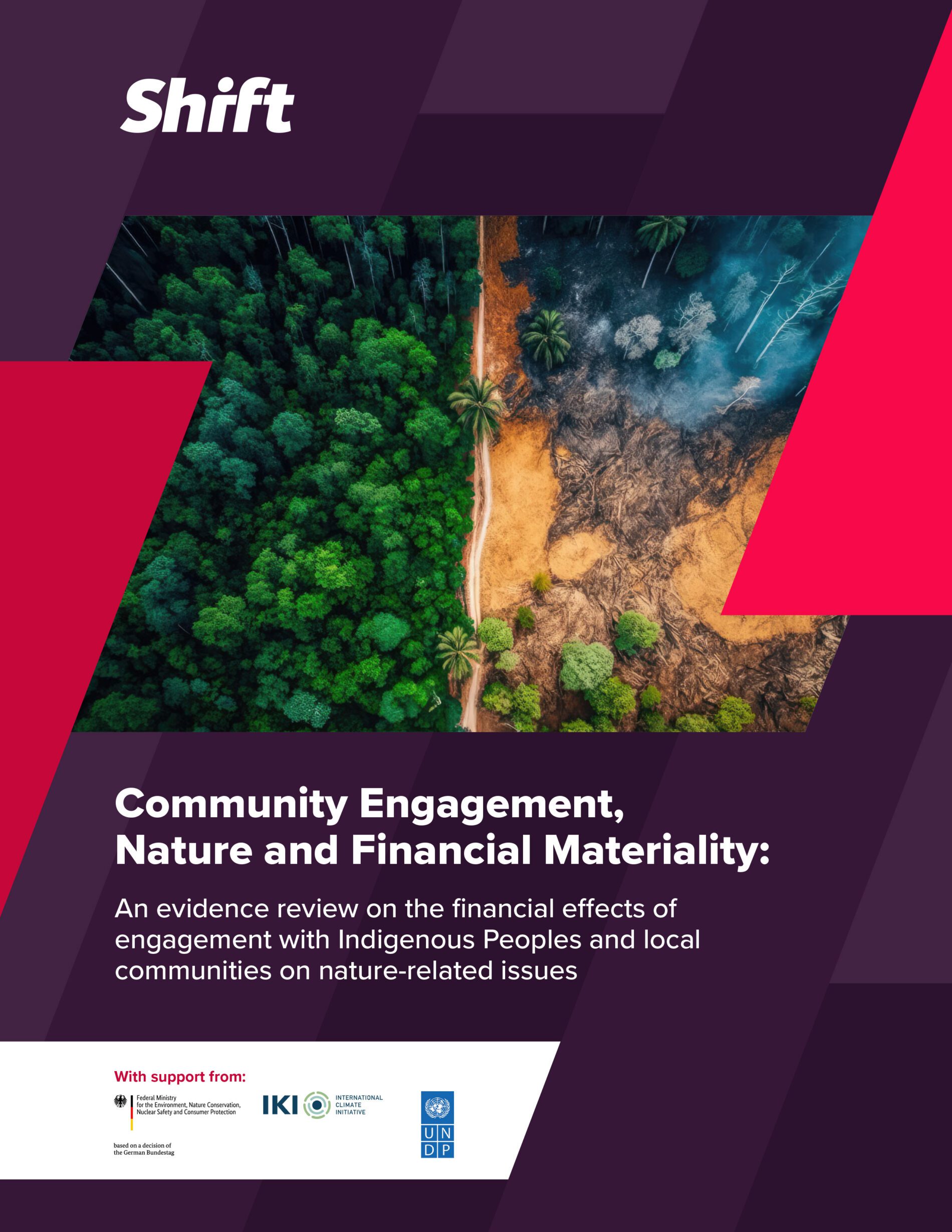
Companies are increasingly aware that their impacts and dependencies on nature are closely connected to impacts on people, particularly Indigenous Peoples and local communities. For instance, land used for agriculture, mining, and infrastructure development can mean that communities are displaced from their homes or livelihoods, or intensive water use by companies can reduce the quality and availability of water for local people.
Companies that meaningfully engage with Indigenous Peoples and local communities are better able to identify and respond to these potential negative impacts. Where the quality of community engagement is poor, and concerns are not effectively addressed, they can escalate into community opposition with a range of financial effects from:
- Operational disruption and delays
- Project redesign, suspension or abandonment
- Legal and regulatory intervention
- Reputational damage and loss of market access
- Increased costs of capital
- Diversion of management time and resources
These effects are often substantial and costs can run into the millions or billions of dollars. At the same time, they are frequently underestimated because they are dispersed across different parts of the business or simply not measured at all.
Shift has published a report which shows the quality of a company’s engagement with Indigenous Peoples and local communities in relation to nature-related impacts is financially material. It is published as the International Sustainability Standards Board (ISSB)’s considers whether companies should disclose information about their engagement with Indigenous Peoples and local communities in relation to nature-related risks and opportunities.
The report is based on a broad evidence base, including:
- A review of over 40 academic and technical studies
- A database of more than 1200 cases of company-community interaction related to nature-related impacts
- Over 800 cases where financial effects were identified
- Detailed case studies across sectors and geographies where the presence, absence, or quality of community engagement had a financial effect – either positive or negative – on the company
The evidence review found that the quality of community engagement helps determine whether nature-related dependencies or impacts become sources of trust and collaboration or of opposition and loss. Therefore information on the quality of company-community engagement is financially material, and decision-useful for investors and others.
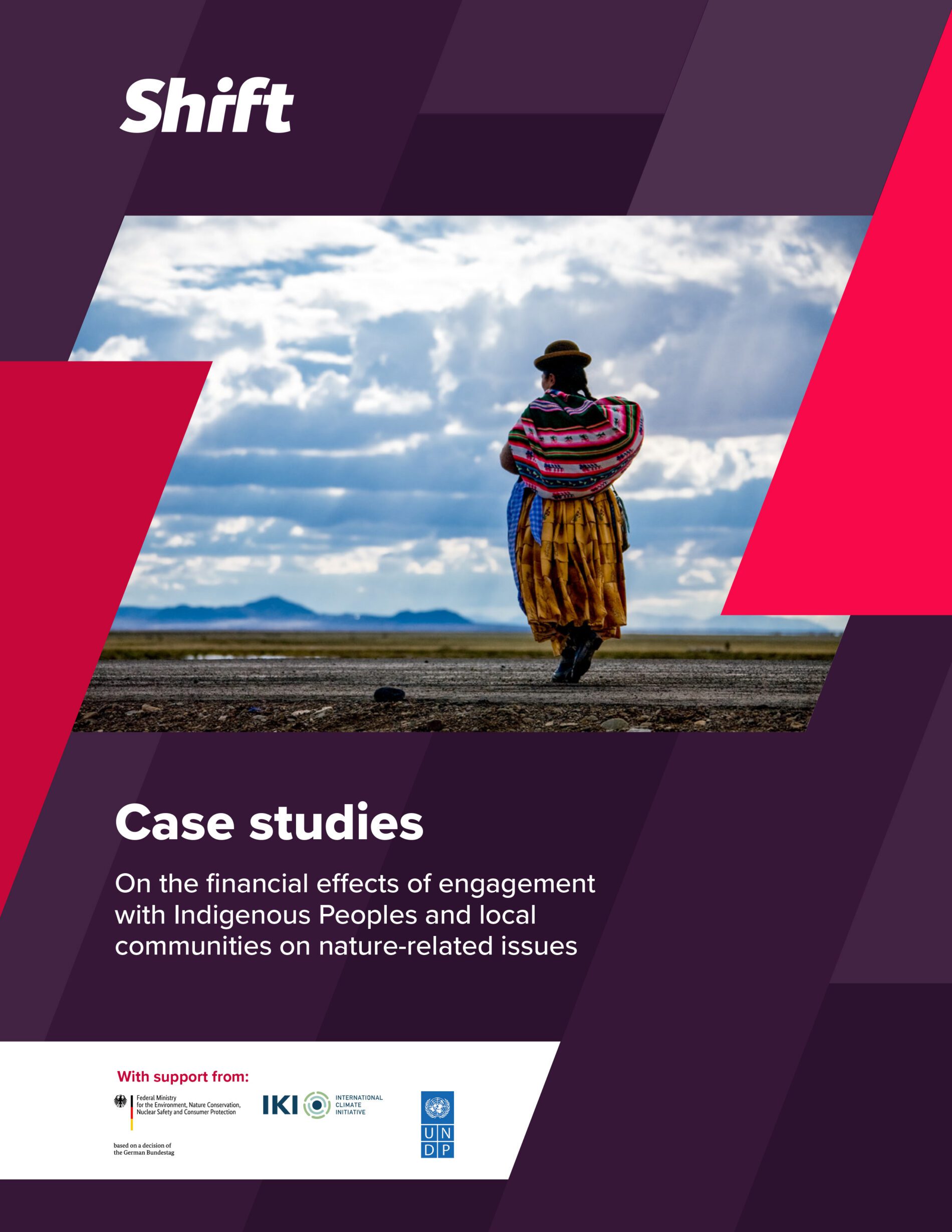
The report has been published alongside a compendium of 24 case studies that detail how companies across different sectors and geographies have approached community engagement and the financial effects they have experienced. Case studies are divided into three categories:
- Value creation: where high-quality engagement contributes directly to financial value, for instance where partnership with communities strengthens supply chain resilience , operational stability or enables market access.
- Value protection: where engagement protects project value, for instance through reducing permit delay, supporting investor confidence and access to capital.
- Value erosion: where failures of engagement have led to project cancellation, stranded assets, cost overruns and delays, loss of buyers and reputational damage.