Everyone working to ensure that business acts with respect for people is in the business of behavior change. We want companies, and individuals within them, to act in ways that enable respect for human rights. That being so, it’s intriguing that we have not drawn on the vast range of existing psychological insights about how to influence behavior. In our first-of-its-kind experiment in the business and human rights field, we drew on the field of behavioral science to test how consumer choices might help to reduce pressure on couriers delivering online purchases. We found how best to nudge consumer behavior, which provided some surprising discoveries, data and evidence about what works.
We simulated an online shopping experience and asked 2,500 people to select their delivery options. Consumers’ delivery choices can place pressure on couriers handling the items. Using the latest psychological research, we designed six behaviorally-informed nudges to test what was most effective in nudging consumers towards choosing longer delivery times. This experiment and its revelations demonstrate the need for evidence and experiments… Continue to the full Viewpoint.
Katryn Wright is a Shift Associate. As a researcher, Katryn focuses on leveraging behavioral science to address common business and human rights and behavior change initiatives.
Edward Gardiner works as the Behavioural Design Lead at Warwick Business School.
Dr. Umar Taj is a Research Fellow in Behavioural Science at Warwick Business School.
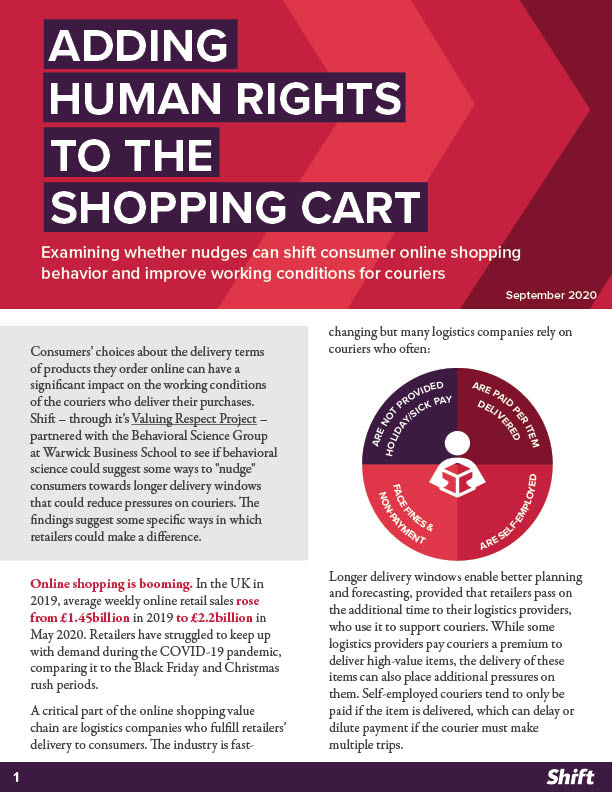
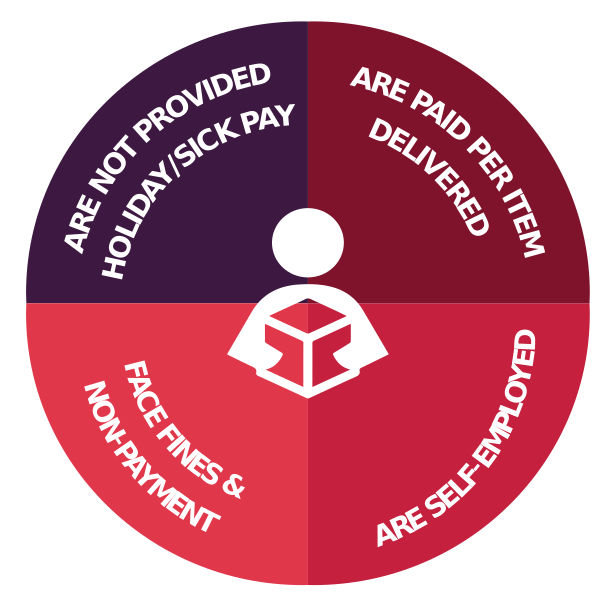
Online shopping is booming. In the UK in 2019, average weekly online retail sales rose from £1.45billion in 2019 to £2.2billion in May 2020. Retailers have struggled to keep up with demand during the COVID-19 pandemic, comparing it to the Black Friday and Christmas rush periods. A critical part of the online shopping value chain are logistics companies who fulfill retailers’ delivery to consumers. The industry is fast-changing but many logistics companies rely on couriers who are often self-employed, not provided holiday or sick pay and face fines or don’t get paid at all if an item is not delivered.
Longer delivery windows enable better planning and forecasting, provided that retailers pass on the additional time to their logistics providers, who use it to support couriers. While some logistics providers pay couriers a premium to deliver high-value items, the delivery of these items can also place additional pressures on them. Self-employed couriers tend to only be paid if the item is delivered, which can delay or dilute payment if the courier must make multiple trips.
Shift – through it’s Valuing Respect Project – partnered with the Behavioral Science Group at Warwick Business School to see if behavioral science could suggest some ways to nudge consumers towards longer delivery windows that could reduce pressures on couriers.
Over the last few years, Shift has engaged with UK retailers, logistics providers and other stakeholders on the full spectrum of human rights challenges in final mile delivery in the UK. One driver of these challenges is customer choice when buying online and this experiment focuses specifically on the ways that consumers can be nudged to make more responsible decisions in relation to online delivery. A future Shift publication will address the wider human rights issues in final mile delivery and the ways that retailers, logistics providers, trade unions and Government can play a role in building a rights-respecting logistics sector in the UK in the aftermath of the COVID-19 pandemic.
Online shopping is booming. In the UK in 2019, average weekly online retail sales rose from £1.45billion in 2019 to £2.2billion in May 2020. Retailers have struggled to keep up with demand during the COVID-19 pandemic, comparing it to the Black Friday and Christmas rush periods. A critical part of the online shopping value chain are logistics companies who fulfill retailers’ delivery to consumers. The industry is fast-changing but many logistics companies rely on couriers who are often self-employed, not provided holiday or sick pay and face fines or don’t get paid at all if an item is not delivered.
Reasons why couriers are particularly vulnerable to harm
Longer delivery windows enable better planning and forecasting, provided that retailers pass on the additional time to their logistics providers, who use it to support couriers. While some logistics providers pay couriers a premium to deliver high-value items, the delivery of these items can also place additional pressures on them. Self-employed couriers tend to only be paid if the item is delivered, which can delay or dilute payment if the courier must make multiple trips.
Shift – through it’s Valuing Respect Project – partnered with the Behavioral Science Group at Warwick Business School to see if behavioral science could suggest some ways to nudge consumers towards longer delivery windows that could reduce pressures on couriers.
Testing Ways to Nudge Consumer Behavior
With that in mind, we ran an online shopping simulation experiment with 2,500 regular online shoppers in the UK. Participants were asked to imagine they were buying a low-value (book), medium-value (coat) and high-value (laptop) product. They were then asked to select their delivery preference for each. Participants were randomized into different groups and shown a range of delivery options, including:
Same-Day Delivery
Nex-Day Delivery
2-3 Days
3-5 Days
£6.49
£4.99
£1.99
Free
The control group received no nudge and acted as a point of reference to compare the effectiveness of the groups receiving the nudges. Participants in this group saw a list of delivery options from fast to slow, with the fastest option as the default. This mirrored how many popular online retailers present delivery options. Each of the other groups saw the same list of delivery options as the control group combined with a different “nudge,” as we tested how best to encourage consumers to choose “3-5 day” delivery instead of “same day” delivery. The nudges
( A nudge is a change in choice architecture to influence behavior and decisions in ways that are easy and cost-free and that retain freedom of choice. )
were:
Decoy
Decoy
Consumers were given an additional 12-14 day option, in order to make 3-5 days appear more reasonable.
Default
Default
The slowest delivery option (3-5 days) was pre-selected.
Empathy
Empathy
The consumer was shown a picture of a courier with a message about how their choice would affect them.
Ordering
Ordering
The delivery options were reversed, from longest to soonest, keeping the “same day” option pre-selected.
Recommended
Recommended
A message was added saying “Standard 3-5 day delivery is recommended by the Good Courier Network, an alliance of delivery providers who commit to responsible working practices for their drivers”.
Social
Social
A message was added saying, “Over 80% of people who purchase this item choose the Standard ‘3-5 day’ delivery option”.
WATCH | A WEBINAR WITH THE BEHAVIORAL SCIENTISTS BEHIND OUR ONLINE SHOPPING EXPERIMENT
Key Findings
Our starting point was the control group, where 18% of consumers chose the free, “3-5 day” delivery option. Our experiment then tested how we could bring this number down by nudging consumers. The graph below shows how nudges were effective in lowering the 18% by up to 4 points:
How Nudges Decrease the Number of Consumers Who Opt for Faster Delivery Options
0.05.010.015.020.0
18.0
Control
17.0
Decoy
17.0
Default
15.0
Social
14.0
Ordering
14.0
Empathy
14.0
Recommend
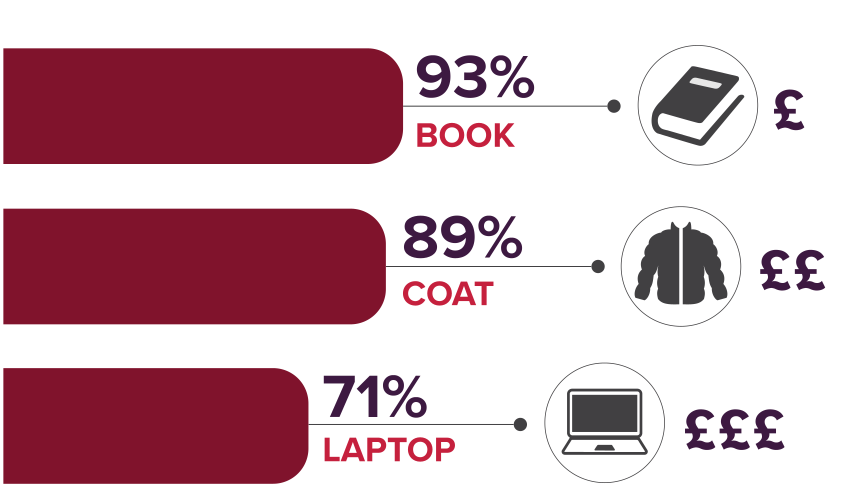
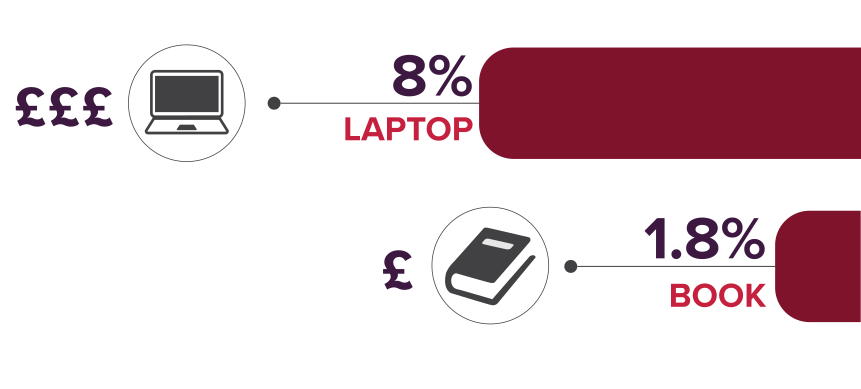
1. Consumers Want More Expensive Items to Arrive Sooner
As the item value increases, fewer consumers choose the free delivery option and more of them go for same-day delivery, even if they have to pay an additional £ 6.49.
Percentage of Consumers Who Chose the Free, “3-5 Day” Delivery Option
Percentage of consumers willing to pay £6.49 to receive their product the day they ordered it
2. The effectiveness of the nudges appears to be dependent on the value of the purchased product
Different nudges were more or less effective depending on what consumers were buying. For instance, when consumers were buying a laptop, they were more susceptible to change their behavior with the ’empathy’ nudge; however, when they were buying a coat, they were more responsive to ordering and recommendation. Interestingly, no nudge had a statistically significant effect on consumers buying the low-ticketed item, which was a book. This is not surprising as data confirmed that people are unwilling to pay for smaller value items to be delivered.
How nudges affected consumer behavior depending on the product they were buying
Increase in Percentage of Consumers Who Chose the Free, “3-5 Day” Option
Laptop
+6%
MOST EFFECTIVE NUDGE:
EMPATHY
+6%
Coat
+6%
MOST EFFECTIVE NUDGES:
Ordering and Recommendation
+6%
Book
+0%
MOST EFFECTIVE NUDGES:
No nudge made a statistically significant difference
+0%
It may be that buying an expensive, long-term investment item such as a laptop triggers more analytical thinking and makes the consumer more receptive to the reasoning in the message from the courier.
3. Several nudges that are effective in other contexts, didn’t seem to alter consumer behavior.
Some nudges did not have a significant effect on any of the three products. For instance, changing the delivery option that appeared by default did not significantly alter consumer choice. This was particularly surprising. Defaults are well-established, powerful nudges in behavioral science and in real-world settings. However, in this case, consumers chose to actively move away from the default to select other options.
4. Consumers who identify as women and are 35 or older were more likely to choose the free, “3-5 day” delivery option.
Across the items, consumers who identified as women were 64% more likely to actively select “standard delivery” when purchasing the book than those who identified as men. Age also played a role in consumer behavior. For instance, compared to consumers aged 18-34, those aged 35 and over were 57-80% more likely to choose “3-5 day” delivery.
5. Shoppers may claim to be ethical consumers. That doesn’t necessarily reflect in their behavior.
Almost half of the consumers (48.2%) said they agreed or strongly agreed with the statement: “I consider myself an ethical consumer.” This was particularly relevant in the case of consumers with higher income and younger consumers. However, their behavior showed no difference in actuality from consumers with lower income or older consumers.
So, what does this mean for a business?
Also Read
September 2020 |
Does our human rights work… work? The case for experimentation and testing
By simply changing the order of how delivery options are presented, retailers can significantly impact the decisions that consumers make.
Changing the order of delivery options led to a decrease in “same day” delivery and a significant increase in “3-5 day” delivery. For the coat, “same day” delivery dropped from 3% in the control group to 0.8%. And “3-5 day” delivery jumped from 85% in the control group to 91% in the order group.
Changing the order is an inexpensive, easy to implement solution that businesses should consider.
When the price tag is high, empathy is key.
High-ticket items — such as a laptop, are critical to nudge given their potential impact on couriers (a book may be posted through letterboxes, while a laptop will need a signature). Simply showing a humanizing picture of a courier with a message that encourages consumers to consider how their choice could place a burden on them appeared to trigger a more reflective, analytical thought process that leads consumers to choose a longer delivery window.
Men and young consumers are less likely to choose delivery options that are better for couriers. We need more research to know how to change that.
More research could help us better understand how certain nudges could be tailored to different demographic groups, in order to increase the number of consumers who choose the “3-5 day” delivery option.
Measuring behavior, and not just stated preferences or attitudes, is critical.
In this experiment, participants were fairly likely to describe themselves as ethical consumers, however, this did not correlate to their actual behavior in all cases. We need to look at what people actually do, not just what they say they will do. Focusing on real-world behavior and decisions is the only way of understanding whether our interventions work.
Over the last few years, Shift has engaged with UK retailers, logistics providers and other stakeholders on the full spectrum of human rights challenges in final mile delivery in the UK. One driver of these challenges is customer choice when buying online and this experiment focuses specifically on the ways that consumers can be nudged to make more responsible decisions in relation to online delivery. A future Shift publication will address the wider human rights issues in final mile delivery and the ways that retailers, logistics providers, trade unions and Government can play a role in building a rights-respecting logistics sector in the UK in the aftermath of the COVID-19 pandemic.

This note sets out Shift’s key take-aways from a series of single-stakeholder consultations we organized between July and August 2020, as part of the Valuing Respect Project. The consultations focused on opportunities and challenges for boards, company practitioners, business associations, banks, investors, governments and Civil Society Organizations to use the Valuing Respect Leadership and Governance Indicators of Rights-Respecting Culture and supporting resources in their work.

This note sets out Shift’s key take-aways from a series of single-stakeholder consultations we organized between July and and August 2020, as part of the Valuing Respect Project. The consultations focused on opportunities and challenges for boards, company practitioners, business associations, banks, investors, governments and Civil Society Organizations to use the Valuing Respect Business Model Red Flags Indicators and supporting resources in their work.
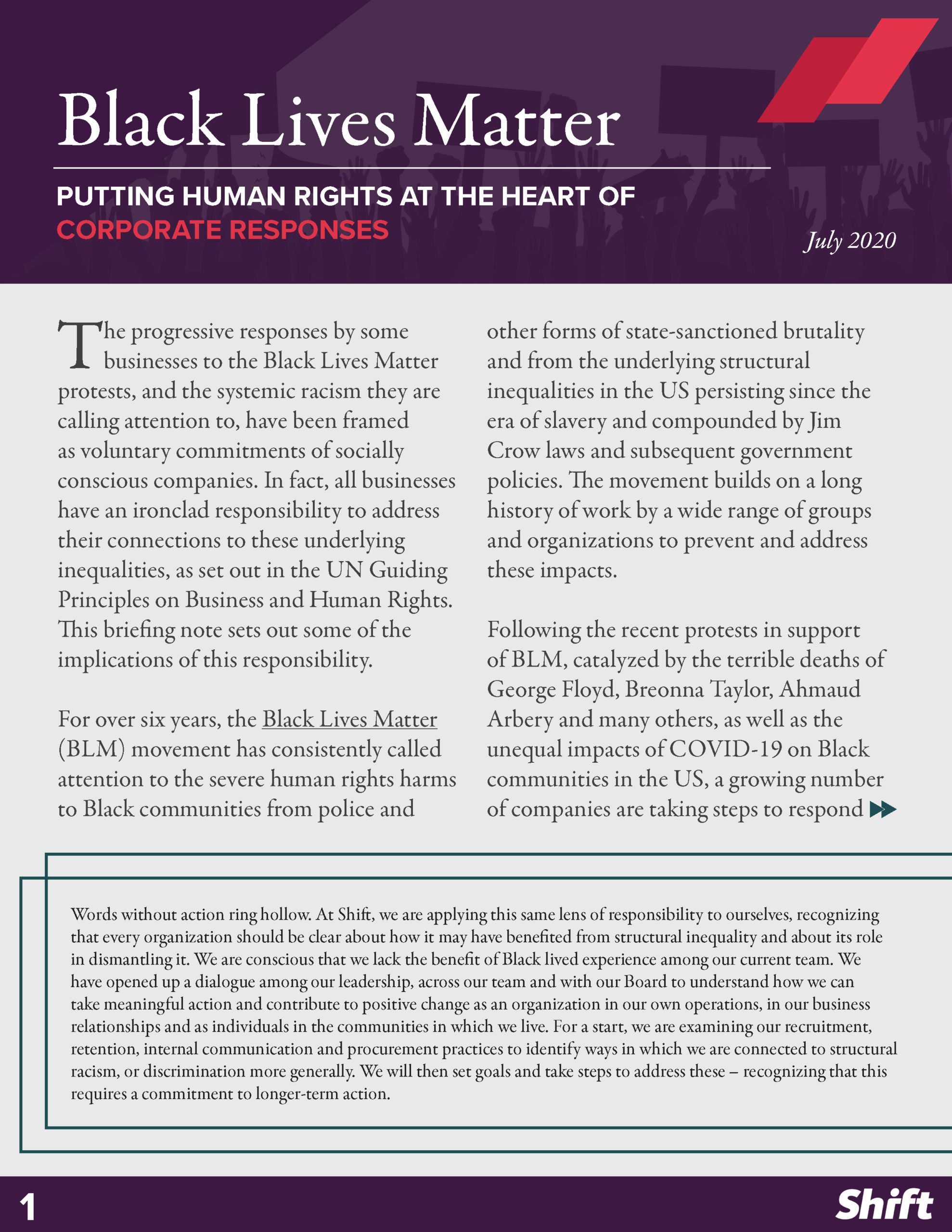
All businesses have a responsibility under the UN Guiding Principles on Business and Human Rights to take action to respect human rights in connection with their own operations and their extended value chain. This responsibility is a globally acknowledged and expected standard of conduct that is increasingly reflected in national laws, the expectations of investors, NGO and trade union advocacy, the standards set by influential industry bodies and the commitments of companies themselves. In the US, the Department of State actively promotes the UN Guiding Principles to US companies.
We see three main ways in which companies need to grapple with these human rights harms – both the immediate risks to protestors as well as the underlying inequalities that the BLM movement is raising.
These are:
Connections to short-term risks to protestors’ safety and freedom of speech
Connections between a company’s own operations and racial discrimination over the long-term
Company involvement in broader advocacy on BLM policy goals
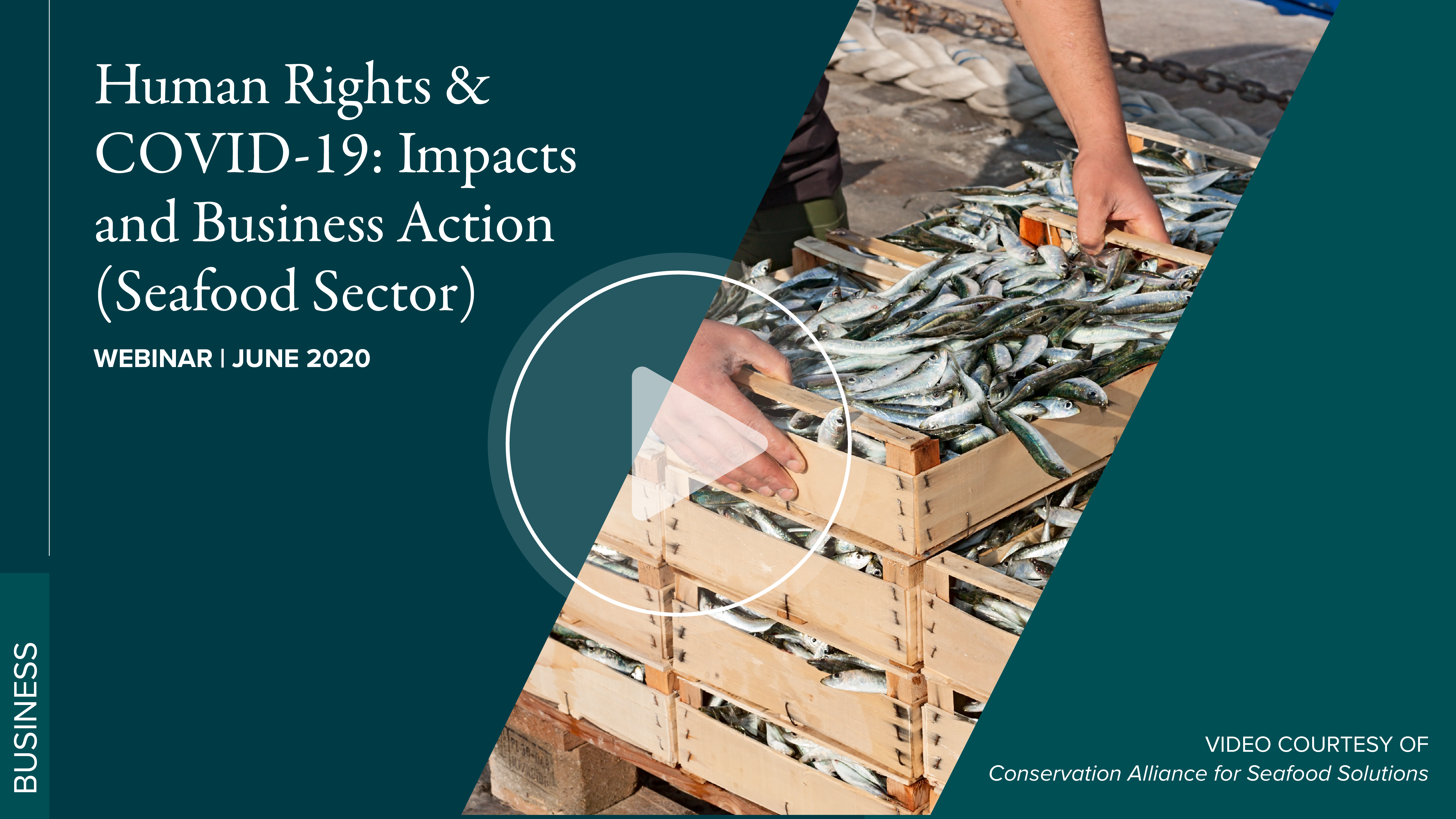
The experience of people on the frontlines of seafood production across geographies (focus on the Global South) with regard to human rights, health and safety, and equity before and during COVID-19
Current efforts and interventions to address these issues and where new approaches are needed, and if the impacts of COVID-19 requires new/different interventions, and
The role NGOs and seafood companies can play to support efforts and address the needs of workers and communities.
Panelists included Neill Wilkins, Head of Migrant Workers Programme (IHRB); Ines Lopez, Catalyst of Change (COBI); and Francis West, Shift’s Business Engagement Director.
This panel was part of the UN Virtual Forum on Responsible Business and Human Rights 2020. Panelists included Shubha Sekhar, Livio Sarandrea, Cristina Tébar Less, Tara Dermott and Payal Jain. The discussion was facilitated by Shift’s Vice President, Rachel Davis.
25. As part of their duty to protect against business-related human rights abuse, States must take appropriate steps to ensure, through judicial, administrative, legislative or other appropriate means, that when such abuses occur within their territory and/or jurisdiction those affected have access to effective remedy.
___
Commentary
Unless States take appropriate steps to investigate, punish and redress business-related human rights abuses when they do occur, the State duty to protect can be rendered weak or even meaningless.
Access to effective remedy has both procedural and substantive aspects. The remedies provided by the grievance mechanisms discussed in this section may take a range of substantive forms the aim of which, generally speaking, will be to counteract or make good any human rights harms that have occurred. Remedy may include apologies, restitution, rehabilitation, financial or non-financial compensation and punitive sanctions (whether criminal or administrative, such as fines), as well as the prevention of harm through, for example, injunctions or guarantees of non-repetition.
Procedures for the provision of remedy should be impartial, protected from corruption and free from political or other attempts to influence the outcome.
For the purpose of these Guiding Principles, a grievance is understood to be a perceived injustice evoking an individual’s or a group’s sense of entitlement, which may be based on law, contract, explicit or implicit promises, customary practice, or general notions of fairness of aggrieved communities. The term grievance mechanism is used to indicate any routinized, State-based or non-State-based, judicial or non-judicial process through which grievances concerning business-related human rights abuse can be raised and remedy can be sought.
State-based grievance mechanisms may be administered by a branch or agency of the State, or by an independent body on a statutory or constitutional basis. They may be judicial or non-judicial. In some mechanisms, those affected are directly involved in seeking remedy; in others, an intermediary seeks remedy on their behalf. Examples include the courts (for both criminal and civil actions), labour tribunals, national human rights institutions, National Contact Points under the Guidelines for Multinational Enterprises of the Organisation for Economic Co-operation and Development, many ombudsperson offices, and Government-run complaints offices.
Ensuring access to remedy for business-related human rights abuses requires also that States facilitate public awareness and understanding of these mechanisms, how they can be accessed, and any support (financial or expert) for doing so.
State-based judicial and non-judicial grievance mechanisms should form the foundation of a wider system of remedy. Within such a system, operational-level grievance mechanisms can provide early-stage recourse and resolution. State-based and operational-level mechanisms, in turn, can be supplemented or enhanced by the remedial functions of collaborative initiatives as well as those of international and regional human rights mechanisms. Further guidance with regard to these mechanisms is provided in Guiding Principles 26 to 31.
Operational Principles
STATE-BASED JUDICIAL MECHANISMS
26. States should take appropriate steps to ensure the effectiveness of domestic judicial mechanisms when addressing business-related human rights abuses, including considering ways to reduce legal, practical and other relevant barriers that could lead to a denial of access to remedy.
___
Commentary
Effective judicial mechanisms are at the core of ensuring access to remedy. Their ability to address business-related human rights abuses depends on their impartiality, integrity and ability to accord due process. States should ensure that they do not erect barriers to prevent legitimate cases from being brought before the courts in situations where judicial recourse is an essential part of accessing remedy or alternative sources of effective remedy are unavailable.
They should also ensure that the provision of justice is not prevented by corruption of the judicial process, that courts are independent of economic or political pressures from other State agents and from business actors, and that the legitimate and peaceful activities of human rights defenders are not obstructed.
Legal barriers that can prevent legitimate cases involving business-related human rights abuse from being addressed can arise where, for example:
The way in which legal responsibility is attributed among members of a corporate group under domestic criminal and civil laws facilitates the avoidance of appropriate accountability;
Where claimants face a denial of justice in a host State and cannot access home State courts regardless of the merits of the claim;
Where certain groups, such as indigenous peoples and migrants, are excluded from the same level of legal protection of their human rights that applies to the wider population.
Practical and procedural barriers to accessing judicial remedy can arise where, for example:
The costs of bringing claims go beyond being an appropriate deterrent to unmeritorious cases and/or cannot be reduced to reasonable levels through Government support, “market-based” mechanisms (such as litigation insurance and legal fee structures), or other means;
Claimants experience difficulty in securing legal representation, due to a lack of resources or of other incentives for lawyers to advise claimants in this area;
There are inadequate options for aggregating claims or enabling representative proceedings (such as class actions and other collective action procedures), and this prevents effective remedy for individual claimants;
State prosecutors lack adequate resources, expertise and support to meet the State’s own obligations to investigate individual and business involvement in human rights-related crimes.
Many of these barriers are the result of, or compounded by, the frequent imbalances between the parties to business related human rights claims, such as in their financial resources, access to information and expertise. Moreover, whether through active discrimination or as the unintended consequences of the way judicial mechanisms are designed and operate, individuals from groups or populations at heightened risk of vulnerability or marginalization often face additional cultural, social, physical and financial impediments to accessing, using and benefiting from these mechanisms.
Particular attention should be given to the rights and specific needs of such groups or populations at each stage of the remedial process: access, procedures and outcome.
STATE-BASED NON-JUDICIAL GRIEVANCE MECHANISMS
27. States should provide effective and appropriate non-judicial grievance mechanisms, alongside judicial mechanisms, as part of a comprehensive State-based system for the remedy of business-related human rights abuse.
___
Commentary
Administrative, legislative and other non-judicial mechanisms play an essential role in complementing and supplementing judicial mechanisms. Even where judicial systems are effective and well-resourced, they cannot carry the burden of addressing all alleged abuses; judicial remedy is not always required; nor is it always the favoured approach for all claimants.
Gaps in the provision of remedy for business-related human rights abuses could be filled, where appropriate, by expanding the mandates of existing non-judicial mechanisms and/or by adding new mechanisms. These may be mediation-based, adjudicative or follow other culturally appropriate and rights-compatible processes – or involve some combination of these –depending on the issues concerned, any public interest involved, and the potential needs of the parties. To ensure their effectiveness, they should meet the criteria set out in Principle 31.
National human rights institutions have a particularly important role to play in this regard.
As with judicial mechanisms, States should consider ways to address any imbalances between the parties to business-related human rights claimsand any additional barriers to access faced by individuals from groups or populations at heightened risk of vulnerability or marginalization.
Non-state-based grievance mechanisms
28. States should consider ways to facilitate access to effective non State based grievance mechanisms dealing with business-related human rights harms.
___
Commentary
One category of non-State-based grievance mechanisms encompasses those administered by a business enterprise alone or with stakeholders, by an industry association or a multi-stakeholder group. They are non-judicial, but may use adjudicative, dialogue-based or other culturally appropriate and rights-compatible processes. These mechanisms may offer particular benefits such as speed of access and remediation, reduced costs and/or transnational reach.
Another category comprises regional and international human rights bodies. These have dealt most often with alleged violations by States of their obligations to respect human rights. However, some have also dealt with the failure of a State to meet its duty to protect against human rights abuse by business enterprises.
States can play a helpful role in raising awareness of, or otherwise facilitating access to, such options, alongside the mechanisms provided by States themselves.
29. To make it possible for grievances to be addressed early and remediated directly, business enterprises should establish or participate in effective operational-level grievance mechanisms for individuals and communities who may be adversely impacted.
___
Commentary
Operational-level grievance mechanisms are accessible directly to individuals and communities who may be adversely impacted by a business enterprise. They are typically administered by enterprises, alone or in collaboration with others, including relevant stakeholders. They may also be provided through recourse to a mutually acceptable external expert or body. They do not require that those bringing a complaint first access other means of recourse. They can engage the business enterprise directly in assessing the issues and seeking remediation of any harm.
Operational-level grievance mechanisms perform two key functions regarding the responsibility of business enterprises to respect human rights.
First, they support the identification of adverse human rights impacts as a part of an enterprise’s ongoing human rights due diligence. They do so by providing a channel for those directly impacted by the enterprise’s operations to raise concerns when they believe they are being or will be adversely impacted. By analysing trends and patterns in complaints, business enterprises can also identify systemic problems and adapt their practices accordingly;
Second, these mechanisms make it possible for grievances, once identified, to be addressed and for adverse impacts to be remediated early and directly by the business enterprise, thereby preventing harms from compounding and grievances from escalating.
Such mechanisms need not require that a complaint or grievance amount to an alleged human rights abuse before it can be raised, but specifically aim to identify any legitimate concerns of those who may be adversely impacted. If those concerns are not identified and addressed, they may over time escalate into more major disputes and human rights abuses.
Operational-level grievance mechanisms should reflect certain criteria to ensure their effectiveness in practice (Principle 31). These criteria can be met through many different forms of grievance mechanism according to the demands of scale, resource, sector, culture and other parameters.
Operational-level grievance mechanisms can be important complements to wider stakeholder engagement and collective bargaining processes, but cannot substitute for either. They should not be used to undermine the role of legitimate trade unions in addressing labour-related disputes, nor to preclude access to judicial or other non-judicial grievance mechanisms.
30. Industry, multi-stakeholder and other collaborative initiatives that are based on respect for human rights-related standards should ensure that effective grievance mechanisms are available.
___
Commentary
Also Read
May 2019 |
Rethinking Remedy and Responsibility in the Financial Sector
Human rights-related standards are increasingly reflected in commitments undertaken by industry bodies, multi-stakeholder and other collaborative initiatives, through codes of conduct, performance standards, global framework agreements between trade unions and transnational corporations, and similar undertakings.
Such collaborative initiatives should ensure the availability of effective mechanisms through which affected parties or their legitimate representatives can raise concerns when they believe the commitments in question have not been met. The legitimacy of such initiatives may be put at risk if they do not provide for such mechanisms. The mechanisms could be at the level of individual members, of the collaborative initiative, or both.
These mechanisms should provide for accountability and help enable the remediation of adverse human rights impacts.
EFFECTIVENESS CRITERIA FOR NON-JUDICIAL GRIEVANCE MECHANISMS
31. In order to ensure their effectiveness, non-judicial grievance mechanisms, both State-based and non-State-based, should be:
Legitimate:
Enabling trust from the stakeholder groups for whose use they are intended, and being accountable for the fair conduct of grievance processes.
Accessible:
Being known to all stakeholder groups for whose use they are intended, and providing adequate assistance for those who may face particular barriers to access.
Predictable:
Providing a clear and known procedure with an indicative time frame for each stage, and clarity on the types of process and outcome available and means of monitoring implementation.
Equitable:
Seeking to ensure that aggrieved parties have reasonable access to sources of information, advice and expertise necessary to engage in a grievance process on fair, informed and respectful terms.
Transparent:
Keeping parties to a grievance informed about its progress, and providing sufficient information about the mechanism’s performance to build confidence in its effectiveness and meet any public interest at stake.
Rights-compatible:
Ensuring that outcomes and remedies accord with internationally recognized human rights.
A source of continuous learning:
Drawing on relevant measures to identify lessons for improving the mechanism and preventing future grievances and harms.
Operational-level mechanisms should also be:
Based on engagement and dialogue:
Consulting the stakeholder groups for whose use they are intended on their design and performance, and focusing on dialogue as the means to address and resolve grievances.
___
Commentary
A grievance mechanism can only serve its purpose if the people it is intended to serve know about it, trust it and are able to use it. These criteria provide a benchmark for designing, revising or assessing a non-judicial grievance mechanism to help ensure that it is effective in practice. Poorly designed or implemented grievance mechanisms can risk compounding a sense of grievance amongst affected stakeholders by heightening their sense of disempowerment and disrespect by the process.
The first seven criteria apply to any State-based or non-State-based, adjudicative or dialogue-based mechanism. The eighth criterion is specific to operational-level mechanisms that business enterprises help administer.
The term “grievance mechanism” is used here as a term of art. The term itself may not always be appropriate or helpful when applied to a specific mechanism, but the criteria for effectiveness remain the same. Commentary on the specific criteria follows:
Stakeholders for whose use a mechanism is intended must trust it if they are to choose to use it. Accountability for ensuring that the parties to a grievance process cannot interfere with its fair conduct is typically one important factor in building stakeholder trust;
Barriers to access may include a lack of awareness of the mechanism, language, literacy, costs, physical location and fears of reprisal;
In order for a mechanism to be trusted and used, it should provide public information about the procedure it offers. Time frames for each stage should be respected wherever possible, while allowing that flexibility may sometimes be needed;
In grievances or disputes between business enterprises and affected stakeholders, the latter frequently have much less access to information and expert resources, and often lack the financial resources to pay for them. Where this imbalance is not redressed, it can reduce both the achievement and perception of a fair process and make it harder to arrive at durable solutions;
Communicating regularly with parties about the progress of individual grievances can be essential to retaining confidence in the process. Providing transparency about the mechanism’s performance to wider stakeholders, through statistics, case studies or more detailed information about the handling of certain cases, can be important to demonstrate its legitimacy and retain broad trust. At the same time, confidentiality of the dialogue between parties and of individuals’ identities should be provided where necessary;
Grievances are frequently not framed in terms of human rights and many do not initially raise human rights concerns. Regardless, where outcomes have implications for human rights, care should be taken to ensure that they are in line with internationally recognized human rights;
Regular analysis of the frequency, patterns and causes of grievances can enable the institution administering the mechanism to identify and influence policies, procedures or practices that should be altered to prevent future harm;
For an operational-level grievance mechanism, engaging with affected stakeholder groups about its design and performance can help to ensure that it meets their needs, that they will use it in practice, and that there is a shared interest in ensuring its success.
Since a business enterprise cannot, with legitimacy, both be the subject of complaints and unilaterally determine their outcome, these mechanisms should focus on reaching agreed solutions through dialogue. Where adjudication is needed, this should be provided by a legitimate, independent third-party mechanism.
PILLAR 2: CORPORATE RESPONSIBILITY TO RESPECT HUMAN RIGHTS
Foundational Principles
11. Business enterprises should respect human rights. This means that they should avoid infringing on the human rights of others and should address adverse human rights impacts with which they are involved.
___
Commentary
The responsibility to respect human rights is a global standard of expected conduct for all business enterprises wherever they operate. It exists independently of States’ abilities and/or willingness to fulfil their own human rights obligations, and does not diminish those obligations. And it exists over and above compliance with national laws and regulations protecting human rights.
Addressing adverse human rights impacts requires taking adequate measures for their prevention, mitigation and, where appropriate, remediation. Business enterprises may undertake other commitments or activities to support and promote human rights, which may contribute to the enjoyment of rights. But this does not offset a failure to respect human rights throughout their operations.
Business enterprises should not undermine States’ abilities to meet their own human rights obligations, including by actions that might weaken the integrity of judicial processes.
12. The responsibility of business enterprises to respect human rights refers to internationally recognized human rights – understood, at a minimum, as those expressed in the International Bill of Human Rights and the principles concerning fundamental rights set out in the International Labour Organization’s Declaration on Fundamental Principles and Rights at Work.
___
Commentary
Because business enterprises can have an impact on virtually the entire spectrum of internationally recognized human rights, their responsibility to respect applies to all such rights. In practice, some human rights may be at greater risk than others in particular industries or contexts, and therefore will be the focus of heightened attention. However, situations may change, so all human rights should be the subject of periodic review.
An authoritative list of the core internationally recognized human rights is contained in the International Bill of Human Rights (consisting of the Universal Declaration of Human Rights and the main instruments through which it has been codified: the International Covenant on Civil and Political Rights and the International Covenant on Economic, Social and Cultural Rights), coupled with the principles concerning fundamental rights in the eight ILO core conventions as set out in the Declaration on Fundamental Principles and Rights at Work. These are the benchmarks against which other social actors assess the human rights impacts of business enterprises. The responsibility of business enterprises to respect human rights is distinct from issues of legal liability and enforcement, which remain defined largely by national law provisions in relevant jurisdictions.
Depending on circumstances, business enterprises may need to consider additional standards. For instance, enterprises should respect the human rights of individuals belonging to specific groups or populations that require particular attention, where they may have adverse human rights impacts on them. In this connection, United Nations instruments have elaborated further on the rights of indigenous peoples; women; national or ethnic, religious and linguistic minorities; children; persons with disabilities; and migrant workers and their families. Moreover, in situations of armed conflict enterprises should respect the standards of international humanitarian law.
13. The responsibility to respect human rights requires that business enterprises:
(a) Avoid causing or contributing to adverse human rights impacts through their own activities, and address such impacts when they occur;
(b) Seek to prevent or mitigate adverse human rights impacts that are directly linked to their operations, products or services by their business relationships, even if they have not contributed to those impacts.
___
Commentary
Business enterprises may be involved with adverse human rights impacts either through their own activities or as a result of their business relationships with other parties. Guiding Principle 19 elaborates further on the implications for how business enterprises should address these situations. For the purpose of these Guiding Principles a business enterprise’s “activities” are understood to include both actions and omissions; and its “business relationships” are understood to include relationships with business partners, entities in its value chain, and any other non-State or State entity directly linked to its business operations, products or services.
14. The responsibility of business enterprises to respect human rights applies to all enterprises regardless of their size, sector, operational context, ownership and structure. Nevertheless, the scale and complexity of the means through which enterprises meet that responsibility may vary according to these factors and with the severity of the enterprise’s adverse human rights impacts.
___
Commentary
Also Read
September 2019 |
SMEs and the Corporate Responsibility to Respect Human Rights
The means through which a business enterprise meets its responsibility to respect human rights will be proportional to, among other factors, its size. Small and medium-sized enterprises may have less capacity as well as more informal processes and management structures than larger companies, so their respective policies and processes will take on different forms. But some small and medium-sized enterprises can have severe human rights impacts, which will require corresponding measures regardless of their size. Severity of impacts will be judged by their scale, scope and irremediable character.
The means through which a business enterprise meets its responsibility to respect human rights may also vary depending on whether, and the extent to which, it conducts business through a corporate group or individually.
However, the responsibility to respect human rights applies fully and equally to all business enterprises.
15. In order to meet their responsibility to respect human rights, business enterprises should have in place policies and processes appropriate to their size and circumstances, including:
(a) A policy commitment to meet their responsibility to respect human rights;
(b) A human rights due diligence process to identify, prevent, mitigate and account for how they address their impacts on human rights;
(c) Processes to enable the remediation of any adverse human rights impacts they cause or to which they contribute.
___
Commentary
Business enterprises need to know and show that they respect human rights. They cannot do so unless they have certain policies and processes in place. Principles 16 to 24 elaborate further on these.
Operational Principles
POLICY COMMITMENT
16. As the basis for embedding their responsibility to respect human rights, business enterprises should express their commitment to meet this responsibility through a statement of policy that:
(a) Is approved at the most senior level of the business enterprise;
(b) Is informed by relevant internal and/or external expertise;
(c) Stipulates the enterprise’s human rights expectations of personnel, business partners and other parties directly linked to its operations, products or services;
(d) Is publicly available and communicated internally and externally to all personnel, business partners and other relevant parties;
(e) Is reflected in operational policies and procedures necessary to embed it throughout the business enterprise.
___
Commentary
The term “statement” is used generically, to describe whatever means an enterprise employs to set out publicly its responsibilities, commitments, and expectations.
The level of expertise required to ensure that the policy statement is adequately informed will vary according to the complexity of the business enterprise’s operations. Expertise can be drawn from various sources, ranging from credible online or written resources to consultation with recognized experts.
The statement of commitment should be publicly available. It should be communicated actively to entities with which the enterprise has contractual relationships; others directly linked to its operations, which may include State security forces; investors; and, in the case of operations with significant human rights risks, to the potentially affected stakeholders.
Internal communication of the statement and of related policies and procedures should make clear what the lines and systems of accountability will be, and should be supported by any necessary training for personnel in relevant business functions.
Just as States should work towards policy coherence, so business enterprises need to strive for coherence between their responsibility to respect human rights and policies and procedures that govern their wider business activities and relationships. This should include, for example, policies and procedures that set financial and other performance incentives for personnel; procurement practices; and lobbying activities where human rights are at stake.
Through these and any other appropriate means, the policy statement should be embedded from the top of the business enterprise through all its functions, which otherwise may act without awareness or regard for human rights.
Human Rights Due Diligence
17. In order to identify, prevent, mitigate and account for how they address their adverse human rights impacts, business enterprises should carry out human rights due diligence. The process should include assessing actual and potential human rights impacts, integrating and acting upon the findings, tracking responses, and communicating how impacts are addressed. Human rights due diligence:
(a) Should cover adverse human rights impacts that the business enterprise may cause or contribute to through its own activities, or which may be directly linked to its operations, products or services by its business relationships;
(b) Will vary in complexity with the size of the business enterprise, the risk of severe human rights impacts, and the nature and context of its operations;
(c) Should be ongoing, recognizing that the human rights risks may change over time as the business enterprise’s operations and operating context evolve.
___
Commentary
This Principle defines the parameters for human rights due diligence, while Principles 18 through 21 elaborate its essential components. Human rights risks are understood to be the business enterprise’s potential adverse human rights impacts. Potential impacts should be addressed through prevention or mitigation, while actual impacts – those that have already occurred – should be a subject for remediation (Principle 22).
Human rights due diligence can be included within broader enterprise risk management systems, provided that it goes beyond simply identifying and managing material risks to the company itself, to include risks to rights-holders. Human rights due diligence should be initiated as early as possible in the development of a new activity or relationship, given that human rights risks can be increased or mitigated already at the stage of structuring contracts or other agreements, and may be inherited through mergers or acquisitions.
Where business enterprises have large numbers of entities in their value chains it may be unreasonably difficult to conduct due diligence for adverse human rights impacts across them all. If so, business enterprises should identify general areas where the risk of adverse human rights impacts is most significant, whether due to certain suppliers’ or clients’ operating context, the particular operations, products or services involved, or other relevant considerations, and prioritize these for human rights due diligence. Questions of complicity may arise when a business enterprise contributes to, or is seen as contributing to, adverse human rights impacts caused by other parties. Complicity has both non-legal and legal meanings. As a nonlegal matter, business enterprises may be perceived as being “complicit” in the acts of another party where, for example, they are seen to benefit from an abuse committed by that party.
As a legal matter, most national jurisdictions prohibit complicity in the commission of a crime, and a number allow for criminal liability of business enterprises in such cases. Typically, civil actions can also be based on an enterprise’s alleged contribution to a harm, although these may not be framed in human rights terms. The weight of international criminal law jurisprudence indicates that the relevant standard for aiding and abetting is knowingly providing practical assistance or encouragement that has a substantial effect on the commission of a crime.
Conducting appropriate human rights due diligence should help business enterprises address the risk of legal claims against them by showing that they took every reasonable step to avoid involvement with an alleged human rights abuse. However, business enterprises conducting such due diligence should not assume that, by itself, this will automatically and fully absolve them from liability for causing or contributing to human rights abuses.
18. In order to gauge human rights risks, business enterprises should identify and assess any actual or potential adverse human rights impacts with which they may be involved either through their own activities or as a result of their business relationships. This process should:
(a) Draw on internal and/or independent external human rights expertise;
(b) Involve meaningful consultation with potentially affected groups and other relevant stakeholders, as appropriate to the size of the business enterprise and the nature and context of the operation.
___
Commentary
The initial step in conducting human rights due diligence is to identify and assess the nature of the actual and potential adverse human rights impacts with which a business enterprise may be involved. The purpose is to understand the specific impacts on specific people, given a specific context of operations. Typically this includes assessing the human rights context prior to a proposed business activity, where possible; identifying who may be affected; cataloguing the relevant human rights standards and issues; and projecting how the proposed activity and associated business relationships could have adverse human rights impacts on those identified.
In this process, business enterprises should pay special attention to any particular human rights impacts on individuals from groups or populations that may be at heightened risk of vulnerability or marginalization, and bear in mind the different risks that may be faced by women and men. While processes for assessing human rights impacts can be incorporated within other processes such as risk assessments or environmental and social impact assessments, they should include all internationally recognized human rights as a reference point, since enterprises may potentially impact virtually any of these rights.
Because human rights situations are dynamic, assessments of human rights impacts should be undertaken at regular intervals: prior to a new activity or relationship; prior to major decisions or changes in the operation (e.g. market entry, product launch, policy change, or wider changes to the business); in response to or anticipation of changes in the operating environment (e.g. rising social tensions); and periodically throughout the life of an activity or relationship.
To enable business enterprises to assess their human rights impacts accurately, they should seek to understand the concerns of potentially affected stakeholders by consulting them directly in a manner that takes into account language and other potential barriers to effective engagement. In situations where such consultation is not possible, business enterprises should consider reasonable alternatives such as consulting credible, independent expert resources, including human rights defenders and others from civil society. The assessment of human rights impacts informs subsequent steps in the human rights due diligence process.
19. In order to prevent and mitigate adverse human rights impacts, business enterprises should integrate the findings from their impact assessments across relevant internal functions and processes, and take appropriate action.
a) Effective integration requires that:
i) Responsibility for addressing such impacts is assigned to the appropriate level and function within the business enterprise;
ii) Internal decision-making, budget allocations and oversight processes enable effective responses to such impacts.
b) Appropriate action will vary according to:
i) Whether the business enterprise causes or contributes to an adverse impact, or whether it is involved solely because the impact is directly linked to its operations, products or services by a business relationship;
ii) The extent of its leverage in addressing the adverse impact.
___
Commentary
The horizontal integration across the business enterprise of specific findings from assessing human rights impacts can only be effective if its human rights policy commitment has been embedded into all relevant business functions. This is required to ensure that the assessment findings are properly understood, given due weight, and acted upon.
In assessing human rights impacts, business enterprises will have looked for both actual and potential adverse impacts. Potential impacts should be prevented or mitigated through the horizontal integration of findings across the business enterprise, while actual impacts—those that have already occurred – should be a subject for remediation (Principle 22).
Where a business enterprise causes or may cause an adverse human rights impact, it should take the necessary steps to cease or prevent the impact.
Where a business enterprise contributes or may contribute to an adverse human rights impact, it should take the necessary steps to cease or prevent its contribution and use its leverage to mitigate any remaining impact to the greatest extent possible. Leverage is considered to exist where the enterprise has the ability to effect change in the wrongful practices of an entity that causes a harm.
Where a business enterprise has not contributed to an adverse human rights impact, but that impact is nevertheless directly linked to its operations, products or services by its business relationship with another entity, the situation is more complex. Among the factors that will enter into the determination of the appropriate action in such situations are the enterprise’s leverage over the entity concerned, how crucial the relationship is to the enterprise, the severity of the abuse, and whether terminating the relationship with the entity itself would have adverse human rights consequences.
The more complex the situation and its implications for human rights, the stronger is the case for the enterprise to draw on independent expert advice in deciding how to respond.
If the business enterprise has leverage to prevent or mitigate the adverse impact, it should exercise it. And if it lacks leverage there may be ways for the enterprise to increase it. Leverage may be increased by, for example, offering capacity-building or other incentives to the related entity, or collaborating with other actors.
There are situations in which the enterprise lacks the leverage to prevent or mitigate adverse impacts and is unable to increase its leverage. Here, the enterprise should consider ending the relationship, taking into account credible assessments of potential adverse human rights impacts of doing so.
Where the relationship is “crucial” to the enterprise, ending it raises further challenges. A relationship could be deemed as crucial if it provides a product or service that is essential to the enterprise’s business, and for which no reasonable alternative source exists. Here the severity of the adverse human rights impact must also be considered: the more severe the abuse, the more quickly the enterprise will need to see change before it takes a decision on whether it should end the relationship. In any case, for as long as the abuse continues and the enterprise remains in the relationship, it should be able to demonstrate its own ongoing efforts to mitigate the impact and be prepared to accept any consequences – reputational, financial or legal – of the continuing connection.
20. In order to verify whether adverse human rights impacts are being addressed, business enterprises should track the effectiveness of their response. Tracking should:
(a) Be based on appropriate qualitative and quantitative indicators;
(b) Draw on feedback from both internal and external sources, including affected stakeholders.
___
Commentary
Tracking is necessary in order for a business enterprise to know if its human rights policies are being implemented optimally, whether it has responded effectively to the identified human rights impacts, and to drive continuous improvement.
Business enterprises should make particular efforts to track the effectiveness of their responses to impacts on individuals from groups or populations that may be at heightened risk of vulnerability or marginalization.
Tracking should be integrated into relevant internal reporting processes. Business enterprises might employ tools they already use in relation to other issues. This could include performance contracts and reviews as well as surveys and audits, using gender-disaggregated data where relevant. Operational-level grievance mechanisms can also provide important feedback on the effectiveness of the business enterprise’s human rights due diligence from those directly affected (see Principle 29).
21. In order to account for how they address their human rights impacts, business enterprises should be prepared to communicate this externally, particularly when concerns are raised by or on behalf of affected stakeholders. Business enterprises whose operations or operating contexts pose risks of severe human rights impacts should report formally on how they address them. In all instances, communications should:
(a) Be of a form and frequency that reflect an enterprise’s human rights impacts and that are accessible to its intended audiences;
(b) Provide information that is sufficient to evaluate the adequacy of an enterprise’s response to the particular human rights impact involved;
(c) In turn not pose risks to affected stakeholders, personnel or to legitimate requirements of commercial confidentiality.
___
Commentary
The responsibility to respect human rights requires that business enterprises have in place policies and processes through which they can both know and show that they respect human rights in practice. Showing involves communication, providing a measure of transparency and accountability to individuals or groups who may be impacted and to other relevant stakeholders, including investors.
Communication can take a variety of forms, including in-person meetings, online dialogues, consultation with affected stakeholders, and formal public reports. Formal reporting is itself evolving, from traditional annual reports and corporate responsibility/sustainability reports, to include online updates and integrated financial and non-financial reports.
Formal reporting by enterprises is expected where risks of severe human rights impacts exist, whether this is due to the nature of the business operations or operating contexts. The reporting should cover topics and indicators concerning how enterprises identify and address adverse impacts on human rights. Independent verification of human rights reporting can strengthen its content and credibility. Sector-specific indicators can provide helpful additional detail.
REMEDIATION
22. Where business enterprises identify that they have caused or contributed to adverse impacts, they should provide for or cooperate in their remediation through legitimate processes.
___
Commentary
Even with the best policies and practices, a business enterprise may cause or contribute to an adverse human rights impact that it has not foreseen or been able to prevent. Where a business enterprise identifies such a situation, whether through its human rights due diligence process or other means, its responsibility to respect human rights requires active engagement in remediation, by itself or in cooperation with other actors. Operational-level grievance mechanisms for those potentially impacted by the business enterprise’s activities can be one effective means of enabling remediation when they meet certain core criteria, as set out in Principle 31.
Where adverse impacts have occurred that the business enterprise has not caused or contributed to, but which are directly linked to its operations, products or services by a business relationship, the responsibility to respect human rights does not require that the enterprise itself provide for remediation, though it may take a role in doing so.
Some situations, in particular where crimes are alleged, typically will require cooperation with judicial mechanisms. Further guidance on mechanisms through which remediation may be sought, including where allegations of adverse human rights impacts are contested, is included in chapter III on access to remedy.
Issues of context
23. In all contexts, business enterprises should:
(a) Comply with all applicable laws and respect internationally recognized human rights, wherever they operate;
(b) Seek ways to honour the principles of internationally recognized human rights when faced with conflicting requirements;
(c) Treat the risk of causing or contributing to gross human rights abuses as a legal compliance issue wherever they operate.
___
Commentary
Also Read
March 2015 | Publications
Human Rights Due Diligence in High Risk Circumstances
Although particular country and local contexts may affect the human rights risks of an enterprise’s activities and business relationships, all business enterprises have the same responsibility to respect human rights wherever they operate. Where the domestic context renders it impossible to meet this responsibility fully, business enterprises are expected to respect the principles of internationally recognized human rights to the greatest extent possible in the circumstances, and to be able to demonstrate their efforts in this regard.
Some operating environments, such as conflict-affected areas, may increase the risks of enterprises being complicit in gross human rights abuses committed by other actors (security forces, for example). Business enterprises should treat this risk as a legal compliance issue, given the expanding web of potential corporate legal liability arising from extraterritorial civil claims, and from the incorporation of the provisions of the Rome Statute of the International Criminal Court in jurisdictions that provide for corporate criminal responsibility. In addition, corporate directors, officers and employees may be subject to individual liability for acts that amount to gross human rights abuses.
In complex contexts such as these, business enterprises should ensure that they do not exacerbate the situation. In assessing how best to respond, they will often be well advised to draw on not only expertise and cross-functional consultation within the enterprise, but also to consult externally with credible, independent experts, including from Governments, civil society, national human rights institutions and relevant multi-stakeholder initiatives.
24. Where it is necessary to prioritize actions to address actual and potential adverse human rights impacts, business enterprises should first seek to prevent and mitigate those that are most severe or where delayed response would make them irremediable.
___
Commentary
While business enterprises should address all their adverse human rights impacts, it may not always be possible to address them simultaneously. In the absence of specific legal guidance, if prioritization is necessary business enterprises should begin with those human rights impacts that would be most severe, recognizing that a delayed response may affect remediability. Severity is not an absolute concept in this context, but is relative to the other human rights impacts the business enterprise has identified.
Watch the video below to learn more about salient human rights issues and how to identify them.
This website uses cookies to improve your experience. We'll assume you're OK with this, but you can opt-out if you wish. Cookie settingsACCEPT
Privacy & Cookies Policy
Privacy Overview
This website uses cookies to improve your experience while you navigate through the website. Out of these cookies, the cookies that are categorized as necessary are stored on your browser as they are essential for the working of basic functionalities of the website. We also use third-party cookies that help us analyze and understand how you use this website. These cookies will be stored in your browser only with your consent. You also have the option to opt-out of these cookies. But opting out of some of these cookies may have an effect on your browsing experience.
Necessary cookies are absolutely essential for the website to function properly. This category only includes cookies that ensures basic functionalities and security features of the website. These cookies do not store any personal information.
Any cookies that may not be particularly necessary for the website to function and is used specifically to collect user personal data via analytics, ads, other embedded contents are termed as non-necessary cookies. It is mandatory to procure user consent prior to running these cookies on your website.

 Business Model Red Flags
  Leadership, Governance, & Culture
  Tool for Indicator Design
  Quality of Relationships