

Fifteen Years of the UN Guiding Principles: Impact, Evolution, and What Comes Next /
A Shift essay series on the UNGPs at 15
March 26, 2026

Fifteen years after their endorsement, the UN Guiding Principles on Business and Human Rights continue to shape how governments, businesses, investors and civil society understand and address the impacts of business on people’s lives.
At a time of geopolitical uncertainty, economic inequality, technological change and regulatory flux, questions of power, accountability and human dignity are more central than ever to how business is done.
The UNGPs were never intended as a set of rigid rules. They were designed as dynamic principles that could endure – to guide practice, remain relevant in changing contexts, and help drive systemic change over time.
To mark this anniversary year, Shift is publishing a curated series of reflections on the impact, evolution and continuing relevance of the UNGPs.
Drawing on perspectives from within our organisation and across our global network, the series explores how the UNGPs have influenced thinking, practice and outcomes across law, policy, business, finance and civil society – and what remains to be done.
We begin with a reflection from Shift’s President and CEO, Caroline Rees, on the intellectual foundations of the UNGPs in the academic work of Professor John Ruggie, and how their deliberate design has enabled them to offer a vital compass for advancing respect for human rights in a changing world.

ESSAY 1
The UN Guiding Principles at 15: Enduring Relevance in a Changing World
By Caroline Rees, CEO and Co-Founder, Shift
As the UN Guiding Principles on Business and Human Rights (UNGPs) mark their 15th anniversary in 2026, it’s worth reflecting on the profound shift they have catalyzed.
What was once dismissed as a radical notion – that companies, not just states, bear a responsibility for human rights – is now an established principle. This is in no small part due to the vision of the UNGPs’ author, the late Professor John Ruggie.

ESSAY 2
From Social Norm to Legal Practice: Fifteen Years of Integrating the UNGPs into Business Law
By John Sherman and Sarah Dadush
In the fifteen years since the UN Human Rights Council endorsed the UN Guiding Principles on Business and Human Rights (UNGPs), the corporate legal community has largely moved past its initial skepticism. Major international and national bar associations now support considering the soft law of the UNGPs in providing legal advice and services to business clients. Companies and law firms alike have moved from generally endorsing the UNGPs to actively using them as a practical framework for addressing human rights issues in supply chains.

ESSAY 3
Staying True to the Compass: How the UNGPs Shaped the EU Due Diligence Law
By Heidi Hautala
It was the honour of my life as an EU lawmaker to get to know John Ruggie. He saw the remarkable opportunity to achieve in the EU what he called a “smart mix” of voluntary and mandatory measures in the implementation of UN Guiding Principles of Business and Human Rights (UNGPs). As his disappointment in the EU’s initial lack of action shifted to optimism, his engagement in the work towards mandatory and cross-cutting human rights due diligence was important and influential.

ESSAY 4
From Ruggie to Resilience: How the UNGPs Shaped Investor Stewardship
By Dr. Christine Chow
When John Ruggie began his tenure as UN Special Representative on Business and Human Rights in 2005, globalisation had outpaced the capacity of states to regulate cross-border corporate conduct, leaving permissive environments in which serious human rights harms could occur with impunity.

ESSAY 5
The Reach of the UN Guiding Principles: Driving Change inside Global Sports Bodies
By Zeid Ra’ad Al Hussein
In 2015, when I was UN High Commissioner for Human Rights, I described the UN Guiding Principles on Business and Human Rights (UNGPs) as “the global authoritative standard, providing a blueprint for the steps all states and businesses should take to uphold human rights.”

ESSAY 6
Advancing the Implementation of the UNGPs in Japan: Government and Corporate Efforts and the Challenges Ahead
By Chihiro Tsukada
Fifteen years after the adoption of the UN Guiding Principles on Business and Human Rights (UNGPs), Japan stands at a pivotal moment in translating these principles into practice across its economy and supply chains. As a trade-dependent nation whose companies are deeply embedded in global markets, Japan has taken steps to develop and implement business and human rights (BHR) policies domestically, while also increasingly serving as a model and source of influence across Asia.

ESSAY 7
Protect, Respect, Regenerate: Facilitating the UNGPs on the Ground
By Pablo Lumerman
The endorsement of the UN Guiding Principles on Business and Human Rights by the UN Human Rights Council on 16 June 2011 1 was welcome news for academics and practitioners. The framework has influenced corporate and public governance, expanding avenues for restorative justice in socio-environmental disputes. For me, it introduced a new cornerstone for my practice as a mediator in disputes between community, business, and government actors over land and natural resources across Latin America.

ESSAY 8
Fifteen Years of the UN Guiding Principles: Reflections From a Global Trade Unionist
By Ambet Yuson
The adoption of the UN Guiding Principles on Business and Human Rights (UNGPs) fifteen years ago significantly strengthened the international framework for protecting workers’ rights within and across borders. The UNGPs built on existing legal standards established by the International Labor Organization (ILO) in articulating the corporate responsibility to respect human rights – including labor rights – as an expectation of all businesses, everywhere.

ESSAY 9
Fifteen Years of Progress: How Japanese Companies Embraced and then Mainstreamed Business and Human Rights
By Dr. Megumi Muto
The UN Guiding Principles on Business and Human Rights (UNGPs, 2011) have recast the conversation in Japan about the responsibilities of businesses and financial institutions for impacts on people’s human rights.
They expanded how company responsibilities were understood, moving beyond a traditional narrow focus on employees to include other rightsholders across the full value chain.
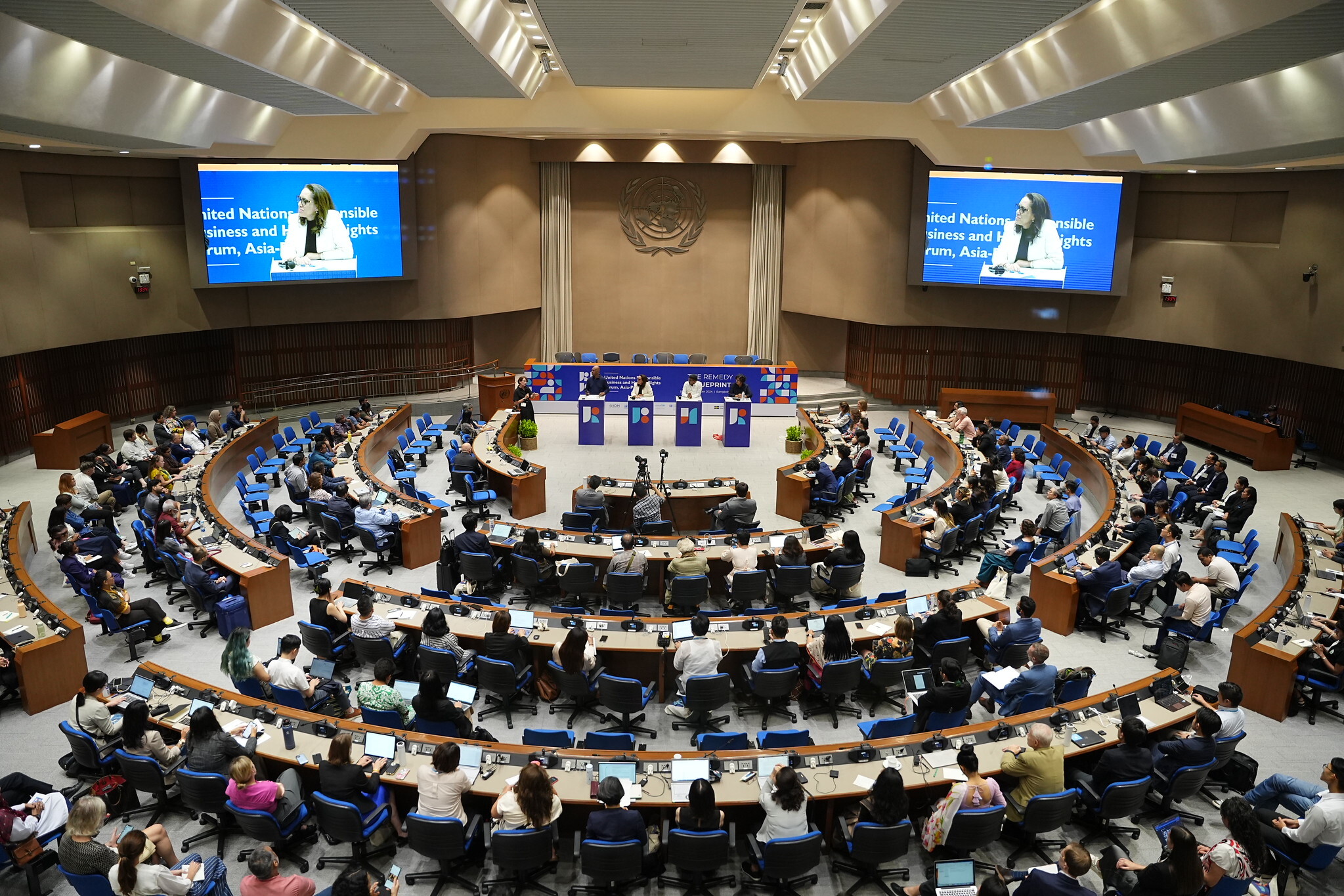
ESSAY 10
The Proving Ground: What Asia Tells Us About the Enduring Relevance of the UNGPs
By Dr. Harpreet Kaur
International frameworks are adopted all the time.
Some influence policy debates for a few years before fading from view. Others remain largely within the communities that created them, discussed in conferences, reports and academic circles but never quite escaping them. Fifteen years after their endorsement, the UN Guiding Principles on Business and Human Rights (UNGPs) have followed a different trajectory. They continue to shape legislation, investor expectations, business practices and public policy discussions around the world.

ESSAY 11
Reflections on 15 Years of the UNGPs: A Letter to John Ruggie
When Shift asked me to write an essay about 15 years of the UN Guiding Principles on Business and Human Rights (UNGPs), I felt both honoured and challenged. Writing is not really my forte. I am a practitioner, a do-er, not a writer.
After reflecting on the request, I decided to write a letter to the late Professor John Ruggie, the author of the UNGPs. This seemed especially appropriate as we mark five years since John’s death this September.

ESSAY 12
Fifteen Years On: The UN Guiding Principles and the Evolution of Business Responsibility
By Shawn MacDonald
Fifteen years after their adoption, the United Nations Guiding Principles on Business and Human Rights (UNGPs) have fundamentally changed the operating logic of the field of supply chain accountability.
The UNGPs have created a common language, a shared framework, and practical architecture through which governments, companies, investors, civil society organizations, and international institutions can better align expectations and actions. That is no small feat in a world where confusion over standards and roles is all too often an excuse for dissembling and inaction.