
Living Wages /
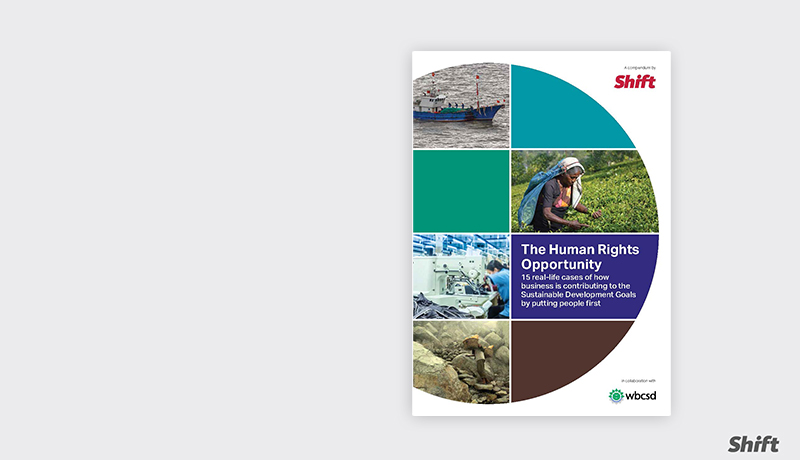
15 cases of how companies are boosting their contributions to the Sustainable Development Goals by putting people first.
The provision of living wages for workers in global value chains could contribute to supporting entire families and communities in surfacing from conditions of poverty, fueling the economic and social development called for by both public and private actors in their endorsement of the SDGs.
Every day, workers head to factories, fields, mines, warehouses and other job sites across the world. There, they put in a full day’s work, contributing their time and labor to ensure the smooth running and expansion of businesses and, in many cases, the development of national economies as well.
More than 340 million workers are currently living with their families on less than US $1.90 per person per day. /
Yet, despite this contribution, day in and day out, many of these workers go home at the end of their long work days and still struggle to meet their basic needs and those of their families. Minimum wage laws in their countries may be weak or unenforced. The wages and any in-kind earnings they do receive are simply not enough to cover essentials such as nutritious food, clean water, sanitary housing, affordable health care, and opportunities for education.
The private sector’s role in these workers’ lives is immense. Wage-setting by employers – which in turn is regulated by governments and often influenced by the purchasing practices of those employers’ business partners – directly impacts the ability of these workers to live lives of dignity, through which their most basic rights as human beings are met.
Given this role, companies across sectors and geographies are asking, “What exactly is a living wage?” and “How can the provision of living wages be realistically achieved?”
In general terms, a living wage is the minimum income necessary for a worker and their family to meet basic needs, including some discretionary income. In many cases, a living wage is considered to be higher than the minimum wage set by national laws.
What this looks like in practice is very likely to vary across contexts and even within countries. But, as the case studies below aim to demonstrate, there are credible processes out there that are starting to set and implement living wages in real ways.
The provision of living wages for workers in global value chains could contribute to supporting entire families and communities in surfacing from conditions of poverty, fueling the economic and social development called for by both public and private actors in their endorsement of the SDGs.
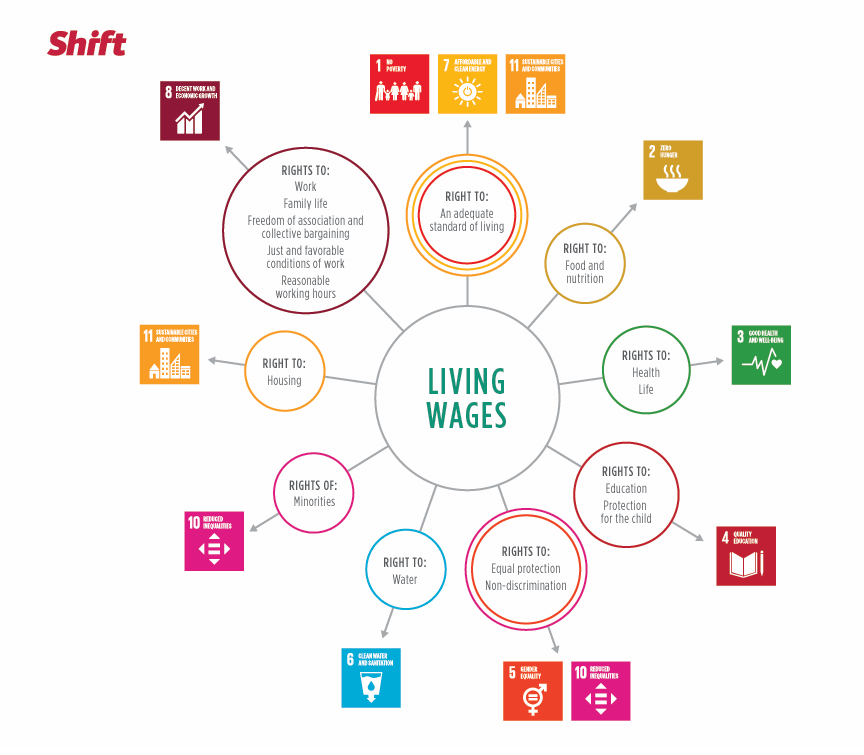
Among others, the human rights to freedom of association, collective bargaining and non-discrimination are key drivers in supporting the provision of a living wage, which in turn can contribute to the fulfillment of the human rights to food, water, health, adequate housing, education, family life, fair working hours and so on.
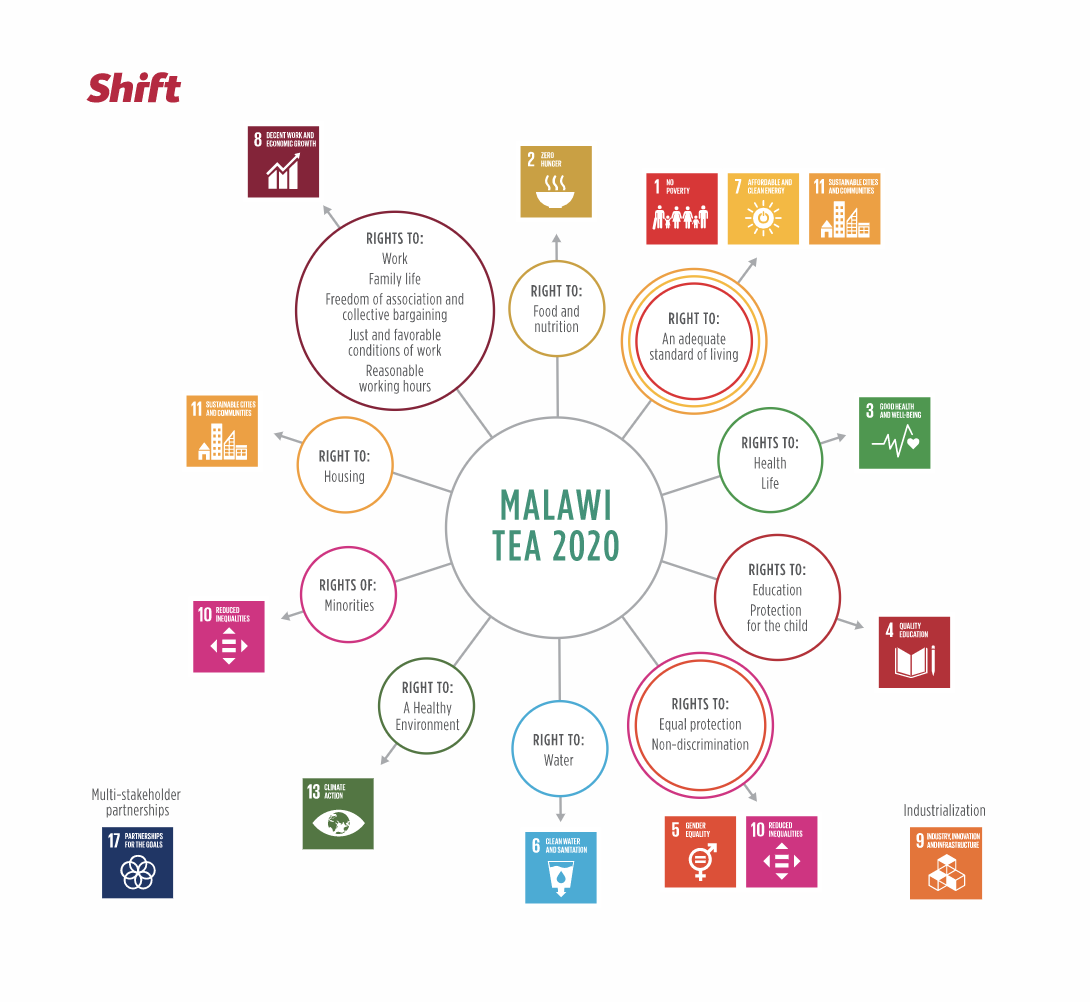
As illustrated in the graphic above, and depending on the specifics of the relevant corporate initiative, the provision of a living wage may contribute to the achievement of an array of Global Goals, including:
- Goal 1: End poverty in all its forms everywhere [i]
- Goal 2: End hunger, achieve food security and improved nutrition and promote sustainable agriculture [ii]
- Goal 3: Ensure healthy lives and promote well-being for all at all ages [iii]
- Goal 4: Ensure inclusive and equitable quality education and promote lifelong learning opportunities for all [iv]
- Goal 5: Achieve gender equality and empower all women and girls [v]
- Goal 6: Ensure availability and sustainable management of water and sanitation for all [vi]
- Goal 7: Ensure access to affordable, reliable, sustainable and modern energy for all [vii]
- Goal 8: Promote sustained, inclusive and sustainable economic growth, full and productive employment and decent work for all [viii]
- Goal 10: Reduce inequality within and among countries [ix]
- Goal 11: Make cities and human settlements inclusive, safe, resilient and sustainable [x]
- Goal 13: Take urgent action to combat climate change and its impacts [xi]
More than 450 million people work in global supply chain-related jobs. When combined with these workers’ families, the number of individuals directly affected by wage-setting in global value chains rises to 2 billion. /
So, how are companies currently demonstrating respect for human rights and supporting a world in which these goals can become a reality – a world in which workers earn living wages such that they and their families are meeting their basic needs?
Examples illustrated by the case studies below include:
- An individual brand is developing and implementing cross-cutting strategies: A global apparel company is enhancing wage management systems at the factory level and pro-worker engagement with governments and suppliers alongside its participation in collaborative initiatives.
- A manufacturer is proactively engaging its buyers: A textile producer in Turkey is working in partnership with its buyers to support living wages in specific production units until broader changes are made at the national level.
- Brands and trade unions are collaborating at the global level: A coalition of textile and garment brands are banding together with global and local trade unions to support industry-wide collective bargaining between workers and their employers to establish legally enforceable requirements at the country level, taking wages and working conditions out of industry competition.
- Local value chain actors and other stakeholders are collaborating at the national level: Key actors in the Malawi tea supply chain are joining forces to tackle the root causes of endemic poverty among Malawian tea workers, paying particular attention to impacts on women both on tea estates and on smallholder farms.
These case studies explore each of these innovative and evolving models in more detail. Each case study captures publicly available information on the initiative, alongside experiences and opinions from various actors involved.
The following summaries do not claim to give a definitive account of a specific initiative or of all perspectives on that case study; instead, they are intended to serve as illustrative examples of how action toward corporate respect for human rights can make a critical contribution to the achievement of various goals and targets under the SDGs.
Key Takeaways on Living Wages: /
Individual Company Action
- The human rights to freedom of association and collective bargaining play central roles in company action on living wages.
- Mature industrial relations are key in figuring out what a living wage means in a particular context and in generating feedback loops that help maintain the provision of living wages over time.
- Improved wage management systems and more comprehensive strategies for promoting fair wages can address many elements that influence whether a living wage is provided in the long-term. Such elements include timeliness of payments; fair working hours; pay adjustments based on skills, experience levels and performance; and open communication channels between workers and management.
- Collaborative initiatives that drive systemic change at both industry and government levels can greatly inform and enhance individual company action on living wages.
- Producer-buyer partnerships are possible and can facilitate direct involvement from workers in determining living wages in specific work sites, thereby having a real impact on the lives of workers and their families via the provision of a living wage while collaborative initiatives with a larger scale are built at a national level.
Collective Action
- Industry-wide, collaborative action across each step in the supply chain builds leverage (the ability to influence another party to prevent, mitigate and/or remediate a human rights harm) at the national level to help make living wages a reality for workers, regardless of which brands their employers supply.
- Collective bargaining across an industry bolsters meaningful stakeholder engagement between employer associations and trade unions, as well as between suppliers and buyers, while also facilitating access to remedy when commitments are not met.
- The re-examination of key aspects of the core business, including product quality investment and purchasing practices, can clarify the contribution of global brands to systemic labor rights issues and inform holistic responses.
- The identification of particularly vulnerable stakeholders helps companies focus their efforts on the most salient human rights issues associated with their business.
- Recognizing that living wages cannot be tackled in isolation inspires multi-faceted approaches that use a confluence of different incentives to drive change from many angles.
H&M’s Fair Living Wage Strategy /
The challenge /
Over 1.6 million people work in the factories that supply H&M apparel, 65% of whom are women.
There is thus little question about the scale at which this global apparel brand has the ability to contribute to sustainable development by supporting the provision of living wages to workers in their supply chain.
The response /
Acknowledging the substantial number of individuals involved in its global supply chain, H&M has identified and prioritized living wages as one of its salient human rights issues – defined as the human rights at risk of the most severe negative impacts through the company’s activities and business relationships.
“We developed our global Fair Living Wage Strategy in 2013 with guidance from multiple experts, trade-unions and NGOs. The strategy focuses on governments, factory owners, our own purchasing practices and most crucially, workers. The strategy is both interlinked with and dependent on well-functioning industrial relations, including collective bargaining. Therefore, it is crucial for all parties involved to work together for the strategy to really come to life.”
– THE H&M GROUP SUSTAINABILITY REPORT 2017
At the center of the company’s work on this issue is H&M’s Fair Living Wage Strategy. Launched in 2013, it is the first comprehensive wage strategy undertaken individually by a global brand.
In implementing the strategy, the company defines a living wage as “a wage which satisfies the basic needs of employees and their families and provides some discretionary income such as savings. It should be revised annually, and negotiated with democratically elected worker representatives.”
Key aspects of the initiative /
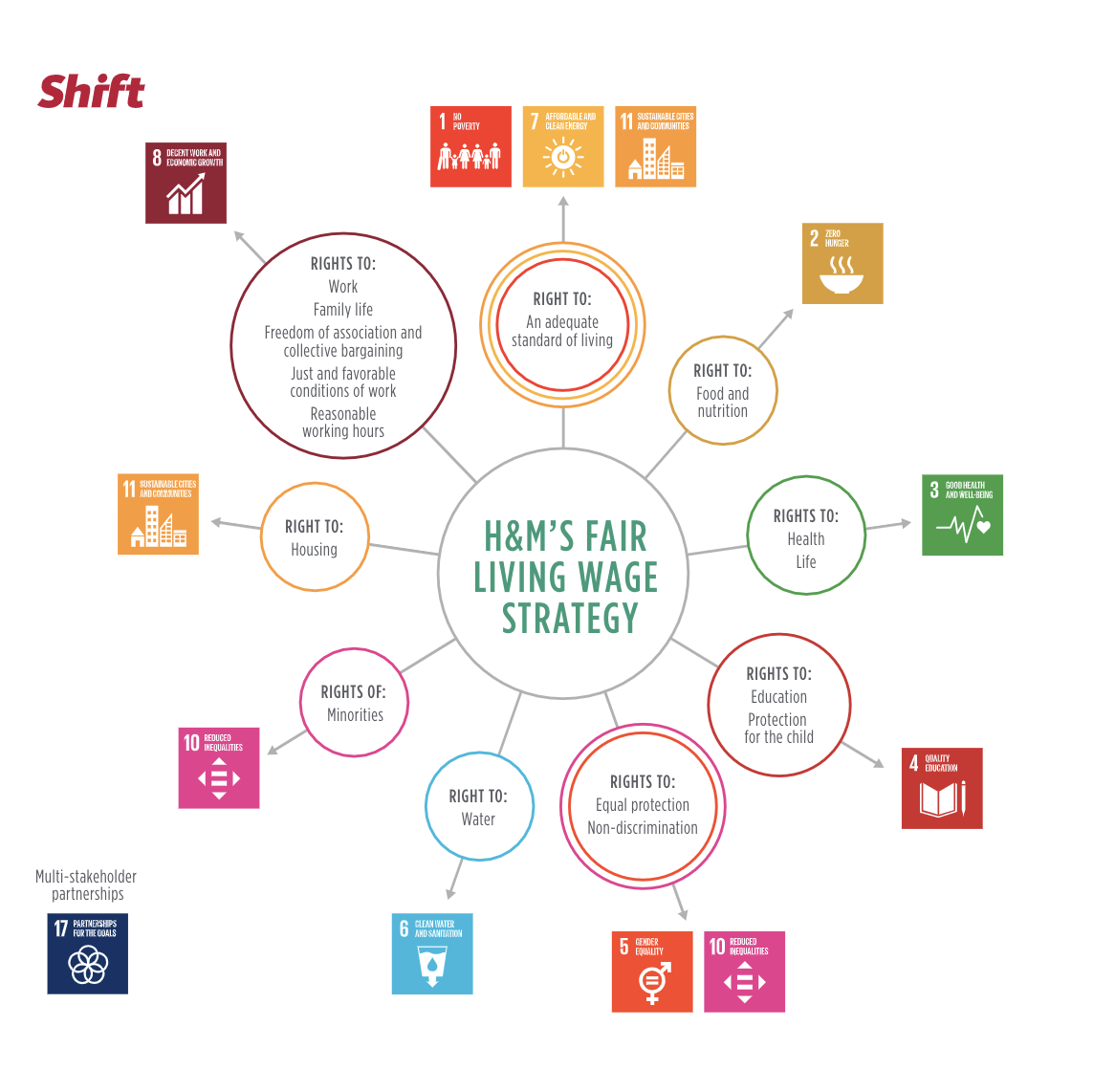
H&M’s Fair Living Wage Strategy, which the company has refined since its launch in 2013 based on its stakeholder engagement and involvement in various collaborative initiatives, has four main components and respective results so far:
1- Workplace dialogue and industrial relations programs to facilitate positive communication and negotiation on wage increases and other working conditions between (a) employers and employees at the factory level and (b) employer associations and trade unions at the national level.
These programs support the establishment of democratically elected worker representation at strategic suppliers, which can lead to the establishment of trade unions if the employees so choose.
The programs also include training at the factory level on workplace cooperation, negotiation skills, collective bargaining and labor law. The global union federation IndustriALL, the Swedish trade union IF Metall, the International Labour Organization (ILO), and the Swedish development agency Sida are key partners in several of these programs.
According to H&M:
- By the end of 2017, 458 factories were enrolled in the company’s workplace dialogue and industrial relations programs, representing 52% of H&M’s total product volume. In 2018, an additional 223 factories are enrolling in these programs.
- More than 600,000 factory workers are directly covered by democratically elected worker representation through these programs.
- The programs are currently run in Bangladesh, Cambodia, China, Ethiopia, India, Indonesia, Myanmar and Turkey.
- In 2017, democratically elected worker representation was in place at suppliers representing 52% of the company’s product volume.
“At H&M group, we believe that well-functioning industrial relations are crucial to the creation of fair jobs. Good relationships between workers and management and effective interactions and negotiations on factory, industry and country level, promote good working conditions and better wages. Good labour relations also support stability and performance in our production markets.”
// THE H&M GROUP SUSTAINABILITY REPORT 2017
2- Fair Wage Method to ensure that wage-setting takes the individual worker’s skills, experience, performance, and responsibility into full consideration.
The Fair Wage Method, developed by the Fair Wage Network and based on twelve dimensions, supports the creation of holistic pay structures that enable and sustain fair living wages and facilitate improved dialogue between employers and employees at the factory level.
Distinct from an audit approach, the Fair Wage Method focuses on partnerships with factories, stores, and brands to assess wage practices through worker and management surveys, identify root causes, and implement improvements, including within Human Resources policies and practices.
According to H&M:
- Systems taking the Fair Wage Method into consideration are being implemented at an increasing number of factories: 140 at the end of 2016 (representing 29% of H&M’s total product volume), 228 at the end of 2017 (representing 40% of H&M’s total product volume), and a total of 336 by the end of 2018, superseding H&M’s goal of 50% of the total product volume by the end of 2018.
- Implementation of the Fair Wage Method takes place in Vietnam, China, Cambodia, Bangladesh, Turkey, Myanmar, India, and Indonesia.
- Approximately 200 factories will also be enrolled in the Wage Management System Program internally developed by H&M.
- Implementation of the Wage Management System Program takes place in Bangladesh, Turkey, Ethiopia, Pakistan, India, Indonesia, China, and Cambodia.
3- Strategic collaborations in recognition that H&M shares its suppliers with many other brands, meaning that living wages are an industry-wide challenge that must be tackled in partnership with others.
Here, H&M’s membership in the ACT (Action, Collaboration, Transformation) initiative plays a key role in the company’s strategy, as the company is one of the founding members of the initiative (see the ACT case study).
This collaborative work is further complemented by the now-permanent Global Framework Agreement between H&M, IndustriALL and the Swedish trade union IF Metall.
This agreement is already demonstrating its value and has facilitated conflict resolution between workers and management within H&M’s supply chains. Implementation of the agreement has been mainly channeled through the National Monitoring Committees (NMCs) that consist of representatives from local trade unions and H&M. In Myanmar, where a month-long strike took place after eight union leaders were fired in October 2015, the agreement was “key to getting trade unionists back to work, as well as achieving trade union recognition at the Jiale Fashion factory in Yangon.” In Pakistan, the agreement was invoked to bring together IndustriALL Pakistani affiliate NTUF and local management of the Denim Clothing Company factory for joint negotiations, which resulted in the reinstatement of 88 workers after they had been fired for demanding better working conditions at the factory.
Moreover, the company continues its collaboration projects with Sida, ILO, and IF Metall to train management and workers on workplace cooperation and dispute resolution.
4- Government engagement in recognition of H&M’s influence and access to the governments in the countries where the company’s products are made.
For example, since 2014, the company joined peer companies to advocate for the Cambodian government’s Trade Union Law and its compliance with ILO conventions. According to H&M, this influence and access relies on the fact that the company’s presence in all of its sourcing markets includes an H&M office and a sustainability team.
“The government engagement aspect of H&M’s work is key. Governments must install an enabling legislative environment for labor rights, one that creates a better balance of power and supports collective bargaining between social partners. In particular, governments must secure implementation of international labor standards when it comes to trade union rights – the right to organize and the right to collective bargaining. Employers must be required to adhere to these standards; and in that sense, buyers can do much more to engage governments and stress adherence to these rights by their suppliers.
In the end, sustainable industrial relations can only be achieved by workers organizing themselves in democratic, independent trade unions at the factory or company level and at the national level. This requires action from governments, but it also requires education. Workers need to know their own rights and have channels for claiming them. Management must understand workers’ rights and put systems in place that foster better industrial relations and social dialogue. And brands must support their suppliers in improving working conditions. Training all actors on these issues across the supply chain, as H&M is doing in partnership with us and others, is incredibly important.”
– MATS SVENSSON, IF METALL
Egedeniz Textile’s Living Wage Project /
Driving the provision of a living wage from the producer perspective
The challenge /
The majority of initiatives around living wages tend to be spearheaded by multinational brands in response to international or national pressure, with producers and manufacturers subsequently affected by such initiatives and occasionally brought in as partners as collaborations unfold.
While there is widespread agreement that cross-industry, collaborative efforts are necessary for systemic change when it comes to living wages, it is also important to highlight opportunities for producers to jointly lead initiatives around this issue, as such efforts can be deeply transformative in enhancing the lives of workers and their families.
The response /
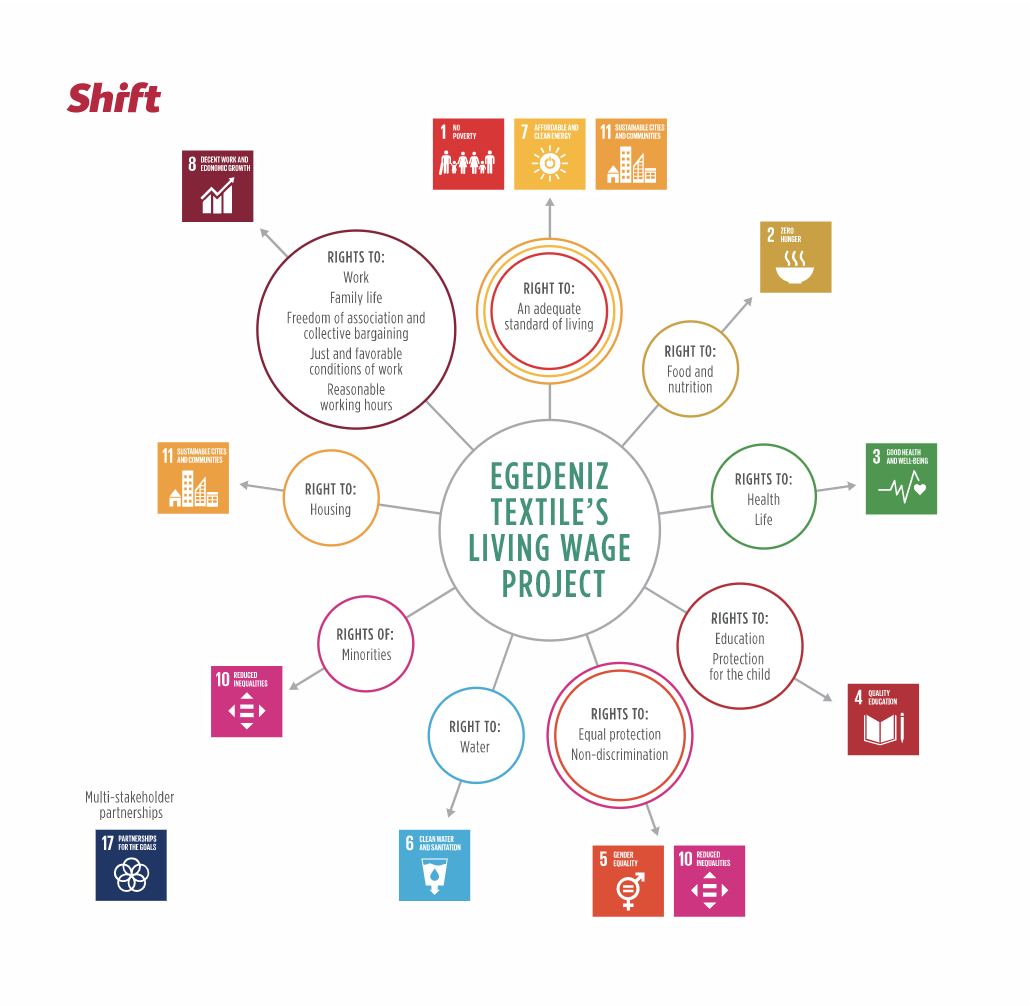
One such example of a producer-buyer partnership is the Living Wage Project of Egedeniz Textile, the first certified organic textile company in Turkey and a medium-sized producer supplying to brands in the United States, Japan and Western Europe.
In partnership with Swedish children’s wear brand Mini Rodini and the Fair Wear Foundation, Egedeniz launched the Living Wage Project in June 2016 after deciding as an employer to prioritize the provision of a living wage to its workers.
Key aspects of the initiative /
In the first two years of the Living Wage project, Egedeniz has:
1. Carried out a cost of living survey with its workers across three wage groups and cross-referenced the results with government data and analysis, with support from the Fair Wear Foundation.
2. Engaged with its buyer Mini Rodini on the survey findings, working with the brand to calculate an initial premium (an additional €0.18 per garment) that resulted in an average 14% wage increase on the lowest monthly salary among the three wage groups covered by the survey.
“The most important part of this project has been the relationships between all the steps in the supply chain. From the brand side, supplier relations are increasing positively. From the supplier side, it’s really important to believe in your role in the partnership with a buyer. If your working conditions will change simply based on the brand, then there are risks of huge negative impacts for the workers. You need to believe in and own your role in the sustainability of the business and in the partnerships involved.”
– Mümin Can Eker, Egedeniz Textile
3. Facilitated dialogues and awareness-raising across the three wage groups to ensure understanding of the program and how the wage increases are set.
4. Began approaching additional buyers to join the program in an effort to enhance the sustainability of the project over time.
5. Conducted an initial evaluation survey among its employees, assessing workers’ knowledge about the Living Wage Project, their experiences throughout the implementation of the project, how they are using the additional wages, and what their general opinions are concerning the initiative. Overall feedback to date has been positive, reflecting workers’ clear understanding of how the initiative is carried out and demonstrating positive impacts in terms of the ability of workers to meet their and their families’ basic needs.
“You can see the change in the eyes of workers when you walk through the sewing line. We’re stopped and the workers say thanks. It can be seen as such a small payment, but it’s such an important thing to these workers. It’s increased their loyalty and motivation – they feel like a valued part of the business and we’re seeing clear improvements in the quality of the work and worker recruitment and retention. We’re also hearing positive feedback from worker representatives and we can see the relationship-building directly on the production line.”
– OZGU CUBUKCUOGLU, EGEDENIZ TEXTILE
ACT Initiative /
Tackling systemic worker issues through industry collective bargaining
“The ACT initiative is an example of how companies have been working together with trade unions, governments, and others to address some of the most severe and systemic labor rights abuses in their supply chains. It illustrates the promise of collective action to leverage change.Importantly, initiatives like ACT are not just about voluntary philanthropic contributions to development, but also the product of a recognized responsibility of companies to address severe human rights risks in their supply chains. In meeting this responsibility, ACT makes a critical contribution to sustainable development as well.”
– Professor John Ruggie, former UN Special Representative on Business and Human Rights
The challenge /
April 2013: The Rana Plaza factory collapse shook the world and the business community along with it. For the textile and apparel industry in particular, the deadliest garment factory accident in history – totaling 1,134 individuals killed and approximately 2,500 injured – crystallized awareness about continued failings in both government and business oversight of supply chain conditions and the potentially devastating human cost of those shortcomings. The Bangladesh Accord was thus born, creating the first legally binding agreement between global brands and trade unions to ensure safe working conditions in the Bangladeshi ready-made garment industry.
For many apparel and textile brands, engagement in the Bangladesh Accord became an important first exposure to the necessity and power of collective, industry-wide action in the face of a pervasive supply chain issue. Due in part to this experience and a drive to examine other working conditions alongside health and safety issues, several leading brands came together to face another systemic issue in their supply chains – the lack of a living wage in garment factories and the severe impacts that this has on workers, their families and their communities.
“We can’t talk about ACT without talking about the Bangladesh Accord. Many of the relationships we have with the brands now involved in ACT were forged through the Accord context.
There has to be a willingness to work together, but also to jointly commit to a common set of rules and systems that work. And, in all of my engagements on ACT, across all of the relevant actors, not one person has said, ‘That won’t work.’ This is extraordinary. And it’s because we’re providing a logical framework that will be built out in each country by the unions and employers standing together on their common interest platform and taking wages and working conditions out of industry competition. This is the only path toward systemic, sustainable change in this industry on this issue.”
– JENNY HOLDCROFT, IndustriALL
Even before the Rana Plaza tragedy, however, various brands had built foundational relationships with trade unions through global framework agreements that are now feeding into collective, industry action in this area. These agreements, which are “negotiated at a global level between trade unions and a multinational company,” put in place standards across a company’s operations and business relationships and can be enforced regardless of whether those standards are in place and upheld in an individual country.
“An important benefit of the ACT initiative is that it is an opportunity to reinforce and build on what we are already doing around living wages within the Global Framework Agreement with IndustriALL Global Union, which Inditex signed in 2007 and which plays a priority role in our sustainability strategy. ACT is focused on building more positive relationships between brands and suppliers and between suppliers and workers through enforcement of collective bargaining in the industry. And it is increasing internal awareness within Inditex on our living wage efforts. The more brands that join this effort, the more powerful the impact will be.”
– FÉLIX POZA PEÑA, INDITEX
The response /
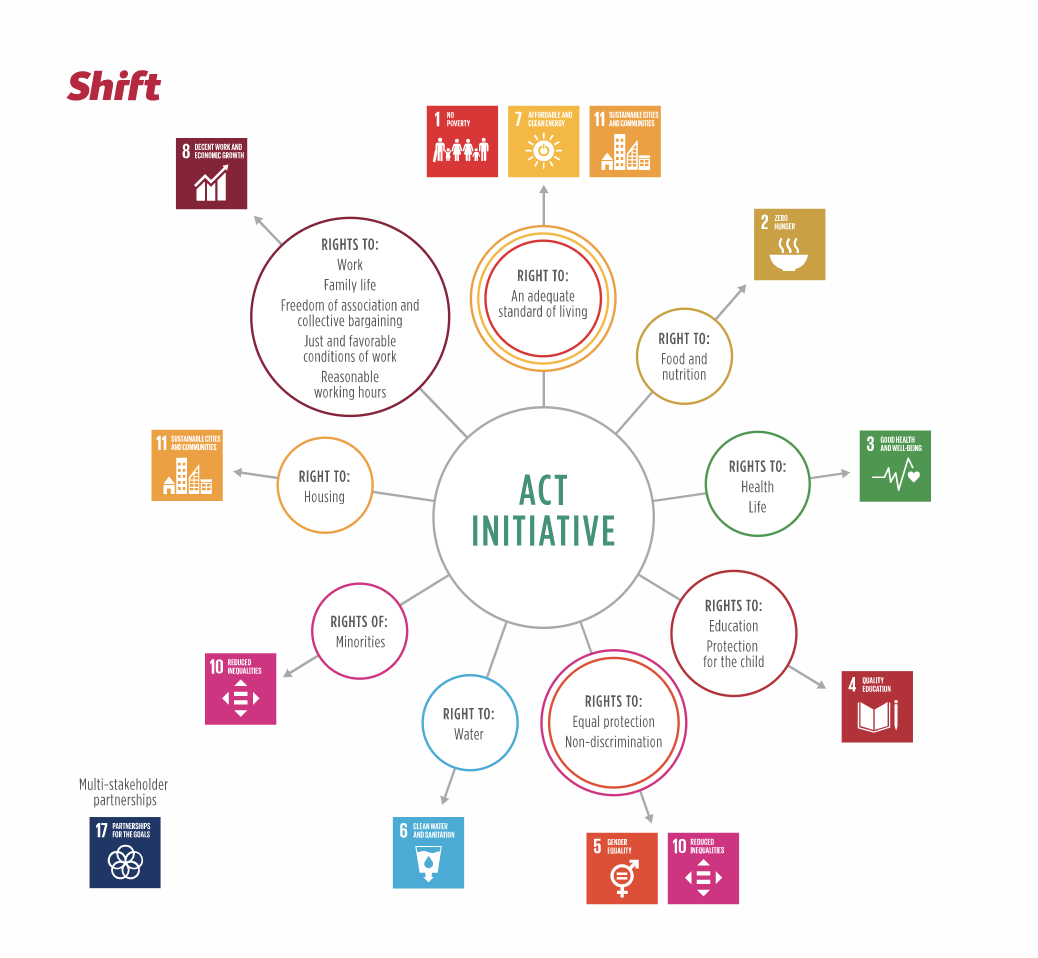
The ACT (Action, Collaboration, Transformation) initiative, which formally launched in 2015, is an agreement between international brands and retailers and trade unions to “transform the garment and textile industry and achieve living wages for workers through industry-wide collective bargaining linked to purchasing practices.”
The initiative centers on a memorandum of understanding between the global union IndustriALL and 17 global brands and retailers (including ASOS, C&A, H&M, Inditex, Kmart, Next, Primark, Target, Tchibo, Tesco and others). It is led by a 50% union, 50% brand board and a full-time secretariat.
“There’s no playing to the galleries on this. With living wages, there’s an astounding opportunity to improve lives. But, before ACT, there was never any means of dealing with the issue in any effective way. After the Bangladesh Accord, we built on the relationships with IndustriALL and other brands that were strengthened as part of that effort to tackle living wages.
How many environments are there where you have brands, retailers, manufacturers, governments, trade unions and employer associations all at the same table? This is real innovation.”
– Christopher Grayer, Next
Key aspects of the initiative /
Putting freedom of association and collective bargaining at the center, the ACT model is comprised of three distinct but interrelated components:
“There’s no playing to the galleries on this. With living wages, there’s an astounding opportunity to improve lives. But, before ACT, there was never any means of dealing with the issue in any effective way. After the Bangladesh Accord, we built on the relationships with IndustriALL and other brands that were strengthened as part of that effort to tackle living wages.
How many environments are there where you have brands, retailers, manufacturers, governments, trade unions and employer associations all at the same table? This is real innovation.”
– Christopher Grayer, Next
1. Industry-wide collective bargaining between employers and unions of registered and legally enforceable agreements at the national level, such that “workers in the garment and textile industry within a country can negotiate their wages under the same conditions, regardless of the factory they work in and the retailers and brands they produce for.”
2. Purchasing practices of the member brands and retailers that ensure that “payment of the negotiated wage is supported and enabled by the terms of contracts” between global buyers and their suppliers.
3. Government engagement on national minimum wage fixing enforcement mechanisms, so that they provide “an adequately resourced regulatory, inspection, and legal system that ensures that no less than legal minimum wages are paid to workers” since “minimum wages play a vital role in underpinning living wages and must be set in accordance with this level and regularly reviewed in line with cost of living increases.”
In tackling each of these components, ACT is currently supporting capacity- and relationship-building among member brands’ supplier factories, IndustriALL’s affiliated unions and governments in target countries, as well as research on how purchasing practices can best facilitate payment of a living wage.
The initiative’s current countries of focus include Bangladesh, Cambodia, Myanmar, Turkey and Vietnam. It is working to bring additional brands on board to further increase its scope and influence and avoid competitive disadvantages.
“This is a groundbreaking program. We’re organizing ourselves in a way that we never had before. Yes, this takes time, but it is the only way to tackle systemic, structural challenges.
Importantly, we’re connecting this back to our own human rights due diligence at the same time. If we want to secure our future as a business enterprise, we can’t cherry pick what we want to work on, including when it comes to the SDGs. We need to thoroughly look at both our positive and negative impacts on people and then take action, collectively and independently, from there.”
– ACHIM LOHRIE, TCHIBO
Malawi Tea 2020 /
Joining forces at a national level to address root causes of endemic poverty
The challenge /
Malawi, East Africa: A young child is nestled on her mother’s back, wrapped snuggly in a chitenje and napping soundly as her mother moves up and down seemingly endless rows of tea plants, picking the vibrant green leaves with expert efficiency and filling basket after basket before the sun goes down on another full day of work in the fields.
Based on Malawi’s malnutrition rate of approximately 50%, the chances are high that this child’s growing body will become stunted physically and in other developmental areas, notwithstanding her mother’s wages and in-kind earnings as a worker in the Malawian tea industry.
As international non-governmental organization (NGO) campaigns have highlighted since the early 2000s, wages remain low in the Malawian tea business despite it being the largest formal employer in all of Malawi. Approximately 62% of Malawians live below the World Bank’s extreme poverty line of US$1.25 per day; approximately 50,000 tea plantation workers were documented in 2013 as being trapped in conditions of extreme poverty. Research commissioned to calculate what a living wage would be in the Malawian tea industry concluded that wages and in-kind benefits would need to double to achieve a living wage.
The response /
In 2015, 20 different groups along the Malawian tea chain got together and agreed that more had to be done to tackle the serious issue of worker wages in their industry. The resulting Malawi Tea 2020 Revitalisation Programme (Malawi Tea 2020) is a coalition of Malawian tea producers, the largest international tea buyers, NGOs, relevant certification organizations, and donors.
The initiative is aiming to “create a competitive Malawian tea industry where workers earn a living wage and smallholders are thriving.” The partnership is endorsed by the Malawian government and involves companies of a range of sizes. All participating tea producers are part of the program through the Tea Association of Malawi (TAML).
The Ethical Tea Partnership (ETP), TAML, Oxfam, IDH (the Sustainable Trade Initiative), and GIZ (the German Agency for International Cooperation) jointly lead the initiative, which is the first of its kind in the tea industry.
“None of this would have happened without the burning platform from NGOs and other campaigns. But once that has happened, you must then have shared knowledge about what the problem is; and then shared commitment across brands, producers, workers and governments to practical approaches that will have a real impact.”
– Rachel Wilshaw, Oxfam
Key aspects of the initiative /
Recognizing that living wages cannot be tackled in isolation but must instead be addressed using a multifaceted approach, Malawi Tea 2020’s five-pronged initiative and respective results to date include:
1. Improved productivity and quality of Malawian tea to generate a more profitable and competitive industry that is able to support the payment of living wages to its workers.
- Outreach to financiers and donors to revitalize the industry through irrigation, replanting and factory refurbishments has resulted in two ongoing deals at an estimated US$3 million.
Each deal involves a tea estate undergoing irrigation feasibility studies and environmental and social impact assessments, with support from IDH and other investors, to boost volume and quality production while mitigating negative social and environmental impacts such as climate change.
- Tea estates themselves have invested US$6.3 million into revitalization projects, including those around agricultural improvements, infrastructure and electricity generation.
2. Improved conditions for women workers via housing and nutrition improvement programs, as well as efforts to achieve better human resources management.
- Via a new nutrition program, 30,000 workers (out of a target of 50,000) now receive fortified lunchtime meals and all workers receive weekly vegetable distributions.
- TAML has adopted a new policy to address sexual harassment and gender-based discrimination, four estates have established gender committees, and gender training sessions for supervisors, managers and workers began in September 2017.
3. Improved opportunities for smallholders to earn a living income via Farmer Field School methodologies, business management programs, and agro-inputs.
- A living income study has established a living income benchmark for smallholder farmers (MWK2,889 or US$15.04 in PPP – purchasing power parity), as set against current smallholder incomes (MWK1,574 or US$8.16 PPP).
- 3,300 smallholder farmers (65% women) have improved their farming and business skills.
- 50 Farmer Field Schools have trained 1,548 farmers, resulting in the improvement of field-level practices. For instance, 540,000 tea plants are being cultivated in 45 mini tea nurseries and 3,138 farmers are participating in a total of 173 village savings and loan groups across Malawi.
4. Improved wage-setting process that centers around collective bargaining between worker representatives and employer organizations.
- TAML and the Plantation and Agriculture Workers Union (PAWU) igned the first ever collective bargaining agreement (CBA) in the tea sector.
- Wages have gone up several times since the initiative started in 2015, narrowing the gap between the TAML base wage and living wage from 28% achievement of the living wage to 41%.
- Training of 337 managers in 2017 on the CBA and wage sensitization sessions with 5,500 workers, have been carried out.
5. Improved environmental efficiency and more sustainable energy use in tea-growing areas.
- As of September 2017, 7 factories had started collecting primary data on their energy efficiency.
- In June 2017, key stakeholders took part in a training on climate change impact mapping.
- 10 tree nurseries have been established and 6 cook stove production groups with 125 members have been established alongside the training of 140 sales agents.
“Malawi Tea 2020 is tackling the issue of extreme poverty in the Malawi tea workforce from a holistic approach. It’s looking at innovation and investment in the industry; it’s seriously examining what a living wage is in this context and how buyers’ procurement practices must change to meet that; it’s empowering smallholders and recognizing their important role in all this; it’s linking to the sector’s environmental efficiency and sustainability; and it’s bringing a gender lens to all it does.”
– Sarah Roberts, Ethical Tea Partnership
In addition, a key highlight of the program has been its ongoing work around sustainable procurement practices. In building out this area, the initiative commissioned Accenture Development Partnerships to develop a methodology to calculate the “additional cost of paying workers a living wage and for this cost to be fairly shared across the tea value chain.” Consultations on the proposed model are currently underway. At the same time, the initiative is seeking additional brands and traders to expand the program to cover 100% of the Malawian tea industry.
“Working on living wages in the context of Malawi Tea 2020 isn’t just about paying workers more. It’s about taking a holistic approach that breaks down what we’re really trying to achieve and coming up with various programs and targets that realistically support the development of a sustainable tea industry in Malawi.
Scale and traction are needed to effect real change when tackling these complex issues. For some companies, it might initially feel uncomfortable to engage with your competitors in this way, but you can and should work through that in order to use your collective influence to drive positive impacts that just won’t happen without collaboration across the industry.
Also, all of the different actors involved in an initiative like Malawi Tea 2020 will have different perspectives; and that’s ok.
It’s when no issues are arising that you have to worry, since this likely means that people aren’t speaking up. Having uncomfortable conversations about what works and what doesn’t work is an important part of the process and companies should be flexible and adapt their approaches based on what they learn along the way from the network of knowledge and various areas of expertise that should be involved.”
– KATY TUBB, TATA GLOBAL BEVERAGE