
Reflections on 15 Years of the UNGPs: A Letter to John Ruggie /
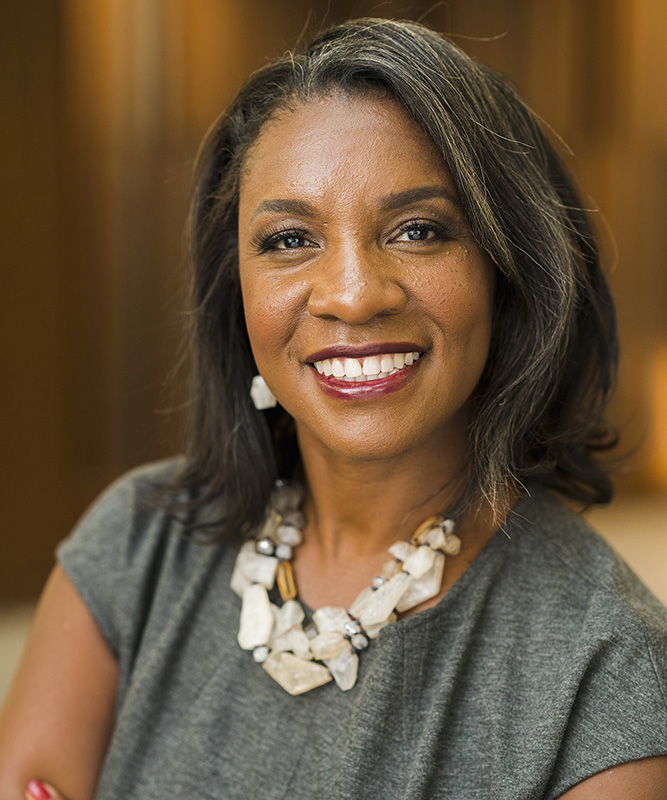
By Linda Kromjong*
September 22, 2026

When Shift asked me to write an essay about 15 years of the UN Guiding Principles on Business and Human Rights (UNGPs), I felt both honoured and challenged. Writing is not really my forte. I am a practitioner, a do-er, not a writer.
After reflecting on the request, I decided to write a letter to the late Professor John Ruggie, the author of the UNGPs. This seemed especially appropriate as we mark five years since John’s death this September.
Dear John,
You changed the world. You changed my career. You changed me.
The first time we met was at a meeting in Berlin in 2010, organised by the German Employers’ Association (BDA). You were engaging with German businesses on the draft UNGPs. I attended on behalf of my then employer, Deutsche Post DHL.
You inspired me.
Since the unanimous endorsement of the UNGPs by the UN Human Rights Council in 2011, I have witnessed a profound shift in how business, trade unions and NGOs discuss corporate responsibility. I vividly remember the first time an employment dispute was framed not primarily as a labour law issue, but as a human rights issue. That case later became part of a broader campaign and an OECD National Contact Point complaint in 2012 that was successfully concluded through remediation in 2014.
The UNGPs were the first globally accepted instrument to bring the words ‘business’ and ‘human rights’ together in a meaningful way. Before then, human rights were largely seen as the domain of governments, while companies focused on legal compliance, labour relations and philanthropy. Your work fundamentally changed that mindset.
In your many engagements with business, you patiently explained the role companies could and should play in respecting human rights. More importantly, you convinced many of us that lasting solutions to systemic human rights issues require collaboration.
Collaboration is not always easy. It can be slow, frustrating and resource-intensive. Yet throughout my career, I have become convinced that it remains the most effective path forward.
From DHL to the International Organisation of Employers, then Samsung Electronics, and now amfori, a global business association supporting companies with supply chain due diligence, one theme has remained constant for me: collaboration.
Whether representing a single company or the business community more broadly, I often think back to your ability to bring people together around practical solutions. Your concept of a “smart mix of measures” to both incentivise and where necessary require business respect for human rights remains highly relevant today. Progress is rarely achieved through a single tool; it comes from different approaches working together.
My own perspective has evolved as well. In the early years, I saw the strength of the UNGPs primarily in their flexibility and ability to inspire voluntary action. I worried that legislation might reduce human rights to a compliance exercise.
Over time, however, I have come to appreciate that voluntary action and smart regulation are not opposites. When legislation is rooted in internationally recognised frameworks such as the UNGPs and OECD Guidelines for Multinational Enterprises on Responsible Business Conduct, it can establish a common baseline of expectations and create a more level playing field. The real question is not whether regulation exists, but whether it helps improve outcomes for people.
As someone who has spent most of my career translating principles into practice, I have learned that there is no single formula for success. But there are several lessons that continue to guide me.
1. No one finds solutions alone /
Progress within companies requires collaboration across functions, perspectives and expertise. Over time, good intentions need to be embedded in policies, processes and responsibilities.
Outside the company, success depends on meaningful engagement with stakeholders.
Companies need to build relationships not only with allies, but also with critical voices. Often, tensions can be reduced significantly through open communication and a willingness to engage.
I have also become a strong believer in collective approaches. At amfori, I see every day that responsible business conduct cannot be achieved by companies acting alone. Supply chains are shared, challenges are shared and increasingly solutions must be shared as well.
Collective efforts help companies learn from one another, align expectations and avoid unnecessary duplication and the burden that can place on smaller business partners.
2. Solutions must look back and look ahead /
When harm occurs, addressing it matters. Remedy and remediation are essential components of respecting human rights. Equally important is understanding what affected people consider meaningful remedy.
At the same time, solutions must look forward. What can be learned? How can similar issues be prevented from happening again?
Progress rarely happens in one step. Continuous improvement is often more realistic than immediate perfection.
That is why communication with stakeholders matters. Be transparent about what is working, what is not, and what still requires attention. If you don’t shape your own narrative, others will shape it according to their perspective. Perfection is not expected. A genuine commitment to improve is.
3. Use language people understand /
One of the great achievements of the UNGPs is that they created a common global language for business and human rights – an ‘Esperanto’ of their own. Yet outside the business and human rights community, that language does not always resonate.
Senior leaders, operational managers and procurement professionals need concepts translated into terms that connect with their daily responsibilities. We must become better at articulating the practical value of human rights due diligence to these different audiences.
At its best, due diligence is not a compliance exercise. It is a risk management and continuous improvement process that helps companies identify issues earlier, make better decisions that help prevent and address impacts, strengthen stakeholder trust and build more resilient value chains.
Effective communication starts with meeting people where they are. It requires patience, repetition and a willingness to explain complex concepts in practical terms.
4. Focus on progress, not perfection /
At their core, the UNGPs offer a practical approach: understanding impacts on people and taking action to address them.
Too often, due diligence is viewed primarily as reporting or compliance. In reality, it is a management process that helps organisations ask better questions, identify risks earlier and take informed action.
I have seen many suppliers improve considerably through this process. They develop stronger systems, better understand their business partners’ expectations and frequently pass these improvements on to others in their value chains.
Perhaps the greatest contribution of the UNGPs is that they have started to shift the conversation from blame to improvement; from reacting to problems towards understanding, preventing and addressing them.
No company will ever eliminate every risk. But every company can strengthen its ability to identify, prevent, mitigate and address adverse impacts.
5. Drink coffee (or tea) together /
Dialogue matters.
As a Dutch person raised with the principles of the Dutch ‘polder’ model of consensus decision-making across different stakeholder groups, I firmly believe that many solutions begin with a conversation over coffee.
Today those conversations may happen virtually, but the principle remains unchanged. Understanding each other is often the first step towards solving problems together.
And understanding starts with dialogue.
John, what would you think today?
Fifteen years after the adoption of the UNGPs, I believe you would see both remarkable progress and significant unfinished work. Many contributions to this Shift anniversary essay series have already highlighted how your ideas have influenced legislation and practice across the world.
Allow me to add one more observation.
You would see a growing global community of practitioners, companies, civil society organisations, investors and policymakers who continue to champion responsible business conduct. To me, that is your enduring legacy.
Thank you, John, for inspiring me and so many others. Thank you for leaving behind not only a framework, but also a community and a compass—one that continues to guide businesses towards creating sustainable value while respecting the rights of people.
Let me conclude where I started.
I am a practitioner, a do-er, not a writer.
But I am also an optimist. And I firmly believe that together, we can make a difference and contribute to a world in which trade serves a purpose: delivering social, environmental and economic benefits for everyone.
Linda Kromjong
President amfori
* Linda Kromjong is President of amfori, With over 2400 company members across 50+ countries, amfori facilitates businesses to assess and manage labor, human and environmental rights risks across their supply chains. She currently is member of the Board and Chair of the Stakeholder Advisory Board of the Association for Social Compliance Auditing (APSCA). Prior to amfori she served among others as Global Labor & Human Rights Director at Samsung Electronics, as Secretary-General at the International Organisation of Employers and as Vice President Labor Relations International & Human Rights for DHL Group.