















Our mission guides us. Our hands-on
expertise sets us apart.
Shift is a non-profit, mission-driven organization working globally to embed respect for human rights into business. We leverage the UN Guiding Principles on Business and Human Rights (UNGPs) to shape the standards, incentives and practices that are needed for a fairer
economic system in which everyone, not just the few, can thrive.
Our team combines deep expertise in business and human rights together with leading skills
in facilitation, consensus building and strategic advisory work. We bring experience and
insights from diverse professional backgrounds, including in government, law, business,
finance, trade unions and civil society.
We’re grounded in human rights principles, meaning everything we do is about achieving better outcomes for people. But we also stay pragmatic, understanding the real-world constraints and complexities our partners face and working within them to drive change.
Our co-founders worked as part of Professor John Ruggie’s small team to develop the UNGPs. We don’t just know them, we helped create them.
For over 15 years, we’ve turned the UNGPs into action, working with governments, business, financial institutions, trade unions and civil society organizations (CSOs).
We know where we add value, where we don’t, and who does. That clarity helps us collaborate and innovate effectively.
We tackle the toughest challenges head-on. We remain pioneers in our field by being forthright about what must change and showing how practices can rise to meet ambitions.
Time and again, our partners speak about the critical role that we play as allies, conveners, facilitators, coaches and partners for transformation. Our work across sectors, with governments, CSOs and businesses alike, has placed us in a position to understand different perspectives, incentives, challenges and realities.
Shift is headquartered in New York City, with team members across the US, UK, Canada, Australia, the Netherlands, Spain and Germany.
Director
Senior Advisor
Senior Advisor
Senior Associate
Head of Human Resources
Founding Chair / In Memoriam
Chair of the Board of Trustees
Board Member
Board Member
Board Member
We are always keen to explore new partnerships, projects and ideas that can help advance our mission.
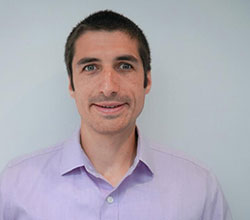
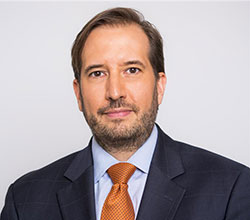
Director
He/Him London
As Director at Shift, Federico engages with business partners to better identify, prioritize and act on salient human rights issues, embedding the UN Guiding Principles in companies’ decision-making processes.
Specializes in Business Enterprises
As Director at Shift, Federico engages with business partners to better identify, prioritize and act on salient human rights issues, embedding the UN Guiding Principles in companies’ decision-making processes.
Prior to joining Shift, Federico was Head of Delivery at Impactt. Federico managed a portfolio of clients, supported by a team of consultants. He led human rights assessment and remediation projects in the construction, energy, food and shipbuilding industries. This resulted in positive outcomes such as the return of passports and reimbursement of recruitment fees to workers and the strengthening of companies’ employment practices. Federico led Impactt’s engagement with the Supreme Committee for Delivery & Legacy in Qatar as external monitor of worker welfare in the construction of venues for the 2022 FIFA World Cup. He also developed Impactt’s Diagnostics community of practice, delivering for clients as well as building internal capacity to execute human rights assessments around the world, with a focus on worker voice.
Prior to Impactt, Federico was a Sustainability Manager at Tesco plc. He contributed to the roll out of Tesco’s ethical trading programme to the goods-not-for-resale value chain. Federico engaged with hundreds of product and services suppliers and internal purchasing and sourcing teams to raise awareness of human rights issues and to prioritise and address the findings from third-party social audits. He also worked on climate change to develop a roadmap to achieve Tesco’s carbon reduction commitments related to direct and supply chain emissions.
In prior roles, Federico worked with a variety of human rights organisations in the United Kingdom and United States.
Federico holds a MSc in Human Rights from the London School of Economics and a BA in Political Science and International Studies from Macalester College, with a focus on human rights law and international migration. He is a United World College Adriatic alumnus and is from Argentina.
Senior Advisor
He/Him New York City
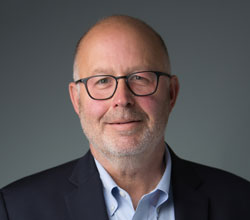
In his role as Senior Advisor at Shift, Bob Dannhauser focuses on how investors and other financial institutions address the human rights impacts associated with capital allocation decisions, the information about corporate social performance that supports their decisions, and the relationships between human rights and systemic risks that underpin risk and return in capital markets.
In his role as Senior Advisor at Shift, Bob Dannhauser focuses on how investors and other financial institutions address the human rights impacts associated with capital allocation decisions, the information about corporate social performance that supports their decisions, and the relationships between human rights and systemic risks that underpin risk and return in capital markets.
His expertise includes how the UN Guiding Principles are applied in the context of diverse portfolios, the evolution of more effective data and disclosure to support investment analysis and decisions, and the potential connections between human rights performance and other dimensions of relevance to assessment of financial performance and impact.
Bob’s career spans a variety of investment functions, including client-facing roles for several North American institutional asset managers, development and sales of fixed income analytic tools, and investor policy and professional standards advocacy in the US, Europe, and Asia for CFA Institute, the global membership association for professional investors. He has experience across a broad range of asset classes with corporate defined benefit and defined contribution retirement plans, public retirement systems, multiemployer trusts, foundations and endowments, and high net-worth investors. His investment governance experience includes service as Chair of the CFA Institute 401-k investment committee and member of the investment committee overseeing the CFA Institute Reserve Fund.
Bob earned the Chartered Financial Analyst (CFA) designation from CFA Institute as well as the Financial Risk Manager (FRM) designation and Sustainability and Climate Risk certificate from the Global Association of Risk Professionals. He holds an MBA from the Johnson Graduate School of Management at Cornell University, an MPH in Health Policy and Systems from the University of Medicine and Dentistry of New Jersey, and a BA in Political Science from the George Washington University.
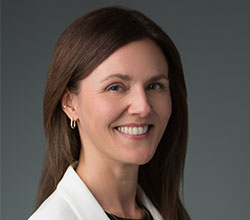
As the Vice President and Co-Founder of Shift, Rachel helps shape our strategy and oversees a range of our collaborations with companies, governments, investors, civil society and other partners. Rachel is also responsible for driving our work on standards advocacy and with sports associations.
Specializes in Standard Setters | Sports and Human Rights
Rachel is one of Shift’s co-founders and has led work at Shift over the last decade on standard-setting, human rights and sports, financial institutions, conflict and international law.
As Vice President, Rachel shapes our strategy and oversees a range of our collaborations with companies, governments, investors, civil society and other partners. Rachel leads Shift’s work to influence standard-setters of all kinds to integrate the UN Guiding Principles into the rules that govern business, including engaging with governments and the European Union on mandatory human rights due diligence.
Rachel also has unique experience advising and leading efforts to drive respect for human rights into the operations of global sports governing bodies. Rachel was the Chair of FIFA’s independent Human Rights Advisory Board while it operated, between 2017 and 2021. She has advised the International Olympic Committee on human rights since 2018, including co-authoring recommendations for the IOC on a comprehensive human rights strategy with former UN High Commissioner for Human Rights, Zeid Ra’ad Al-Hussein.
Rachel has more than a decade of experience in implementing the Guiding Principles with a wide range of organizations, including public and private financial institutions and companies from diverse business sectors and geographies, and she frequently leads and facilitates engagements with senior audiences around the world. She is the co-author of the leading study of the costs of company-community conflict in the extractive sector.
Prior to co-founding Shift, Rachel was a senior legal advisor from 2006-2011 to the Special Representative of the UN Secretary-General on business and human rights, Harvard Professor John Ruggie. She played a pivotal role in the development of the Guiding Principles, advising on all aspects of the relationship between the Guiding Principles and national and international law.
Rachel is also a Senior Program Fellow with the Corporate Responsibility Initiative at Harvard Kennedy School and has experience at the highest levels of the Australian legal system and internationally, having clerked at the High Court of Australia and at the UN International Criminal Tribunal for the former Yugoslavia in The Hague. She has a particular interest in Indigenous peoples’ rights, having advised the Australian Federal Attorney-General’s Department on Indigenous affairs and acted as Ruggie’s liaison with the UN Permanent Forum on Indigenous Issues during his UN mandate.
Rachel has a Master of Laws degree from Harvard Law School and Bachelors degrees in Law and Politics from the University of New South Wales in Sydney, where she also lectured and published in law. She is a (non-practicing) lawyer qualified in New South Wales.
Senior Advisor
She/Her London
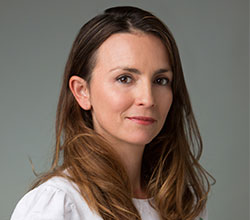
As Senior Advisor at Shift, Francesca works with companies and financial institutions to support their implementation of the UN Guiding Principles (UNGPs).
Specializes in Business Enterprises | Financial Institutions
As Senior Advisor at Shift, Francesca works with companies and financial institutions to support their implementation of the UN Guiding Principles (UNGPs).
Francesca was previously Principal Consultant at Environmental Resources Management (ERM), where she led ERM’s UK human rights team, and global technical community on modern slavery and human rights. Francesca advised multinational companies to assess and address human rights risks, build internal capacity and develop and implement fit-for-purpose policies and management systems. She also worked closely with financial institutions including development finance institutions (DFIs), commercial banks, export credit agencies and private equity on assessing and managing human rights risks in accordance with international standards including the UNGPs, IFC Performance Standards and Equator Principles IV.
Prior to ERM, Francesca was Senior Business Advisor at the Ethical Trading Initiative, a leading initiative of companies, NGOs and trade unions promoting respect for labor rights in supply chains. She supported companies to develop and improve ethical trade strategy, implementation and reporting.
From 2012-2016, she was the in-house human rights specialist at BG Group, a multinational energy company. Francesca developed and managed BG Group’s approach to integrating the UNGPs into company processes, and supported BG Group’s country offices on site, on issues including community impacts, grievance management, security and conflict, stakeholder engagement, and social investment.
She has international work experience across Europe, Middle East, Africa, Asia and Latin America including on-the-ground experience conducting stakeholder consultation, human rights impact assessments (HRIA), environmental and social due diligence (ESDD) and monitoring. Francesca is also experienced in designing and delivering training and capacity building on social performance, human rights and sustainable finance.
Francesca holds an MSc in Human Rights from the London School of Economics and a MA in Social and Political Sciences from Cambridge University. She is from Trinidad & Tobago.
Specializes in Putting the UNGPs into Practice
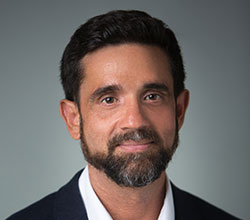
As a Senior Associate, Anthony contributes to Shift’s work with governments, business enterprises, and other partners to put the Guiding Principles into practice and advises on opportunities to expand the impact of Shift’s work advancing respect for human rights.
Anthony is a business advisor, attorney, and teacher with two decades of experience counseling senior executives in the private and non-profit sectors on crisis management, corporate responsibility, and strategic communication. He has advised clients in a range of industries, including healthcare, technology, financial services, energy and manufacturing. In the non-profit sector, he has worked with the International Labour Organization, the Executive Office of the UN Global Compact, the International Secretariat of Religions for Peace, the International League for Human Rights, Physicians for Human Rights, the Inter-American Court of Human Rights, and an international development organization in Central America.
Anthony teaches business and human rights at Columbia Law School. He co-founded the Teaching Business and Human Rights Forum, a platform for collaboration among teachers worldwide, is a member of the Editorial Board of the Business and Human Rights Journal, and is editing a guide on Teaching Business and Human Rights (Edward Elgar Publishing Ltd., forthcoming 2022).
Anthony holds a B.A. in political science from Yale University and a law degree from Columbia University, where he was editor-in-chief of the Columbia Human Rights Law Review. He is a United States national.
In his role as a Senior Associate at Shift, Rutger focuses on corporate human rights due diligence, supporting companies to assess, address, prioritize, and report (potential) human rights impacts.
In his role as a Senior Associate at Shift, Rutger focuses on corporate human rights due diligence, supporting companies to assess, address, prioritize, and report potential human rights impacts. He guides companies on the practical application of the UNGPs, supporting the acquisition of internal buy-in and development of strategy and policies, risk assessment, external stakeholder engagement and collection of feedback, action-planning and communications and reporting.
Rutger’s expertise is in human rights, labor rights and public/government affairs, in both national and international and EU contexts. Rutger gained this experience through work at the European Financial Reporting Advisory Group (EFRAG) supporting the development of the social European Sustainability Reporting Standards; 15 years at HEINEKEN, as Senior Manager for International Labor Relations, where he was responsible for international labor relations and labor & human rights and as Global Public/Government Affairs Manager; as International Public Affairs Manager and as Manager for International Labor Relations at the Postal & Express Company TNT (now part of FedEx). His first practical experience in Labor Rights & Relations and Public Affairs was as Secretary of International Social Affairs for the Dutch Employers’ Federation.
Rutger is an independent member of the Dutch OECD National Contact Point for responsible business conduct (NCP). The NCP mandate is to promote the OECD Guidelines for Multinational Enterprises, and related due diligence guidance, and to handle cases (referred to as “specific instances”) as a non-judicial grievance mechanism.
Rutger studied at the Faculty of Law at Utrecht University, where he specialized in Labor and Civil law. He speaks English and Dutch and is proficient in French, Spanish and German. He is based in Amsterdam.
As Head of Operations, Jill leads Shift’s operational excellence and oversees finance, human resources, grants, and contracts across the organization.
Jill is Head of Operations at Shift, where she oversees the organization’s core operational functions, including finance, human resources, grants, and contracts, and plays a central role in advancing organizational effectiveness and long-term sustainability. She serves as Treasurer of the Board of Directors and is a member of the executive leadership team, partnering closely with senior leadership to support strategy, risk management, and responsible stewardship of resources.
Jill brings 25 years of experience leading finance and operations across the nonprofit and international development sectors. She has overseen large-scale global programs and complex grant and contract portfolios exceeding $50 million, working closely with funders and internal teams to align financial, operational, and programmatic objectives. Her career has been marked by strengthening grant-making and compliance systems, improving data integrity, streamlining workflows, and translating complex policies into practical, user-centered processes. She brings deep expertise in grant compliance, financial management, human resources, and enterprise systems, and is known for aligning operational rigor with programmatic impact.
Her work spans Africa, Asia, the Middle East, and Eastern Europe, with leadership roles and long-term assignments in Moldova, Jordan, Myanmar, Lebanon, and Ghana. Jill has held senior operations and finance positions with organizations including Tetra Tech and FHI 360, supporting complex, multi-country initiatives focused on climate change, conservation, civil society, human rights, and governance. Throughout her career, she has partnered closely with major development funders, including USAID, the European Union, GIZ, and the United Nations, building productive relationships and navigating diverse funding frameworks to advance shared objectives while strengthening operational systems in dynamic and resource-constrained environments.
Jill began her career as a Peace Corps Agroforestry Volunteer in Cameroon, an experience that inspired her lifelong commitment to international development and equity-driven work. She holds a Master of Public Policy from George Mason University and a Bachelor of Landscape Architecture from Michigan State University.
As Vice President with Shift, Mark helps shape our strategy and oversees a range of our collaborations with companies, governments, investors, civil society and other partners.
Specializes in Valuing Respect
As Vice President with Shift, Mark helps shape our strategy and oversees a range of our collaborations with companies, governments, investors, civil society and other partners. Mark co-led Shift’s VALUING RESPECT PROJECT, focused on developing better ways to evaluate business respect for human rights. He has extensive insight into how businesses implement the UN Guiding Principles in practice. As a trained moderator and facilitator, Mark has deep interest and experience in leading processes that address complex challenges and lead to practical outcomes.
Mark has focused significantly on the implementation of the UN Guiding Principles in the context of emerging digital technologies such as AI, facial recognition, cloud computing and social media. He has served as Senior Advisor to the UN Human Rights Business, Human Rights and Technology (B-Tech) project to develop guidance and recommendations for companies, States and investors about how to embed respect for human rights into the business of technology. Mark has also been a Technology and Human Rights Fellow at Harvard Kennedy School’s Carr Center.
Mark was previously the Executive Director of the Global Business Initiative on Human Rights (GBI) which he co-founded in 2009. In that role he led the development of GBI’s cross-industry peer learning program that addressed the daily realities and dilemmas of doing business with respect for human rights. His work also included a project on leverage in corporate lending and project finance for the Dutch Banking Sector Agreement on International Responsible Business Conduct, and the development of a program of work on new digital technologies for the Institute for Human Rights and Business. Mark has designed and delivered training and capacity building around the world to business leaders, NGO representatives and students, and conducted factory and mine assessments and field visits in several countries with a focus on India, where he was based between 2009 and 2012.
Mark has authored or contributed to a number of publications including: The Transformative Nature of Respect (Allen and Overy business and human rights journal), a chapter on responsible business in Myanmar in Business and Human Rights in South East Asia – Risk and the Regulatory Turn (Routledge) and the State of Play of Respect for Human Rights in Business Relationships, a joint GBI and Institute for Human Rights and Business report.
Mark has a first-class Honors degree in politics theory from Queen Mary University of London. He is trained in various dialogue and facilitation methods including scenario planning, organizational constellations, deep democracy and the art of hosting.
As Director, Jenny works with companies, governments, financial institutions, civil society organizations, funders and partners to advance Shift’s mission to redefine corporate practice to fully embed human rights.
Specializes in Accounting for a Living Wage | Human Rights Reporting | Valuing Respect
As Director, Jenny works with companies, governments, financial institutions, civil society organizations, funders and partners to advance Shift’s mission to redefine corporate practice to fully embed human rights. Working closely with the Business Engagement team, she facilitates strategic alignment and shared learning across Shift’s work.
Jenny has over 20 years of experience working with trade unions, companies, NGOs, multistakeholder initiatives, academics and others to drive progress on business and human rights. Prior to joining Shift, Jenny was Assistant General Secretary at IndustriALL Global Union, where she led major initiatives on precarious work, living wages and sustainable industrial policy. There, she engaged extensively with multinational companies, governments, NGOs and trade unions to develop pioneering joint strategies, including the ACT initiative on living wages in garment supply chains, linking brand purchasing practices to the payment of higher wages, and the seminal Accord on Fire and Building Safety in Bangladesh, for which Jenny jointly led the first international arbitration in the field of business and human rights to enforce its provisions.
Before this Jenny was Director of ICT, Electrical and Electronics and Aerospace Departments at the International Metal Workers Federation in Geneva. She has also held posts at the Affirmative Action Agency, the National Tertiary Education Union, and the Community and Public Sector Union, in Sydney, Australia.
Since January 2021, Jenny has worked with Shift’s Accounting for Living Wages project to support the development of an accounting model that enables companies to measure and report on progress towards living wages across their workforces and supply chains.
Jenny holds a Masters in Labour Law and Relations from the University of Sydney, and a Bachelor’s degree in French and Linguistics from the University of Exeter.
As a Senior Associate at Shift, Théo brings hands-on experience in the implementation of the international standards on business and human rights to support Shift’s advisory work.
Théo Jaekel is a lawyer specialized in business and human rights and international law. He brings over a decade’s experience working with multinational companies, both as in-house and external legal counsel, research-based civil society organizations, as well as academia.
Théo’s hands-on experience in the implementation of international standards and legal frameworks on business and human rights includes designing and embedding due diligence processes across value chains and global operations, conducting in-depth and on the ground research and investigations in high-risk countries, establishing governance and accountability structures as well as supporting clients on legal cases.
Théo is a frequent, and internationally recognized, panel speaker and lecturer at several universities, and has held several non-executive board seats for international organizations.
Théo holds an LL.M. in international law from Stockholm University and his previous experiences include managing the global legal human rights team at Ericsson Group as Director, Business and Human Rights, establishing and leading the human rights practice group at Vinge law firm, and conducting research projects and investigations on corporate accountability, including field work in high-risk and conflict-affected areas for Swedwatch. Théo currently works as an independent business and human rights advisor.
As a trained and certified SA8000 auditor, Théo conducts social audits in a wide range of sectors and geographies, including extractives, ICT manufacturing and apparel.
As a Senior Advisor at Shift, Subajini works with companies and other strategic partners to support their implementation of the UN Guiding Principles on Business and Human Rights.
As a Senior Advisor at Shift, Subajini works with companies and other strategic partners to support their implementation of the UN Guiding Principles on Business and Human Rights (UNGPs).
Suba brings extensive operational experience working on children’s and women’s rights. Prior to joining Shift, she worked for 17 years with the United Nations Children’s Fund (UNICEF), in Asia and Africa and global headquarters in New York and Geneva. Suba was the architect of UNICEF’s Better Business for Children initiative, positioning UNICEF as one of the leading organizations working with business to create positive impact for women and children in workplaces and across global supply chains. Suba also played a key role in the development of the Children’s Rights and Business Principles, a framework for businesses to respect and support children’s rights, building directly on the UN Guiding Principles.
Suba has worked on child rights in a range of business sectors – from the apparel sector in Bangladesh, to footwear factories in Vietnam, palm oil plantations in Indonesia, and cocoa farms in Côte d’Ivoire. She began her career at UNICEF working in humanitarian and conflict programming in Sri Lanka and Sudan. Here, she managed child protection programs, building the capacity of government and civil society and strengthening systems for social work, social protection, mental health and psychosocial wellbeing and justice for children. She has developed information management systems to monitor child rights violations in conflict and led programs to support the rehabilitation and reintegration of former child soldiers.
During the Covid-19 pandemic, Suba created a social media project called Nyaanum to explore diversity and inclusion in travel storytelling. Through the project, she worked with local and indigenous communities to create a series of short Instagram videos capturing everyday life from their perspective. The videos were featured on the UN Biodiversity Instagram channel, reaching an audience of 300,000.
Suba has published on business and children’s rights, writing about family-friendly workplace policies, and children as stakeholders in the financial sector. She has a Masters in Social Policy and Planning from the London School of Economics and Political Science; and a Bachelor of Arts from the University of Toronto.
As an Senior Advisor with Shift, Mairead works hand-in-hand with companies and other strategic partners to build capacity to identify, prioritize and mitigate human rights risks.
Specializes in Business Enterprises | Human Rights Reporting
As an Senior Advisor with Shift, Mairead works hand-in-hand with companies and other strategic partners to build capacity to identify, prioritize and mitigate human rights risks. She blends her background in business, technology, CSR and human rights disclosure to help companies fulfill their responsibility to respect human rights. From 2016-2019, she managed Shift’s Reporting Program, a flagship initiative aimed at developing corporate capacity for improved human rights disclosure in line with the UNGPs and equipping other stakeholders to understand and interpret this disclosure, particularly through the expansion of the UNGP Reporting Database. As part of this program, Mairead worked closely with Mazars LLP through the development of the UN Guiding Principles Assurance Guidance.
Prior to joining Shift, Mairead worked for 16 years for Microsoft in Europe in both strategic and operational positions, the second half of which as Corporate Affairs Manager for Central and Eastern Europe. In this role Mairead coordinated across Microsoft’s 28 subsidiaries to engage with governments and bring a consistent policy and corporate social responsibility strategy to life. She participated on behalf of Microsoft in multi-stakeholder initiatives on key topics linked to business and human rights. Prior to this role, Mairead led Partner Marketing across Central and Eastern Europe and had European operational responsibility for the company’s Anti-Piracy programs.
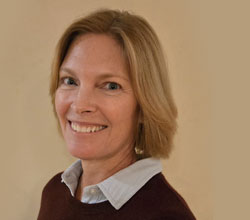
As Shift’s Head of Finance, Barbara ensures we have sound financial systems in place.
As Shift’s Head of Finance, Barbara manages the financial aspects of our collaborations and activities. She is responsible for financial management and accounting, contracts, grants and operational compliance.
Barbara brings over fifteen years of experience in operations roles with sustainability organizations focused on environmental and social responsibility. She previously managed the training program for the American College & University Presidents’ Climate Commitment (ACUPCC), a national network of over 675 colleges and universities committed to tracking greenhouse gas emissions and planning for climate neutrality.
Prior to her work with the ACUPCC, Barbara worked on climate and sustainability research and the development of a sustainability rating system for Fortune 500 companies. She spent four years at the Oregon Natural Step Network, coordinating operations and professional development events for a network of over 300 businesses, higher education institutions, government agencies and non-profit organizations interested in sustainability.
Barbara has an MBA in Sustainable Business from the Bainbridge Graduate Institute, the first graduate program in the US to offer an MBA focused on environmentally and socially responsible business practices. She also holds a Bachelor of Arts in Communication and Human Ecology from Rutgers University. Barbara is also a licensed “SCORE” assessor – a tool that helps organizations evaluate the effective integration of sustainability into their operations. She is a United States national.
As Head of Global Communications at Shift, Davinder leads the development and implementation of the organization’s global communications strategy.
Davinder is a strategic communications leader with nearly two decades of experience in media, human rights, international development, and international higher education.
As Head of Global Communications at Shift, Davinder leads the development and implementation of the organization’s global communications strategy. His focus is on strengthening Shift’s voice, visibility, and influence with key stakeholders, including governments, international institutions, businesses, civil society, and financial institutions, to advance implementation of the UN Guiding Principles on Business and Human Rights.
Davinder brings a strong track record shaping narratives, building influence, and aligning communications with mission and impact across diverse sectors and geographies. He has worked extensively at the intersection of policy, systems change, advocacy, and stakeholder engagement, with communications expertise spanning media relations, digital strategy, multi-channel campaigns, brand development, and reputation management. Prior to joining Shift, Davinder was Vice President of Corporate & Public Relations at INTO University Partnerships, a global education services provider, where he built a global PR function, elevated INTO’s brand in key markets, secured unprecedented media profile, led strategic communications for university partners, and oversaw the digital transformation of communications channels.
Previously, Davinder spent a decade at Plan International — one of the world’s largest child rights and humanitarian organizations — where he held various senior roles including Head of Global Media and Public Relations. He supported external engagement across 80+ countries and contributed to global advocacy campaigns on child rights, gender equality, and youth empowerment.
Originally trained as a journalist, Davinder has been published by The Guardian, CNN, BBC, and Al Jazeera, and was a finalist for the Guardian International Development Journalism Award. He is a Chevening Human Rights Scholar, holds an MA in Human Rights from the University of Essex, and is a Fellow of the Royal Society of Arts.
Throughout his career, Davinder has used communications and advocacy to help organizations navigate complexity, build alliances, and stay grounded in values of dignity, justice, and accountability.
As a Senior Advisor with Shift, Michelle works with companies, financial institutions and other strategic partners to support their implementation of the UN Guiding Principles (UNGPs).
Specializes in Standard Setters | Human Rights Reporting
As a Senior Advisor with Shift, Michelle works with companies, financial institutions and other strategic partners to support their implementation of the UN Guiding Principles (UNGPs).
Michelle has a decade of experience analyzing the maturity of companies’ human rights reporting and played a central role in promoting the uptake of the UN GUIDING PRINCIPLES REPORTING FRAMEWORK, including through developing Shift’s UN GUIDING PRINCIPLES REPORTING DATABASE. She is also a leading expert in the application of the UN Guiding Principles to new and emerging legislation and standards. Her work includes analyzing the implications of these standards for leading companies and financial institutions that have commitments and practices that are aligned with the UNGPs. She is also involved in Shift’s work supporting the development of the European Sustainability Reporting Standards (EFRAG) under the EU’s Corporate Sustainability Reporting Directive.
As part of Shift’s Business Learning Program, Michelle supports financial sector and FMCG partners, working closely with partners on human rights due diligence, including the identification of salient human rights issues, E&S risk assessment frameworks, grievance mechanisms, stakeholder engagement and internal capacity building – including for procurement departments, portfolio managers, and front-line teams.
Michelle is a (non-practicing) lawyer specialized in international human rights law. She completed her articling position at a major Canadian corporate law firm and graduated summa cum laude from the Master of Laws program in International Human Rights Law at the University of Notre Dame. Michelle is based in Canada and speaks English and French.
Senior Associate
He/Him Montreal
As a Senior Associate with Shift, Lloyd focuses on bringing his expertise in human rights impact assessments to help our collaboration partners implement the Guiding Principles on the ground.
As a Senior Associate with Shift, Lloyd engages with our collaboration partners on an everyday basis, with a particular focus advising companies in the extractives sector and in emerging markets. As a leading expert on human rights impact assessments, Lloyd has a deep understanding of the impact on communities and workers of large scale infrastructure, extractives and natural resources projects.
Lloyd is an international human rights lawyer with 25 years of experience working with companies, governments, national human rights institutions, civil society organizations and indigenous peoples on corporate impacts on people. Lloyd has led or participated in over 75 on-the-ground assessments in challenging contexts around the world.
Lloyd has particular expertise on indigenous peoples rights, economic, social and cultural rights, stakeholder engagement and grievance mechanisms. He regularly publishes and makes presentations on a wide range of human rights issues relevant to companies, industry associations and governments.
Lloyd previously served as the senior assistant to three presidents of the Canadian human rights organization Rights & Democracy from 2003 to 2008, and participated in all aspects of the organization’s management and programming, including the development of a community-based human rights impact assessment methodology. He began his career as a corporate litigator at McMillan Binch in Toronto. He successfully represented clients at all levels of the courts of the province of Ontario and in the Canadian federal court system and developed a specialization in class actions, mediation and dispute resolution. Lloyd is a graduate of Queen’s University and McGill University and is a member of the Law Society of Ontario. He is a Canadian and United States national and speaks English and French.
As a Senior Advisor, Helen develops and leads Shift’s work at the nexus of human rights and environment, climate and biodiversity.
HELEN MEEKINGS | SENIOR ADVISOR, ENVIRONMENT, CLIMATE CHANGE AND HUMAN RIGHTS
As a Senior Advisor, Helen develops and leads Shift’s work at the nexus of human rights and environment, climate and biodiversity. Helen is an energetic, collaborative and experienced senior leader bringing with her more than 20 years’ experience in sustainability and climate change, 11 of which have been in the international finance sector. Helen has worked at the senior executive level, leading climate and ESG organizational change, including in the Taskforce on Climate-related Financial Disclosures (TCFD). She has also led international negotiations and UK government policy development relating to climate, sustainability and export finance.
Helen is experienced in delivering the requirements of the UN Guiding Principles from a business and government perspective, particularly in her role with UK Export Finance, where she headed their environmental and social risk management team for a number of years. She has worked with business, financial institutions, standard setters and civil society on interrelated sustainability issues at both corporate and project level. This includes significant experience in the implementation of the IFC Performance Standards, Equator Principles, and with OECD requirements such as the OECD Common Approaches and Guidelines for Multilateral Enterprises. More recently, Helen has advised and supported businesses and financial institutions with evolving international ESG requirements, such as those of the International Sustainability Standards Board (ISSB), EU and Global Reporting Initiative.
Helen is a strategic thinker supported by strong practical knowledge and skills gained from working internationally throughout her career and across many industrial sectors. Helen is a civil and public health engineer by training, and a professionally qualified chartered engineer and chartered environmentalist in the UK.
As a Senior Advisor, Jonathan has a primary focus on social dimensions of corporate reporting standards, frameworks and practice, including Shift’s engagements with the Taskforce on Inequality and Social-related Financial Disclosures (TISFD), and the Sustainability Reporting Board of EFRAG (European Financial Reporting and Advisory Group) as well as on the EU’s wider sustainable finance agenda.
As a Senior Advisor, Jonathan has a primary focus on social dimensions of corporate reporting standards, frameworks and practice, including Shift’s engagements with the Taskforce on Inequality and Social-related Financial Disclosures (TISFD), and the Sustainability Reporting Board of EFRAG (European Financial Reporting and Advisory Group) as well as on the EU’s wider sustainable finance agenda.
Jonathan has one decade of ESG strategy, reporting, and policy experience. Before joining Shift, he spent five years with the Stockholm-based specialist management consultancy firm Ethos. Here he was a member of the executive management team and served as Senior Advisor and Head of Sustainable Finance while leading a team of sustainability experts. While at Ethos, he worked with multiple Fortune 500 and FTSE 250 firms on projects focused on capacity building and strategic implications ahead of and during the rollout of the EU Action Plan on Sustainable Finance (SFDR, EU Taxonomy, CSRD) and global reporting frameworks such as the IFRS Sustainability Standards (ISSB) and TCFD.
Prior to his tenure as Head of Sustainable Finance at Ethos, he co-founded a venture-backed climate-focused impact startup and filled numerous sustainability and advocacy roles within the public and private sector – on the 2016 U.S. Presidential Campaign, the Swedish Campaign for Zero Emissions, NextGenerationEU, Sustainable Innovation, and as board member at PUSH Sweden and Wellstreet VC.
Other than that, he has worked in stints as a grape picker, groundworker, garbage collector, waiter, deckhand, tutor, translator, and stonemason’s assistant. Jonathan is bilingual in Swedish and English.
Jonathan has a B.A. in Political Economy from University of California, Berkeley. He has also undertaken graduate studies in International Affairs with a focus on International Finance and Economic Policy at Columbia SIPA in New York.
As Shift’s Director / Financial Institutions Lead, Ashleigh leads our work with financial institutions and supports other partners across industries, leveraging her breadth of experience to tackle cutting-edge issues and entrenched challenges on the road to implementation of the UN Guiding Principles.
Specializes in Financial Institutions | Valuing Respect
As Director / Financial Institutions Lead, Ashleigh engages directly with financial institutions, companies and investors as they embed respect for human rights into their operations and business relationships. She also leads on pieces of research under our Valuing Respect Project, which is focused on developing better ways to evaluate business respect for human rights. Ashleigh has a breadth of experience approaching the Guiding Principles from business, legal and academic perspectives and brings a holistic view to Guiding Principles implementation.
Ashleigh was previously Executive Director at Ernst & Young’s Climate Change and Sustainability Services. At EY Japan, she led a team of consultants supporting policy-making, educational program and governance design, stakeholder dialogue and due diligence strategies for multinational and domestic companies across a variety of industries. As founder of the EY Human Rights Network, she led the enhancement of EY’s human rights capabilities across EY’s global network. In her role she was a frequent speaker and moderator of dialogues at multi-stakeholder fora and functioned as a connector between civil society, government and corporate actors with a common goal of empowering business to respect rights.
From 2012 to 2014 she conducted research at the United Nations University in the field of Sustainability Science, specializing in business and human rights. She prepared research for the UN Working Group on Business and Human Rights and spent time at the UN Global Compact New York and the Office of the High Commissioner for Human Rights. Ashleigh later sat on the UN Global Compact’s Human Rights and Labour Working Group and drafted the Global Compact’s 2015 Guide on How to Develop a Human Rights Policy.
Ashleigh is a lawyer qualified in Australia and England & Wales and specialized in intellectual property law, labor law and public international law. She has advised governments and companies on state human rights obligations, companies on the nexus between bilateral investment treaties and human rights and fellow lawyers on integrating the Guiding Principles into legal advice. In 2007 she won the Intellectual Property Society of Australia & NZ prize.
Ashleigh has authored or contributed to a number of publications including: Business and Human Rights: Corporate Japan Rises to the Challenge (joint publication between EY Japan and Global Compact Network Japan), Corporate Social Responsibility Can Save Japan (Op-ed in Japan Times), Cumulative Human Rights Impacts (in UN Global Compact/ Maplecroft Business Dilemmas Forum) as well as several legal publications on intellectual property law in Australia and English translations of Japanese High Court judgments. She is also a member of the Advisory Board for the United Nations Institute for Training and Research (UNITAR)’s Division for Prosperity.
Ashleigh has degrees in Law and Asian Studies from the University of Western Australia, with studies also conducted at the University of Vienna and Sophia University in Japan. She has a Masters of Science in Sustainability from the United Nations University and has undertaken the institution’s Leadership for Sustainability program. Ashleigh is an Australian national, and is fluent in Japanese.
As an Advisor, Swantje works with companies to support their implementation of the UN Guiding Principles on Business and Human Rights (UNGPs).
As an Advisor, Swantje works with companies to support their implementation of the UN Guiding Principles on Business and Human Rights (UNGPs).
Swantje is an international lawyer with more than ten years of experience in international criminal law, human rights implementation and business and human rights. She has worked at the International Criminal Tribunal for the Former Yugoslavia in The Hague as well as the UN Khmer-Rouge Tribunal in Phnom Penh. She has also worked on the broader implementation of human rights with the EU External Action Service, and with the Committee for Human Rights and Humanitarian Affairs of the German Federal Parliament. As a research fellow for the Max Planck Foundation for International Peace and the Rule of Law for Cambodia and the Sudan, she designed and delivered training to members of parliament and government representatives.
Prior to joining shift, Swantje was a Manager for Human Rights at Mercedes-Benz Group AG, where she set up the company’s human rights due diligence management system and oversaw implementation of its activities throughout the supply chain. In this role, she also led the implementation of the German Supply Chain Due Diligence Act in company policies and processes, working closely with Mercedes’ procurement units and other relevant functions in headquarters and entities across the world. Swantje has also represented Mercedes, a founding member, in the Sector Dialogue of the German Automotive Industry, a multi-stakeholder forum and the first of its kind. Alongside the Federal Ministry of Labor and Social Affairs, business associations, civil society organizations, trade unions and other enterprises in the automotive supply chain, the sector dialogue seeks to develop joint solutions to address human rights risks and improve the protection of human rights along automotive supply chains. Amongst other things, this included the establishment of a cross-company grievance mechanism in Mexico that seeks to improve access to remedy in the lower tiers of the supply chain.
Swantje holds Master of Laws (distinction) in International Law with a Spezialisation in Human Rights and a Bachelor of Laws in European Law from Maastricht University. She also holds an M.A. (distinction) in European and International Studies from the Centre International de Formation Européenne. She has been a guest lecturer at several universities, including the University of Groningen and the Central European University in Vienna.
As a Senior Advisor at Shift, Brianna advises financial institutions and companies on how to put the UNGPs into practice, with a particular focus on the nexus between human rights and climate change.
Specializes in Financial Institutions
As a Senior Advisor at Shift, Brianna advises financial institutions and companies on how to put the UNGPs into practice, with a particular focus on the nexus between human rights and climate change. Brianna combines environment and climate change expertise with experience developing and implementing human rights policies, due diligence approaches and sustainability reporting.
Before Shift, Brianna spearheaded innovative sustainability initiatives at Sustainable Development Technology Canada and Export Development Canada (EDC). At EDC she led the development and implementation of exciting new portfolio approaches for climate change and human rights risk management, as well as aligning EDC’s corporate reporting with international reporting frameworks, such as the Task Force on Climate-related Financial Disclosures and the UNGPs Reporting Framework. She also led EDC’s international sustainability negotiations and engagements, including as co-Chair of the Equator Principles Climate Change Working Group.
Prior to joining EDC, Brianna worked for nine years as a diplomat with Canada’s foreign ministry, including four years at the United Nations General Assembly where she led environment and development negotiations, advocacy and outreach on behalf of the Government of Canada, including for the creation of the UN Sustainable Development Goals.
Brianna has also advised international financial institutions including the World Bank Group, institutional investors, bilateral development agencies, and small- and medium-sized enterprises on the practical application of environment, climate change, human rights standards.
Brianna has an undergraduate degree in Chemical Engineering from Queen’s University and a Master’s degree in Environmental Change & Management from the University of Oxford.
Head of Human Resources
He/Him
As Head of Human Resources, Martyn leads Shift’s global people strategy and oversees all aspects of HR across the organization.
As Head of Human Resources, Martyn leads Shift’s global people strategy and oversees all aspects of HR across the organization. He ensures that Shift’s systems, policies and practices foster a thriving, inclusive and values-driven culture that supports our mission to embed respect for people’s dignity at the core of business practice.
Martyn brings over a decade of HR leadership experience across mission-driven and international organizations working at the intersection of business and society. Prior to joining Shift, he was Director of People Development & Culture at the PRI and earlier worked with Business in the Community. In these roles, he developed and embedded HR business partnering models, guided the organizations through significant growth and transformation, and partnered with senior leaders to design and implement people strategies that supported the delivery of their mission. Most recently, he served as a consultant with the WeProtect Global Alliance, where he supported the establishment of their HR function.
He is a Chartered Member of the CIPD and holds a Level 7 Diploma in Human Resource Management, as well as an ILM Level 7 Certificate in Executive Coaching and Mentoring, reflecting his strong focus on leadership development and coaching. Martyn studied German and International Relations at the University of Exeter, including a year at the University of Würzburg in Germany. He later worked on education projects in Nicaragua, strengthening his global outlook and commitment to people-centred change.
Martyn is based in the United Kingdom.
As Shift’s President, Caroline leads our strategic development and drives our thought leadership work on key challenges and opportunities in advancing corporate respect for business and human rights.
As the President and Co-Founder of Shift, Caroline leads our organizational strategy and development and drives our thought leadership work on key challenges and opportunities in advancing corporate respect for business and human rights. Caroline speaks extensively at events around the world and frequently facilitates dialogue and debate amongst companies, governments, investors and civil society. In recent years, Caroline has focused on improving corporate human rights reporting as a catalyst for better human rights risk management, and on improving the data and methods used in evaluating companies’ social performance as part of ESG (environmental, social and governance) analysis. She has written and spoken extensively on the relevance of business respect for human rights, and the UNGPs specifically, to movements that seek to advance sustainability, equality, ESG investing, stakeholder capitalism, and human and social capital.
Caroline previously spent 14 years with the British Foreign and Commonwealth Office. From 2003 to 2006 she led the UK’s human rights negotiating team at the UN and she ran the negotiations to establish the mandate of the Special Representative of the UN Secretary-General on business and human rights. The success of this initiative led to Professor John Ruggie’s appointment and from 2007-2011 Caroline was a lead advisor on his team and deeply involved in the drafting of the Guiding Principles.
From 2009 to 2011 Caroline was also the Director of the Governance and Accountability Program at the Corporate Social Responsibility Initiative at Harvard Kennedy School and she remains a Senior Program Fellow there. Caroline is a member of the Imperatives Board of the World Business Council for Sustainable Development, the Board of the Capitals Coalition, the Unilever Sustainability Advisory Council, and the Steering Committee of the Taskforce on Inequality and Social-related Financial Disclosures.
Caroline’s prior British foreign service career covered Iran, Slovakia, the UN Security Council in New York and the European Union in Brussels. Caroline has a Bachelor of Arts (Hons) from Oxford University and a Master of Arts in Law and Diplomacy from the Fletcher School of Law and Diplomacy at Tufts University. Caroline is a British national and speaks English, French and German.
As a Communications Officer at Shift, Lily helps to amplify the organisation’s voice and build visibility for its message and services.
Lily Russell-Jones is a Communications Officer at Shift, where she helps to amplify the organisation’s message and strengthen its visibility and influence.
She has more than six years of experience in media and communications, spanning roles as an award-winning personal finance journalist for The Times and The Sunday Times and as a parliamentary assistant for an MP.
Before joining Shift, Lily was a Senior Money Reporter for The Times and The Sunday Times, where she wrote features, analysis and investigations about personal finance. She frequently helped consumers challenge unfair treatment by companies and government departments. She was also a regular guest on Times Radio, The Story podcast and featured on BBC London, Newscast and Radio 4’s You and Yours program. She won Headline Money’s Fintech Journalist of the Year for both 2022 and 2023. She was also Rising Star of the Year in 2023.
Prior to joining The Times she was a Business News Reporter for the London-based financial newspaper City AM. She was also a freelance reporter for The Sunday Times’ investigative team, where she worked on articles covering the government’s handling of the coronavirus pandemic and the best-selling book Failures of State.
In her free time she enjoys reading, creative writing and salsa dancing. She regularly volunteers as an aid worker with the charity Care4Calais, which supports refugees living in settlements across Calais and Dunkirk.
Lily achieved a distinction for her master’s in International Relations at the London School of Economics, where she was the Editor-in-Chief of The London Globalist, an international affairs magazine. She holds a First Class undergraduate degree in English Language and Literature from the University of Oxford and was awarded an academic scholarship.
As a Senior Advisor at Shift, Andrew advises companies and financial institutions on how to put the UNGPs into practice, with a particular focus on the nexus between human rights and climate change.
As a Senior Advisor at Shift, Andrew advises companies and financial institutions on how to put the UNGPs into practice, with a particular focus on the nexus between human rights and climate change. Andrew combines expertise in environmental issues with experience developing and implementing human rights policies, due diligence approaches, reporting and grievance systems at major multinational companies.
Prior to Shift, Andrew worked in public policy and sustainability roles at Tesco in the UK and PepsiCo in both the UK and the US. He has worked across a wide range of challenging issues, leading company approaches to land rights, labor rights in apparel and palm oil supply chains and the provision of access to remedy for affected stakeholders, among many others.
Andrew has extensive experience engaging with affected stakeholders to set environmental and human rights priorities, improve company goals and commitments, and address specific challenges and grievances raised directly, and through proxies. He is also an expert in the connections between human rights and a responsible approach to corporate political engagement.
Andrew has a law degree from the London School of Economics and Political Science. He is based in New York City.
As an Advisor, Defne works with companies and other strategic partners to support their implementation of the UN Guiding Principles on Business and Human Rights (UNGPs).
Specializes in The “S” in ESG | Human Rights Reporting | Valuing Respect
As an Advisor, Defne works with companies and other strategic partners to support their implementation of the UN Guiding Principles on Business and Human Rights (UNGPs).
Defne has extensive experience researching a range of human rights and international legal issues, including the UNGPs and corporate accountability. Prior to joining Shift, Defne was an independent researcher and consultant on labor rights, where she focused on occupational health and safety, collaborating with a variety of stakeholders, from the ILO to trade unions. Previously, she worked as a researcher on reporting projects for UNESCO, Freemuse and the OSCE, looking at artistic freedom, freedom of expression, and anti-slavery.
Defne is currently a PhD candidate at the Osgoode Hall Law School, York University. Her project explores the shift from the corporate social responsibility tools of the liberal economy to those of the financial economy, with a focus on the use and purpose of voluntary social disclosure mechanisms and performance rating systems.
Defne has instructed courses on legal process, ethical lawyering, corporate social responsibility and transnational law in Canada and the UK.
Defne holds degrees in Law from the Dickson Poon School of Law, King’s College London (LL.M, distinction) and Koç University in Istanbul (LL.B, Member of the Istanbul Bar). She is currently the co-managing editor of Transnational Legal Theory, a refereed law review of transnational law.
As a Senior Associate with Shift, Anna advises companies, lawyers, investors and business associations on how to put the Guiding Principles into practice.
As a Senior Associate with Shift, Anna advises companies, investors and business associations on how to put the Guiding Principles into practice. Trained as a lawyer, Anna focuses particularly on working with legal professionals on their role in implementing the Guiding Principles and has led work on analyzing regulations in various jurisdictions and how they align to the Guiding Principles. She also has particular expertise on the UN Guiding Principles Reporting Framework.
Prior to joining Shift, Anna provided input to the work of the Special Representative of the UN Secretary-General for business and human rights John Ruggie as a legal consultant. During this period, Anna also opened the New York office of the Public International Law & Policy Group, where she advised government officials, opposition leaders, human rights victims and civil society organizations on human rights, constitutional reform and transitional justice in Burma, Côte d’Ivoire, Egypt, Kenya, Libya, Somaliland, Tunisia, Uganda and Zimbabwe.
Anna was previously a mergers and acquisitions associate at the law firm of Jones Day in New York, where she advised a broad range of multinational companies on cross-border mergers and acquisitions, joint venture, private equity and venture capital transactions. She founded and led the law firm’s International Law Pro Bono Group. She began her career as an advisor to the World Bank, advising on development governance structures to better meet the Millennium Development Goal of achieving universal primary education.
Anna is a (non-practicing) lawyer qualified in New York, England & Wales and France. She is a frequent expert speaker and writer on business and human rights and is the recipient of various professional awards, including the Empire State Counsel Award for changing the lives of those unable to afford counsel and the Seymour-Reuben Award for shaping international law. Anna has a Masters in International Law from American University Washington College of Law and a degree in common and civil law from the University of Paris X. She has been awarded the Business Sustainability Management certificate from the Cambridge Institute for Sustainability Leadership (CISL) and the MBA Essentials certificate from London School of Economics (LSE). Anna is a British and French national and speaks English and French.
As an advisor, Tammy support Shift’s research and advocacy on mandatory due diligence standards at the European Union and EU member states and helps connect our work on mandatory due diligence and reporting standards.
Specializes in Standard Setters
As an advisor, Tammy support Shift’s research and advocacy on mandatory due diligence standards at the European Union and EU member states and helps connect our work on mandatory due diligence and reporting standards. She also works to bring business and civil society perspectives from key sourcing markets into the EU debates.
Prior to joining Shift, Tammy was a policy advisor at Solidaridad Europe. She worked at influencing EU legislative developments on sustainable supply chains, including the proposal for a Directive on corporate sustainability due diligence and the proposal for a Regulation on deforestation-free products with the aim of making them inclusive of the interest of smallholders. She also participated in the multisectoral gold sector agreement negotiated under the Social and Economic Council of the Netherlands (SER) where she supported member companies in implementing due diligence in the mineral supply chain.
Tammy has extensive experience in the development of public policy in Ecuador, where she worked as a legal and policy advisor to a number of senior governmental officials. This included working toward the adoption of national legislation premised on the notion of water access as a human right. Working as a consultant for the UNDP to draft key sections of the implementing regulation of the Ecuadorian Environmental Law. Providing legal advice to the Vice-Mayoress of Quito in the exercises of her legislative power in the environmental committee. All these processes involved significant multistakeholder engagement, including with indigenous peoples’ representatives. She also supported negotiations on the restructuring of Quito’s waste management system, securing commitments to assess and address social risks, which included an obligation to conduct a fully participatory process with informal waste pickers.
Tammy holds a Master degree in Public and International law from Melbourne University, and a Master of Globalization and Social Integration from Universidad de Navarra. She has a Graduate Specialization in Environmental Management from Universidad Central del Ecuador and is a member of the IUCN World Commission on Environmental Law. Tammy is a (non-practicing) lawyer qualified in Ecuador and is an Ecuadorian and French national.
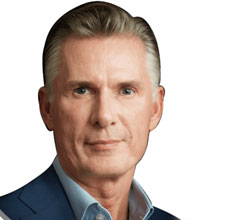
As Director, David engages with business partners to better identify, prioritize and act on salient human rights issues, embedding the UN Guiding Principles in companies’ decision-making processes.
Specializes in Business Enterprises
As Director, David engages with business partners to better identify, prioritize and act on salient human rights issues, embedding the UN Guiding Principles in companies’ decision-making processes.
David has over a decade of experience advising multinational corporations, governments, NGOs and others on business and human rights. Prior to joining Shift, David provided research assistance to the Special Representative of the UN Secretary-General for business and human rights John Ruggie. As part of his contributions, David field-tested human rights due diligence with a group of Dutch companies and their stakeholders, and he supported research on company-led grievance mechanisms.
From 2008 to 2010, David was the lead consultant on an 18-month project, the Business and Human Rights Initiative, under the umbrella of the Global Compact Network Netherlands. The initiative was a collaboration between 10 Dutch multinationals – ABN AMRO, AkzoNobel, Essent, KLM, Philips, Rabobank, Randstad, Shell, TNT and Unilever – and led to the publication of a ground-breaking business guidance tool, How to Do Business with Respect for Human Rights, in 2010. Through his work at Shift, David led the update of this publication from 2014 to 2016 with the support of the Dutch government under their National Action Plan on implementing the Guiding Principles.
Another major guidance tool David has helped develop addresses due diligence on child labor, published by the International Labour Organization (ILO) and the International Organisation of Employers (IOE) in 2015. The guidance was the result of a multi-year, multi-stakeholder, multi-country project led by David involving the ILO, IOE, companies, unions, NGOs and other stakeholders.
David was previously a Research Fellow at the Corporate Responsibility Initiative at the Harvard Kennedy School, including assisting in teaching on business and human rights, global governance, corporate governance and leadership. David sits in a personal capacity on the board of the Dutch Social and Economic Council International Corporate Social Responsibility Committee. He has a Masters in Public Policy from the Harvard Kennedy School and a Bachelor of Arts in Business from Radboud University Nijmegen in the Netherlands. David is a Dutch national, speaks English and Dutch and is proficient in Spanish and German.
As Director, Ruben works with governments, companies, civil society organizations and funders to drive alignment with the UN Guiding Principles on Business and Human Rights (UNGPs) in private and public standard-setting initiatives.
Specializes in The “S” in ESG | Standard Setters | Financial Institutions
As Director, Ruben works with governments, companies, civil society organizations and investors to drive alignment with the UN Guiding Principles on Business and Human Rights (UNGPs) in public and private standard-setting initiatives. In this role he focuses on mandatory due diligence and reporting regulations, working closely with Shift’s Vice President and Co-founder, Rachel Davis. He also supports Shift’s wider engagements with companies and financial institutions in relation to regulatory developments, and thematic work on strengthening the ‘S’ in ESG.
Prior to joining Shift, Ruben was Business and Human Rights Advisor at the Dutch bank ABN AMRO, where he was responsible for the coordination of ABN AMRO’s Human Rights Programme. Here, he helped embed the UNGPs into the bank’s corporate lending, project finance, retail banking and investment activities. Between 2016 and 2019, he represented the bank in the Dutch Banking Sector Agreement on Human Rights, a ground-breaking multistakeholder collaboration between banks, civil society organizations, trade unions and the Dutch government, ingraining responsible business conduct into the global operations of participating banks. In 2017 Ruben co-authored ABN AMRO’s Human Rights Report, following the UN Guiding Principles Reporting Framework, making it the first bank ever to do so.
During his time at ABN AMRO, Ruben was also a member of various expert groups on business and human rights. Within the Social Risk Working Group of the Equator Principles Association, Ruben worked to advance remedy in the context of project finance. And, as a member of the European Financial Reporting Advisory Group, he helped to inform the initial draft EU sustainability reporting standards. He has previously worked as a Policy Advisor in the Dutch Parliament, advising on corporate responsibility for human rights, and as a Public Affairs Advisor to the Dutch Chamber of Commerce.
Ruben has a PhD from Leiden University. His dissertation, which is published by Brill| Nijhoff, examines the ways in which trade and investment law both enables and constrains international labor standards. He is currently based in the Netherlands.
Founding Chair / In Memoriam
John Ruggie is the author of the UN Guiding Principles on Business and Human Rights.
John served as the founding Chair of Shift from 2011 to 2021. He was the Berthold Beitz Research Professor in Human Rights and International Affairs at Harvard’s Kennedy School of Government. He also taught at the Berkeley and San Diego campuses of the University of California, and at Columbia University where he became Dean of the School of International and Public Affairs. From 1997-2001 John served as UN Assistant Secretary-General for Strategic Planning in the cabinet of Kofi Annan; from 2002-2005 as Special Advisor to the Secretary-General for the Global Compact; and from 2005-2011 as Special Representative of the Secretary-General for Business and Human Rights.
A Fellow of the American Academy of Arts & Sciences, he received numerous awards from academic and professional societies for his contributions to social science, public policy and the development of international law. In addition to serving as Shift’s Board Chairman, John was also on the Board of Arabesque Asset Management Holding Company as well as Unilever’s Sustainability Advisory Council. His book, Just Business: Multinational Corporations and Human Rights, has been translated into Chinese, Japanese, Korean, Portuguese and Spanish.
Prince Zeid is the President & CEO of the International Peace Institute (IPI) and the Perry World House Professor of Practice of Law and Human Rights at the University of Pennsylvania Carey Law School. He served as United Nations High Commissioner for Human Rights from 2014 to 2018. He is a member of The Elders, an independent group of global leaders working together for peace, justice and human rights, first established by Nelson Mandela in 2007.
Prince Zeid has previously held several diplomatic posts including as Jordan’s Permanent Representative to the United Nations in New York and Ambassador to the United States of America. In 2014, he was President of the UN Security Council and chaired the Security Council’s committees on the Democratic Republic of the Congo and Liberia. He also served as a UN political affairs officer in the former Yugoslavia, from 1994 to 1996.
Prince Zeid is globally respected for his integrity, ethical leadership, and commitment to human rights. His professional experience demonstrates his long familiarity with international criminal justice, international law, UN peacekeeping, post-conflict peace-building, and international development.
An expert in the field of international justice, Prince Zeid was a central figure in the establishment of the International Criminal Court (ICC), chairing the complex negotiations to establish the exact terms of genocide, crimes against humanity, and war crimes. He was subsequently elected the first President of the governing body of the ICC in 2002 and grew it into the internationally recognized court that it is today.
Recognized as a leading defender of universal human rights, Prince Zeid was given the Stockholm Human Rights Award in 2015, the Human Rights Tulip prize in 2018, and Foreign Policy magazine named him Diplomat of the Year.
She has held senior leadership roles at UBS Asset Management, HSBC Asset Management and Federated Hermes, where she led global stewardship, thematic research, responsible investment and engagement with companies on sustainability and governance issues. She was the human rights engagement lead at Federated Hermes, where she pioneered its approach to global value chain engagement with electronics companies, and advocated for provenance and traceability of critical minerals.
Christine served as Managing Director at UBS Asset Management, leading on global stewardship, thematic research and impact engagement. Previously, she was Global Head of Stewardship and a board member of HSBC Asset Management UK Limited, and Head of Asia and Global Technology at Federated Hermes EOS. From 2019 to 2025, she served as a board member and then Chair of the International Corporate Governance Network (ICGN), a global investor-led organisation representing around US$100 trillion in assets under management across more than 40 countries.
Christine is recognised internationally for her work on responsible investment, AI governance and corporate stewardship. She has published influential work on responsible AI and data governance and was a member of the UK Parliament’s All-Party Parliamentary Group on Artificial Intelligence, serving on its Data Governance Task Force. She is the Appointed Advisor of AFRC in Hong Kong, the independent regulator of the accounting profession, and Emeritus Governor of the London School of Economics. Her PhD research on responsible investment was shortlisted for a United Nations award recognising industry relevance and academic excellence.
Board Member
She/Her
Vânia Maria is an accountant at Brazilian Development Bank and the Coordinator of the Brazilian Integrated Reporting Network and Head of the Brazilian Delegation of Accountants at ISAR, a Division of UNCTAD
Vânia Maria is the Head of CBARI – Brazilian Network for Integrated Reporting. She is the former Head Accountant at BNDES (Brazilian Development Bank), where she was responsible for promoting transparency best practices such as international accounting and auditing standards, corporate governance and the Integrated Report both in Brazil and abroad. During her time at BNDES, she represented the institution on the International Integrated Reporting Council (IIRC). Vânia was also the Head of the Brazilian Delegation of Accountants at ISAR, a Division of UNCTAD.
Vânia is a member of the Expert Panel of Accounting for Sustainability (A4S) and a former member of the Advisory Council of the IFRS and the Consultative and Advisory Groups of the International Standard Board for Auditing (IAASB) and Accounting Ethics (IESBA).
She is a Ph.D. candidate in accounting at FUCAPE Business School. Vânia is the author of “SOX: Understanding the Sarbanes-Oxley Act” published by Thomson Learning in 2006.
Paul is a passionate global leader in capital market reform.
Paul Druckman is a Non-Executive Director and Trustee.
He is Trustee of many organisations including being Deputy Chairman of Shift. He has been a Trustee of Accounting for Sustainability which was established by King Charles III for over 20 years. He is an Honorary Professor at Durham Business School.
Paul is a Chartered Accountant who built his own software company before becoming a non-executive director for companies including being Chairman of the Board of Clear Insurance Management group and the Access group.
Highlights in the past have also included being President of the Institute of Chartered Accountants in England & Wales (ICAEW): being on the City Takeover Panel; the founding CEO of the International Integrated Reporting Council; a Board member of the UK government regulator (FRC) and Chairman of UK accounting standards.
Erika George is Director of the Tanner Humanities Center and Samuel D. Thurman Professor of Law at the University of Utah. She has conducted leading research and is a passionate advocate for women’s rights, children’s rights, gender equality and environmental justice.
Professor Erika R. George is the Associate Dean for Equity, Justice, & Engagement, Professor of Law, and Ernest Haddad Faculty Scholar at Boston University School of Law and a leading expert in business and human rights.
Professor George is the author of “Incorporating Rights: Strategies to Advance Corporate Accountability” (Oxford University Press, 2021), which examines the evolution of demands for corporate responsibility to respect international human rights. She was a founding member of the editorial board of the Business and Human Rights Journal (Cambridge University Press) and since 2022 has served on the board of Shift.
Before joining BU Law in 2024, Professor George spent over two decades at the University of Utah as the Samuel D. Thurman Professor of Law. She directed the Tanner Humanities Center for four years and worked to enhance engagement and expand and diversify audiences for public humanities programs during her tenure. She also advocated for academic freedom and the right to read. Along with the former poet laureate of Utah, she co-founded the PEN America Utah Chapter to protect access to information and prevent censorship.
Professor George is an elected member of the American Law Institute, an American Bar Foundation fellow, a trustee of Earthjustice, and serves on the Executive Board of the American Bar Association Center for Human Rights.
She is the recipient of numerous awards including the Society of American Law Teachers’ M. Shanara Gilbert Human Rights Award and the Salt Lake City Human Rights Commission Human Rights Award.
Professor George earned her BA with honors from the University of Chicago, a MA in International Relations from the University of Chicago, and a JD from Harvard Law School. She also clerked for Judge William T. Hart of the United States District Court for the Northern District of Illinois. She was a litigation associate at the law firm of Jenner & Block in Chicago before joining Human Rights Watch as a research fellow.
We recorded an interview with Professor George when she joined Shift’s Board in February of 2022. It is available here.
Erika George is Director of the Tanner Humanities Center and Samuel D. Thurman Professor of Law at the University of Utah. Prior to joining the University of Utah, Professor George served as a law clerk and litigation associate at prominent firms in both Illinois and New York. She also worked as a fellow and later consultant at Human Rights Watch, where she conducted investigations in South Africa on women’s rights, children’s rights, violence, the right to education and abuses related to the HIV/AIDS epidemic. She wrote a book-length report, Scared at School: Sexual Violence Against Girls in South African Schools, which received widespread media coverage in South Africa and internationally. She currently serves as special counsel to the Women’s Rights Division of Human Rights Watch.
Her scholarship has appeared in the California Law Review, the Michigan Journal of International Law, the New York University Journal of International Law and Policy, and the annual proceedings of the American Society of International Law.
Professor George has served on the Executive Committee of the U.S. Department of State Public-Private Partnership for Justice Reform in Afghanistan and as a member of the board of the American Civil Liberties Union of Utah. She is an Editor for the blog globaljusticeblog.com.
We recorded an interview with Professor George when she joined Shift’s Board in February of 2022. It is available here.
Alexandra Haas is the Executive Director of Oxfam Mexico.
Alexandra Haas is the Executive Director of Oxfam Mexico. In 2020, she was a guest researcher at the Centro de Investigación y Docencia Económicas and advisor on gender and inclusion at the Coordinación de Difusión Cultural de la UNAM. She was President of the National Council for the Prevention of Discrimination (CONAPRED) for four years and prior to that she headed the political affairs area of the Mexican Embassy in Washington, DC.
Alexandra has participated in developing and implementing legislative and public policy initiatives with a human rights perspective in international organizations, government institutions and social organizations in Mexico, the United States, Guatemala and Argentina.
Alexandra has taught Human Rights and Democracy at the Latin American Faculty of Social Sciences (FLACSO) and she has taught International Law of Human Rights and Theory of Law at Universidad Iberoamericana and the University of the Cloister of Sor Juana. She is an associate of the International Human Rights Network.
Board Member
He/Him
Sharath Martin has spent the last three decades in the realms of finance and accounting and more recently in sustainability. Based in Malaysia, he serves as the Senior Policy & Insights Consultant for the Association of Chartered Certified Accountants (ACCA) in the Asia Pacific region where he focuses on raising the Asian voice in policy-making and thought leadership.
His career is distinguished by significant roles in risk and strategy, including positions at a Big Four firm, a globally operating listed company, and the Malaysian capital market regulator. Having lived and worked through the Asian Financial Crisis, the Global Financial Crisis, and the recent pandemic-induced crisis, he believes strongly in the need for businesses to rebalance their priorities and put people, profit and planet on par with each other.
Sharath also serves on the Board of Trustees of WWF-Malaysia, which works to sustain the natural world for the benefit of people and wildlife, focusing on six major themes: forests, oceans, wildlife, food, climate and energy, as well as freshwater.
An alumnus of the University of Oxford’s Saïd Business School, Sharath holds a Post Graduate Diploma in Financial Strategy and is an ACCA Fellow. At a more personal level, Sharath is a huge cricket fan and firmly believes that yoga has radically transformed his life.
Board Member
He/Him
Owen Pell is a retired partner from White & Case in New York City, a large international law firm where he handled complex commercial litigation, litigation involving foreign sovereigns, and litigation involving issues of international law, including as to the Holocaust.
In addition to his litigation practice, Owen formulated a proposal for a title-clearing and dispute resolution center in the EU to address claims for art works looted from Jews during the Holocaust, a proposal that was endorsed by the European Parliament. In addition to publishing on Holocaust-looted art issues, he has authored a paper analyzing the history of the French National Railway during the Holocaust, contributed book chapters on Business and Human Rights, and given a TEDx talk titled “Diplomacy 2.0” on how companies and non-governmental organizations can affect human rights issues faster than countries. Owen is President of the Auschwitz Institute for the Prevention of Genocide and Mass Atrocities, the largest NGO in the world that trains government officials in long-term strategies for preventing identity-based violence. He also sits on the board of the International Peace Institute, the largest think tank dedicated to making the UN system work better.
Susanne is a Leader in Residence at Copenhagen Business School and a recognized authority in corporate sustainability, with extensive experience driving transformative change in business practices from within.
Prior to her appointment at Copenhagen Business School in 2025, Susanne Stormer was a partner and ESG & Sustainability Services Leader at PwC Denmark. From 2008 to 2020, Susanne was the Chief Sustainability Advisor and Vice President of Novo Nordisk, where she successfully embedded the Triple Bottom Line principle into business practice and spearheaded the company’s leadership in integrated reporting. Susanne is also a member of the Board of Governors of the International Corporate Governance Network, and a member of the Board of the Access to Nutrition Initiative. She was a member of the task force that developed the draft European Sustainability Reporting Standards and, until July 2022, was also a member of the SASB Standards Board. In addition, she is an adjunct professor of Corporate Sustainability at Copenhagen Business School and a visiting professor at UC Berkeley Haas.
Maria Anne van Dijk is an independent business and human rights strategist specializing in sustainable banking practices.
Maria Anne van Dijk is an independent business and human rights strategist specializing in sustainable banking practices.
Maria Anne has worked in various roles in the financial services industry for over 30 years, focusing on sustainability for ABN AMRO Bank since 2003, including as Global Head of Environmental and Social Risk Advisory and Monitoring. In that role, she developed ABN AMRO’s human rights program, which became one of the pillars of the bank’s sustainability policy. She also pioneered an award-winning project with the Dutch Ministry of Social Affairs and Employment, the University of Amsterdam and the Public Prosecution office, which utilizes bank data to detect human trafficking activities.
Maria Anne is a member of the Netherlands Helsinki Committee and the Human Rights Committee of the Dutch Advisory Council on International Affairs (AIV). She co-authored Banks and Human Trafficking: Rethinking Human Rights Due Diligence.
Board Member
He/Him
Ambet Yuson is the General Secretary of the Building and Wood Workers’ International (BWI), a Global Union Federation representing 12 million workers in building and construction, allied materials and forest industry workers affiliated to 361 trade unions in 115 countries across the globe.
As General Secretary, Ambet led the global dialogue and negotiation with leading construction, wood and forestry multinational enterprises for an international framework agreement committing them to comply with the ILO Fundamental Principles and Rights at Work; the OECD Guidelines on Multinational Enterprise and the UN Guiding Principles on Business and Human Rights.
Since 2009, Ambet also led the global campaign on labor rights in mega-sporting events, including the FIFA World Cup in South Africa, Brazil and Russia; and the Olympics in London, South Korea, Tokyo and France, which included conducting organizing campaigns and labour inspections on stadia construction sites. In Qatar, the host nation for the 2022 FIFA World Cup, he developed innovative organising strategies and represented migrant construction workers in the BWI-Qatar Supreme Committee Agreement on Health and Safety Joint Inspection, which eventually led to national labor reforms. He served as a member of the FIFA Human Rights Advisory Board (2017-2021); and a member of the Advisory Council of the Center for Sports and Human Rights.
As member of the Council of Global Unions, he chairs the Working Group on Migration and represents the global unions in the UN Global Migration Network and the GFMD. He leads the Construction and Forestry Sectoral Tripartite Experts Meetings at the International Labor Organization.
Ambet represents BWI in various engagements advocating labor rights with the World Bank, ADB and other regional development banks; with the WEF Infrastructure Group; with the various certification bodies such as the FSC, PEFC (for wood and forestry) and the Blue dot Network (for infrastructure); and with the C40 and the built environment networks on just transition and green jobs.
Prior to his international work, Ambet was a labor organizer and a democracy activist during the Marcos dictatorship in the Philippines. Later, Ambet served as General Secretary to the National Peace Conference (NPC), a multi-sectoral coalition of people’s organisations, trade unions and civil society organizations in the Philippines advocating for genuine peace and social reform, which resulted in the adoption of the Anti-Poverty Agenda of the Ramos government.