
Business Model Red Flags /
25 ways in which businesses could be wired to put people at risk

About the Red Flags /
In September 2025, 13 of the 25 Red Flags were updated and expanded to integrate a climate lens. The revised tool now features 14 climate-linked Red Flags — 13 updated and one newly developed — each illustrated with real-world examples of corporate action and material consequences that have arisen where a business has failed to mitigate the risks inherent in its business model.
The latest update, published in August 2026, introduces an AI and data lens to 14 of the Red Flags. While the original version of the Red Flags touched upon impacts associated with the collection and use of data, the updated version places additional focus on how the incorporation of AI technologies, including generative AI, into a company’s business model can deepen existing or create new risks.
- Business leaders seeking to identify and address risks to people that may be embedded in the business model, in order to ensure the resilience of value propositions and strategic decisions and build more integrated approaches to climate and human rights risks and impacts.
- Lenders and Investors scrutinizing their portfolios for human rights risk, including as it pertains to climate action, engaging with clients and investees and diagnosing whether significant human rights incidents are likely to be repeated by the company concerned, replicated in other parts of their portfolio or are being hard-wired into company climate strategies and transition plans.
- Regulators, analysts and civil society organizations seeking to strengthen their analysis and engagement with companies and investors on business model-related risks to people, including how they may be interacting with climate-related risks.
There are 25 Business Model Red Flags /
To see an overview chart with all 25 red flags, click here
How each Red Flag is organized /
Each red flag is supported by a guidance document, organized into four levels:
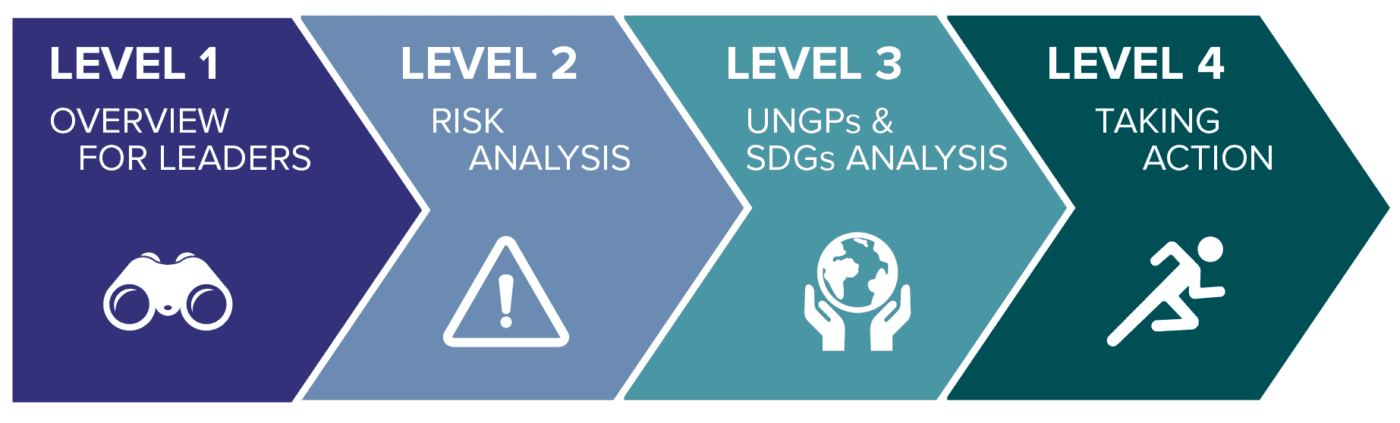
Level One: Overview for Leaders
This includes:
- Higher risk sectors in which the red flag feature is most prevalent;
- Key questions for leaders to ask or be asked to aid decisions about whether further action is needed.
Level Two: Risk Analysis
This includes:
- Risks to People: the key human rights risks associated with this red flag, absent appropriate mitigation efforts;
- Risks to the business: evidence of legal, financial, operational and reputational risks that can arise as a result of companies not addressing the red flag.
Level Three: UNGPs and SDGs analysis
This sets out:
- What the UNGPs say, with particular reference to how companies might be involved with the adverse human rights impacts associated with the red flag;
- Possible contributions to the Sustainable Development Goals that can be achieved with effective mitigation or removal of the red flag;
Level Four: Resources for taking action
This includes:
- Due diligence lines of inquiry for deeper analysis of the company’s impact and how it could effectively mitigate the risks associated with the red flag;
- Mitigation examples illustrating how companies have in practice sought to reduce the impacts associated with the red flag;
- Alternative model examples of companies that have either designed or redesigned their business model to function without the risk elements highlighted in the red flag;
- Additional tools and resources to guide further analysis.
Examples of Investor Application of Red Flags
| Institution | DD Stage Referenced | Use | Source |
|---|---|---|---|
APG Pension provider | Risk Identification Portfolio Engagement | “Additional conditions and mitigants are required for companies operating in high-risk areas. Moreover, in partnership with the Shift Project, we are developing our model of ‘red flags’ for companies in sectors exposed to high-risk business models, such as those handling sensitive data or having complex and vulnerable supply chains. This analysis is intended to bolster our human rights due diligence efforts and improve our engagement with companies on human rights.”6 FN 6: “…Shift’s Business Model Red Flags are key indicators present in dominant or emerging business models across various sectors. While not exhaustive, they serve to prompt reflection and aid in identifying additional red flags.” | Catalyst for Change:Our approach to upholding respect for human rights (2024) |
ABN AMRO Bank | Risk Identification | “In 2023 ABN AMRO developed a social risk identification tool (the Social Risk Heatmap), which provides a structured methodology to help us to identify human rights risks in our business environment. The Social Risk Heatmap shows potential impact in the sectors in which our clients operate. This may differ from the actual impact of our clients, which may be reduced through preventative measures taken to counter adverse human rights impacts. The risk level per sector is based on several indicators taken from the Impact Institute’s Global Impact Database and Shift’s Business Model Red Flags and focuses on four themes: labour rights, land-related rights, the right to life and health and the right to privacy and freedom of expression.” | Modern Slavery Statement (2024) |
PGGM Cooperative pension fund service provider | Risk Assessment: Prioritization Portfolio Engagement | “To set our engagement targets, we have identified key outcomes and activity indicators that focus on tangible outcomes (e.g. number of child labour incidents remediated) for land and labor rights and on effective actions to reach those outcomes (e.g. evidence of improvements on purchasing practices and of robust human rights due diligence). This approach aims to look beyond policy commitment of a company and to focus on actual results and implementation quality. Although land and labour rights are already a subset of all human rights topics, they still cover a wide spectrum of issues. Therefore, a second level of prioritization is necessary in selecting engagement targets per company. For this, we consider multiple factors, including existing controversies, social benchmarks, and business model red flags.” | PGGM Human Rights: Proactive engagement on land and labour rights |
| Bridges Fund management Specialist sustainable and impact investment fund manager | Risk Identification Risk Assessment Mitigation through Leverage | “We assess each potential investment against the SHIFT Business Model Red Flags framework to check whether there are human rights risks inherent in the business model. Where significant risks of potential harm are identified, we carry out further due diligence to understand those risks and assess whether they are manageable. If so, we work closely with management with the aim of ensuring that the potential negative impacts are mitigated and managed.” | Public Transparency Report for PRI (2023) |
HUB24 Wealth and superannuation platform and technology provider | Risk Identification Risk Assessment | “HUB24 takes a risk-based approach to identifying and assessing modern slavery risk in our operations and supply chain. Our modern slavery risk assessment considers the four key modern slavery risk factors of: [1] Vulnerable populations […] [2] High-risk geographies […] [3] High-risk sectors […] [4] High-risk business models: Business models that have higher human rights risks, including modern slavery risk. Examples include labour hire outsourcing with high use of precarious labour, low-cost goods and services, sourcing in countries with contested land use, and complex supply chains with limited visibility.”3Business Model Red Flags (FN3) | Modern Slavery Statement (2023)
|
Westpac Bank | Risk Identification | [Modern slavery] risks can arise due to the following factors: [1] Sector or Categories Risk […] [2] Country Risks […] [3] Vulnerable Groups […] [4] Business model risks: Business models that have higher human rights risk. Examples -Labour hire and outsourcing with high use of precarious labour -Franchising -Complex supply chains with limited visibility -Low-cost goods and services -Sourcing in countries with contested land use. | Modern Slavery Statement (FY21) |
How to use this resource /
There are 25 Business Model Red Flags. Each one is available to read online, by clicking on the word READ, or to download as a PDF. You can also use the search bar below to filter them by sector.
The badge  indicates that the red flag has been updated to include an AI & Data Lens and the icon
  indicates an update from a Climate Lens.
Once you’ve picked the Red Flags you want to download, select them by clicking on the circled number of each Red Flag and choose ‘Download All Selected’. You may also choose to download the full series or to download a high level menu. For support, please contact communications@shiftproject.org.
To select multiple documents to download, click on the circles on the right.
- Filter By Sector :
Red Flags in
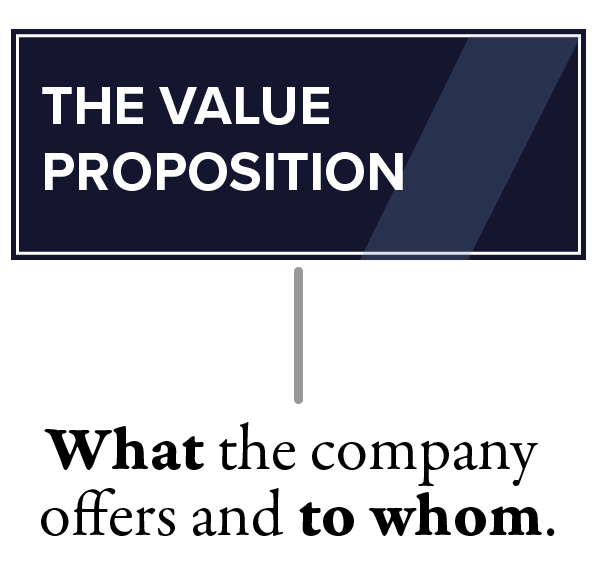
the Value Proposition /
What the company offers and to whom the business’s commercial success substantially depends upon…
1
Offering lowest cost goods or services in ways that put pressure on labor rights
2

High speed delivery that places pressure on warehouse workers and logistics workers in the “last mile”
3
Project timelines that undermine consultation with communities
4
Privatized public goods with risks to access & quality of services
5
Algorithmic decision-making that can affect access to rights & resources
6
Providing digital platforms where design choices risk online & offline harm
7
Financial, research or advisory services to high-risk clients
8
Products that harm with high levels of use
10
Offering products that harm when used as intended.
Red Flags in
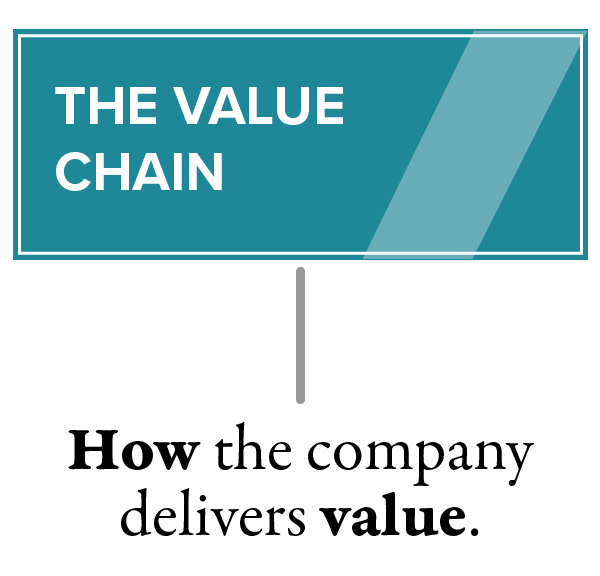
the Value Chain /
How the company delivers value the business’s commercial success substantially depends upon…
11
Speed in developing products or services, or delivering projects, with risks to health and safety
12
Land use in geographies where ownership may be contested
13
Depleting or polluting natural resources or public goods such that it undermines access or health
14
Commodities with unclear provenance and visibility to impacts on workers or communities
15
Business relationships with limited influence to address risk to people
16
Using data such that privacy and other rights are undermined
25
Greenhouse gas-intensive activities, products and services that contribute to negative impacts on people’s rights
Red Flags in
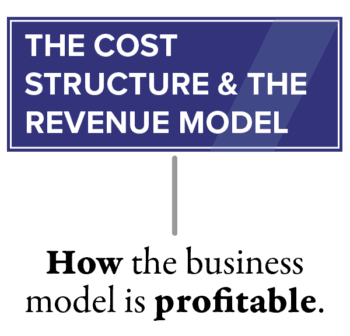
Cost Structure & Revenue Model
How the business model Is profitable the business’s commercial success substantially depends upon…
17
Using gig workers or other precarious labor
18
Sourcing low-paid labor from labor providers
19
Sourcing commodities that are priced independently of farmer income
20
Shift inventory risk to suppliers with knock-on effects to workers
21
Rapid digitalization that leaves workers little chance to adapt
22
Incentives for sales-maximization/ cost minimization that put consumers at risk
23
Markets where regulations fall below human right standards
24
Aggressive tax- minimization strategies